
Table of Contents
TL;DR
- Arizona dash cam laws generally permit continuous inward-facing or outward-facing video.
- Keep the mount within a supported location and preserve a clear view through the windshield and windows.
- Arizona’s one-party consent rule covers qualifying conversations only when a party or person present consents.
- After an incident, stop loop overwriting and preserve the complete native file, timestamps, metadata, and custody history.
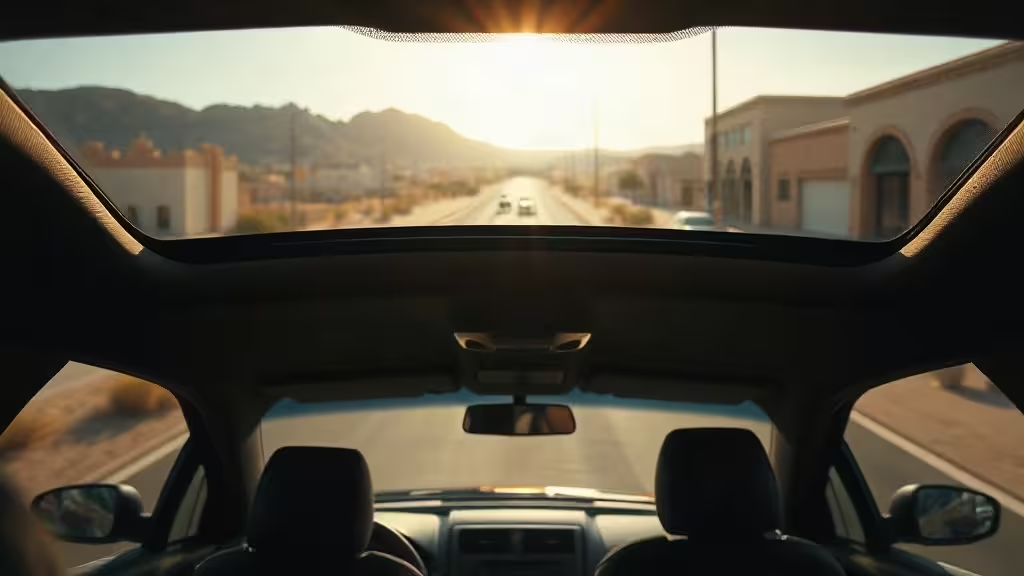
Arizona dash cam laws generally let you run a camera while driving, but they regulate where you place it, whether you handle or watch it, and how it captures private conversations.
Arizona expressly permits continuous video recording inside or outside a moving vehicle. A legal setup still depends on the mount, the driver’s clear view, hands-off operation, and a separate audio and privacy analysis.
Check the current DashOne Pro offer if you are shopping for a camera. The merchant page supplies the live price, shipping information, package contents, and return terms. We have not independently tested the product, so every product detail remains a merchant claim.
Is your dash cam compliant?
Describe your setup and how you use it. You will get a conditional assessment for mounting, video, and audio. This quiz does not replace a lawyer’s analysis of the specific facts.
Your profile
This result flags risks, not a legal conclusion. Compliance depends on the device, its exact location, what is recorded, and the applicable state, among other factors. For a disputed situation, consult an attorney in your state.
Official sources: A.R.S. § 28-959.01, A.R.S. § 28-963, A.R.S. § 28-914, A.R.S. § 13-3012 and A.R.S. § 13-3019.
Arizona Dash Cam Laws Generally Permit Continuous Recording
Arizona drivers may continuously record video inside or outside a moving vehicle. They generally may not hold the device, watch its video, or operate a prohibited display visible from the normal driving position while the vehicle moves.
Continuous recording versus watching a display
A.R.S. § 28-963 expressly preserves continuous recording or broadcasting by a portable wireless communication device or stand-alone electronic device. That exception covers inward-facing and outward-facing video.
The same statute generally bars an image-display device that the driver can see from the normal driving position while the vehicle moves. Navigation, vehicle-view, occupant-monitoring, and specified safety displays receive exceptions, so whether a live dash-cam feed fits one depends on the statute’s enumerated exceptions.
Set the camera before moving. Let it record.
When hands-free use and statutory exceptions matter
As of September 12, 2026, Arizona’s handheld-device rule applies as follows. Unless the vehicle is parked or stopped as the statute specifies, the driver generally may not physically hold or support a portable wireless communication device or stand-alone electronic device, or write, send, or read text-based communications.
The statute includes hands-free, emergency, and occupational exceptions. Whether one applies turns on the device, its use, and the circumstances.
| Violation under A.R.S. § 28-914 | Civil penalty |
|---|---|
| First violation | $75–$149 |
| Second or subsequent violation | $400 |
| Violation causing a motorcycle accident | Additional $150 |
These penalties come from the version in force after the September 12, 2026 amendment.
Why adjusting or holding the camera while driving creates a separate risk
A camera may record continuously while its driver violates a different rule by holding it or watching its video. The recording exception does not erase the handheld-device restrictions.
Pull over where the law permits before adjusting the camera. A fixed, preconfigured setup keeps the recording function separate from driver interaction.
Arizona Dash Camera Mounting Rules
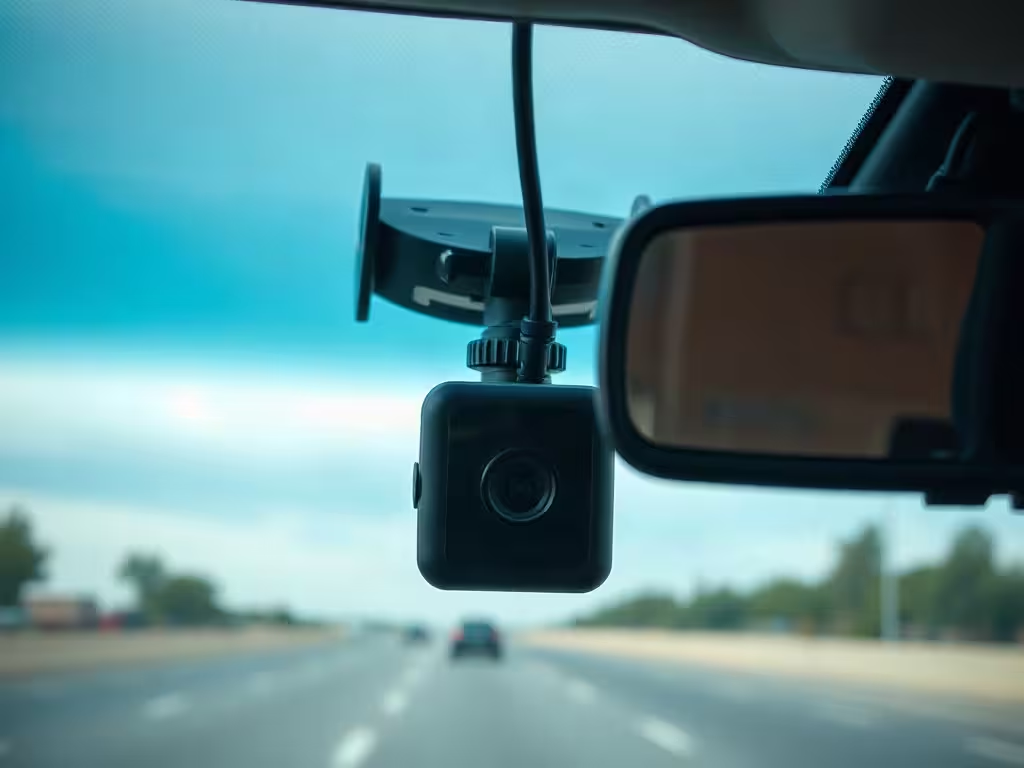
Arizona windshield mounting rules create two corner zones and a qualified rearview-mirror location. Every setup must also preserve the driver’s clear view through the windshield and side or rear windows.
Driver-side and passenger-side windshield zones
A.R.S. § 28-959.01 permits signs, stickers, or other materials within:
- A seven-inch square in the lower windshield corner farthest from the driver
- A five-inch square in the lower windshield corner nearest the driver
The statute uses the phrase “signs, stickers or other materials.” It does not expressly classify every dash camera within that wording, so mount size and placement can still raise a fact-specific question.
The qualified rearview-mirror exception
The statute separately permits safety-monitoring equipment and driver feedback immediately behind, slightly above, or slightly below the rearview mirror. A vehicle without a windshield-mounted mirror may use the area where that mirror would commonly sit.
That provision carries a qualification. The statute does not define every dash camera as safety-monitoring equipment or driver feedback, so the exception should not be treated as a universal permission for mirror-area mounting.
Dashboard mounts and the unobstructed-view requirement
A dashboard mount does not escape the statute merely because it avoids the glass. A.R.S. § 28-959.01 reaches objects placed elsewhere in or on a vehicle when they obstruct or reduce the driver’s clear view.
Check the view from the actual driving position. Any part of the setup that obstructs or reduces that view can matter.
Civil traffic penalties for an unlawful installation
Section 28-959.01 sits in Title 28, chapter 3, so a violation falls under Arizona’s general civil traffic classification unless another statute supplies a different result. The general civil penalty may not exceed $250, and the court adds statutory surcharges.
That figure marks a general maximum. It does not establish the amount a particular court will impose.
Audio Recording Rules for Arizona Dash Cams
Arizona generally applies a one-party consent framework to protected oral communications, but the rule does not make every sound freely recordable. The communication must fall within the interception statutes, and consent must come from a party to the communication or a person present.
What Arizona one-party consent covers
A.R.S. § 13-3012 exempts an interception made with the consent of a party to the communication or a person present during it. If you take part in a qualifying conversation inside your vehicle, your consent can satisfy that state-law exemption.
The definition matters. Arizona protects a spoken communication when the speaker exhibits an expectation against interception and the circumstances justify that expectation.
Passenger conversations and justified expectations against interception
A microphone may capture passenger conversations or conversations held when the driver is absent. One-party consent requires consent from a party or person present. A camera owner who is neither participating nor present cannot rely merely on ownership of the device.
Intentionally intercepting a conversation at which the recorder is not present, without one party’s consent and outside an exception, constitutes a class 5 felony under A.R.S. § 13-3005.
An intentional unlawful interception, disclosure, or use may also support a civil action under A.R.S. § 12-731. Available remedies include actual damages and profits or statutory damages, punitive damages in appropriate cases, attorney fees, and costs. The statute lists statutory damages of $100 per day or $10,000 within its alternative damages provisions, subject to a proven violation and the statute’s terms.
Silent road video versus audio capture
Silent video receives a separate legal analysis. Arizona’s privacy statute targets secret recording in specified places or circumstances involving a reasonable expectation of privacy or concealed intimate areas.
The statute does not create a general ban on ordinary outward-facing video of public roads. It does prohibit specified invasive recording, generally as a class 5 felony when a device is used, and separately restricts publication of a recording made in violation of the statute.
Privacy limits in protected places and circumstances
A.R.S. § 13-3019 covers locations such as restrooms, bathrooms, locker rooms, and bedrooms, along with other enumerated private circumstances. Its classifications vary for some conduct, including certain recording without a device and some publication involving a recognizable person.
Private-property rules remain less complete. The statutes covered here do not comprehensively establish every owner’s or invitee’s power to prohibit ordinary, non-police dash-camera recording on all private property. Posted conditions, trespass rules, and the particular setting may require separate analysis.
Why interstate trips may trigger a stricter state rule
Federal law supplies a one-party-consent baseline, but state recording laws differ. Courts have not followed one universal rule for interstate communications: some look to the recorder’s location, while others look to the recorded person’s location.
If a conversation crosses state lines, assess the stricter applicable rule before recording. Consult an attorney in the relevant state when the audio could affect a claim or proceeding.
Review the live DashOne Pro terms before buying. That page is the place to verify the current offer, shipping terms, package contents, and return conditions. We have not independently verified product performance or specifications.
Recording an Arizona Traffic Stop
A.R.S. § 13-3732 says occupants of a vehicle that is the subject of a police stop may record the encounter if they do not interfere with lawful police actions. The statute supplies a direct rule for the stopped vehicle’s occupants.
Recording without interfering
Avoid physical obstruction and do not use the camera in a way that interferes with lawful police actions. The statute conditions the right to record on not interfering.
A mounted camera can continue recording without requiring the driver to reach for a device. Audio still requires its own analysis under Arizona’s interception rules.
Enclosed private property and officer safety directions
For law-enforcement activity inside an enclosed structure on private property, the statute addresses a person authorized to be there who records from an adjacent room or area less than eight feet away. An officer may order that person to leave when the officer determines that the person is interfering or that remaining there is unsafe.
That language applies to the documented private-property setting. It should not be expanded into a rule for every camera use on every private parcel.
What the statute does not authorize
Section 13-3732 applies to recording a police stop and does not independently authorize other recordings. It also does not settle whether separately captured audio complies with Arizona or another state’s interception law.
How Arizona Courts, Police, and Insurers May Use Dash-Cam Footage
Arizona courts, police, and insurers may consider dash-cam footage, but they perform different jobs. A court applies evidence rules, an agency may collect the file during an investigation, and an insurer weighs relevant information while investigating a claim.
Authentication under Arizona Rule of Evidence 901
Arizona Rule of Evidence 901 requires evidence sufficient to support a finding that an item is what its proponent claims. A witness who observed the event may testify that the recording fairly and accurately depicts what the witness perceived.
Relevance opens the door but does not settle admission. Completeness, hearsay, original-recording questions, and Rule 403 concerns can still affect whether the court receives the footage or how much weight it carries.
Why an edited or incomplete clip is not automatically excluded
In State v. Steinle (Moran), the Arizona Supreme Court held that witnesses present during the recording could authenticate a video excerpt by testifying that it fairly and accurately depicted the events they perceived. The court held that the trial court erred in precluding the excerpt under several cited evidence rules, and Rule 403 analysis remained for remand.
The decision does not make every excerpt admissible. It shows that an incomplete or edited file can sometimes receive a sufficient foundation through witness testimony, while context and unfair-prejudice questions remain live.
Submitting footage to Arizona DPS or an insurer
Arizona DPS describes citizen recordings supplied during an interstate or state-highway incident or collision investigation as investigative video records. That agency practice establishes that DPS may receive and retain a citizen’s recording. It does not guarantee courtroom admission.
Arizona insurance regulators require a fair and reasonable claim investigation that considers available information related to the claim. An insurer may not refuse to consider relevant information offered by a claimant, but footage does not control the result merely because the claimant submits it.
Why unlawful recording does not produce one universal exclusion result
In State v. Allgood, an Arizona appellate court explained that the cited Arizona and federal interception offenses did not themselves create an exclusion remedy. The court also recognized a separate federal provision that mandates exclusion of intercepted wire communications when disclosure would violate the federal interception chapter.
The governing rule and proceeding control. The available authority does not establish automatic exclusion for an illegally mounted camera, nor does it resolve every consequence in an Arizona civil claim or insurance dispute.
Preserving and Producing Arizona Dash-Cam Evidence
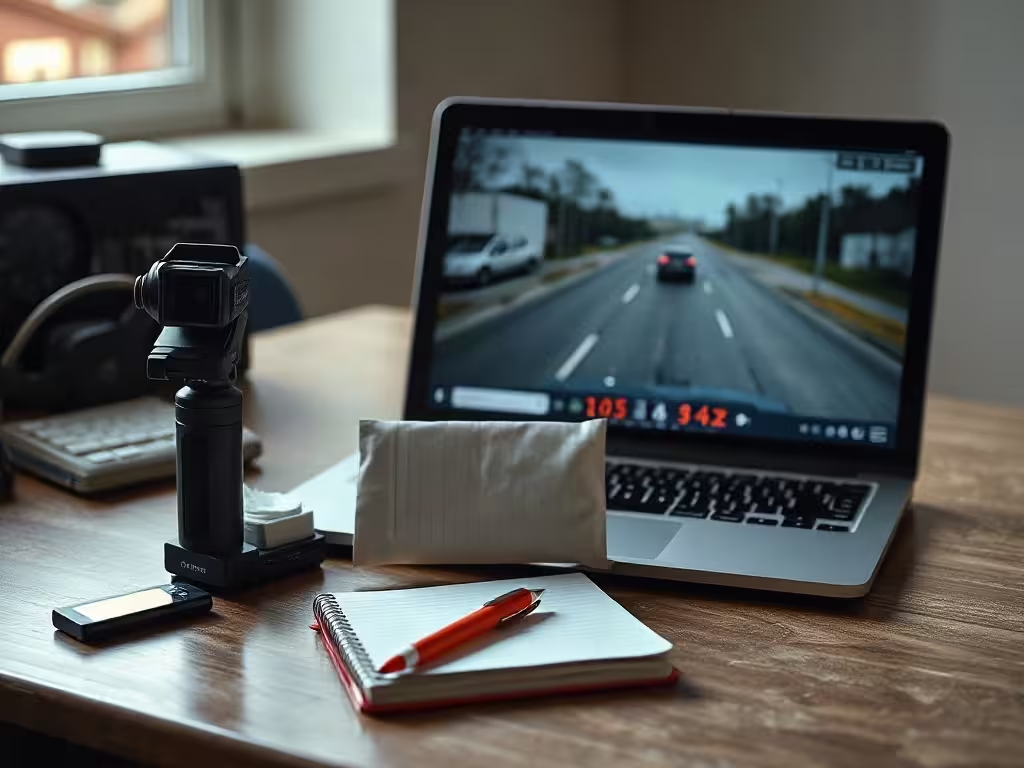
Arizona authority recognizes a duty to preserve evidence when a party knows or reasonably should know that it is relevant to an existing or reasonably anticipated case, with possible sanctions for a failure to do so.
Save the native file before loop recording overwrites it
Secure the recording as soon as safety permits:
- Stop automatic loop overwriting.
- Retain the original storage medium and native file.
- Create a separate working copy.
- Keep the source file unchanged.
Arizona judicial guidance recommends preserving digital evidence in its original, native format whenever possible.
Keep timestamps, metadata, and a custody record
Retain the timestamps and metadata. Record the dates, times, locations, and individuals responsible each time the file was handled or copied.
Arizona’s judicial guidance describes a chronological custody record with dates, times, locations, and responsible individuals. A clear record may help a witness explain the file later.
Do not edit the only copy
Do not trim, filter, recompress, annotate, or convert the only version. Make excerpts from a duplicate.
If you create a conversion or edit, identify the software or process used and retain earlier versions. Alteration does not necessarily compel exclusion, but it can affect authenticity.
When discovery, a subpoena, or an investigation may reach the file
Arizona civil procedure permits discovery of relevant, nonprivileged, and proportional electronically stored information. Requests for production and subpoenas are recognized discovery methods, subject to procedural limits and possible protective orders.
Arizona statutes also provide specified warrant, subpoena, court-order, and service-provider preservation routes for covered communications. In an insurance-loss investigation, an authorized agency may demand relevant information already held by an insurer. Suspected fraudulent claims trigger additional reporting and transfer duties for insurers.
The statutes covered here do not establish that you must surrender owner-held footage solely because an insurer informally requests it during an ordinary claim. Ask whether a request is voluntary or backed by legal process, preserve the file, and consult counsel before ignoring a subpoena or court order.
DashOne Pro: Verify the Merchant’s Current Offer
DashOne Pro appears here as a merchant offer, not an independently tested recommendation. The editor reviewed the merchant page on October 13, 2026, but that review did not verify camera performance.
What to verify on the live merchant page
Use the DashOne Pro merchant offer to check:
- The current price
- Shipping terms
- Package contents
- Return terms
Those details can change. Read the live terms before placing an order and save a copy of the terms that apply to your purchase.
Merchant claims versus independent testing
No independently verified resolution, field of view, storage capacity, night performance, durability, app behavior, or recording reliability is available here, so this article makes no claim about those characteristics.
Treat every product statement on the sales page as the merchant’s representation. The page itself remains the source for the offer.
Penalties and Unresolved Legal Consequences
Improper dash-camera use can trigger a civil traffic citation, distracted-driving penalties, or criminal and civil exposure for unlawful interception. The consequence depends on the conduct and the statute that reaches it.
Windshield-obstruction citations
A violation of A.R.S. § 28-959.01 carries a civil traffic classification under the general Title 28 rules. Unless a more specific provision controls, the civil penalty may not exceed $250, and statutory surcharges apply.
An unlawful mount does not automatically erase the recording. The available authority does not decide how every Arizona court, civil claimant, or insurer must treat footage produced by an improperly mounted camera.
Criminal and civil consequences for unlawful interception
Specified intentional interception of a conversation without the required consent constitutes a class 5 felony under A.R.S. § 13-3005. A proven violation may also expose the recorder to statutory civil remedies under A.R.S. § 12-731.
Separate publication or disclosure can create additional risk. Check the audio track before sharing footage publicly or sending it beyond counsel.
Why exclusion depends on the governing rule and proceeding
Criminal prosecution, suppression or exclusion, civil admissibility, discovery, and claim handling ask different questions. Allgood shows that recording illegality does not produce one universal Arizona result, while federal law can compel exclusion in circumstances covered by its separate rule.
Consult an Arizona attorney when the recording may have captured protected audio, when the mount was unlawful, or when a pending case could turn on disclosure.
Before relying on any camera offer, verify DashOne Pro’s current merchant terms. The page is the source for its live price, shipping, package contents, and return conditions. No independent product test supports those merchant claims here.
Key takeaways
Before driving, run a four-part check: place the camera within a supported mounting area, confirm that every component leaves a clear view, configure it for hands-off operation, and choose the audio setting deliberately.
After a crash or disputed traffic stop, preserve the complete native recording before the camera overwrites it. Keep metadata and a custody record, then work from copies.
Audio, interstate travel, subpoenas, active litigation, and disputed disclosure requests can change the legal analysis. Consult an Arizona attorney for advice tied to your facts.
Related reading on Audit Faction
- Can dash-cam footage be used in court? Authentication explained
- Pennsylvania dash-cam laws: Mounting, audio, and evidence
- Indiana dash-cam laws: Mounting, audio, and evidence
- California dash-cam laws: Mounting, audio, and evidence
This post may contain affiliate links. If you click them, I might earn a small commission (it costs you nothing and helps me keep shipping quality articles every day for your reading pleasure).