
Sommaire
TL;DR
- Indiana dash cam laws generally permit drivers to use a camera, but they do not give every mounting or recording choice a blanket approval.
- Indiana Code § 9-19-19-3 bars material that blocks the driver’s clear view and describes a limited lower-corner windshield allowance.
- Video from a public vantage point raises different questions than recorded audio.
- After a crash, keep the original file, preserve its context, and avoid editing the source clip.
A driver can replay a dashboard camera clip moments after a collision, but that file may later matter to an insurer, a police officer, or a court. Indiana dash cam laws turn on three practical questions: where the device sits, what it records, and whether you preserve the footage in a form someone can verify.
The rule reviewed through October 9, 2026 requires care rather than guesswork. A small camera can document a traffic stop or a crash, yet poor windshield camera placement or an altered file can weaken the value of that record.
indiana dash cam laws: Are Dash Cams Legal in 2026?
Indiana dash cam laws generally permit a driver to use a dash camera in a private vehicle. Indiana does not appear to have a statute that names dashboard cameras as a separate category, so the legal baseline comes from broader vehicle-equipment and recording rules.
That distinction matters. A camera does not become lawful in every location merely because Indiana law does not name it. The device still cannot create a windshield obstruction, and audio recording can raise questions that ordinary road video does not.
The general rule for private vehicles
Drivers can use in-car video recording to capture the road ahead, nearby vehicles, and events visible from the vehicle. A specialized legal source reports that Indiana permits dash cams subject to rules about windshield obstruction and recorded audio.
The practical takeaway stays narrow. You can use a camera, but you should mount it where it leaves a clear sightline and treat audio as a separate legal issue.
Why Indiana Code § 9-19-19-3 matters
Indiana Code § 9-19-19-3 prohibits nontransparent material on a windshield or other listed windows when it obstructs the driver’s clear view of the highway or an intersecting highway. The statute does not expressly classify a dash cam as nontransparent material.
That leaves an important limit. The statute supplies a rule about obstructed vision, not a device-specific license for every dashboard camera rules setup.
Where Indiana Dash Cam Laws Limit Windshield Mounting
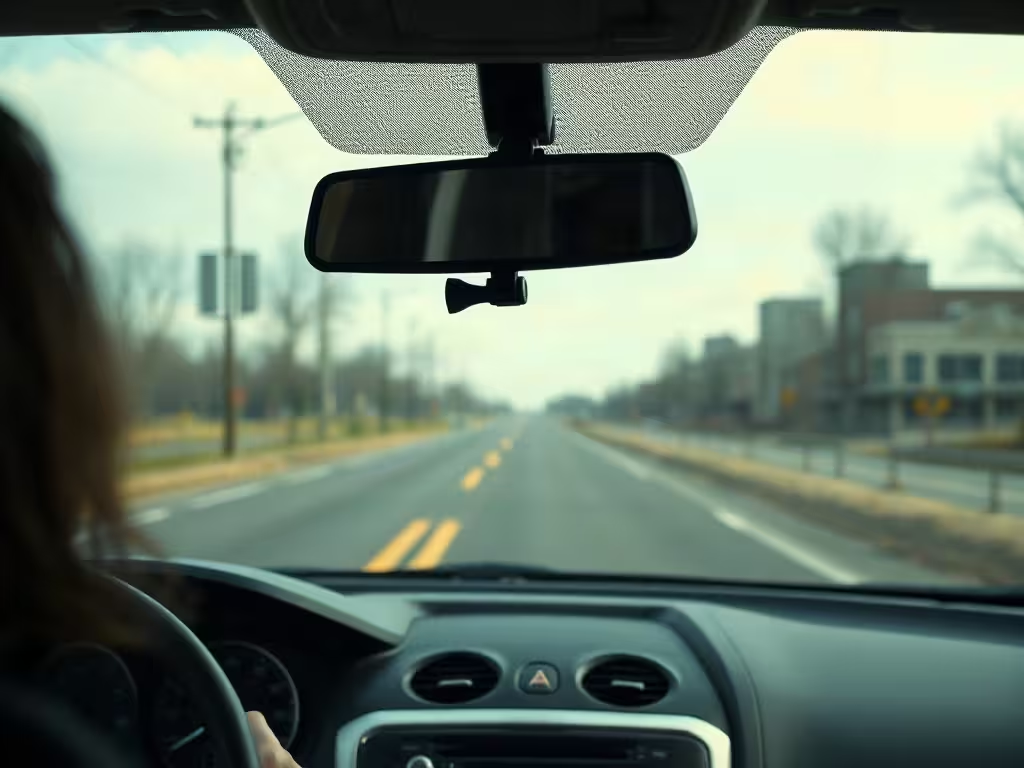
Indiana dash cam laws point drivers back to the windshield-obstruction rule. The statutory language permits certain nontransparent material in the lower corner farthest from the driver, as long as it stays within a stated size limit.
For a typical left-hand-drive vehicle, that location means the passenger-side lower corner. A dash cam can be smaller than the permitted space and still interfere with a driver’s view if its position, wiring, or mount blocks the roadway.
The passenger-side lower-corner placement
The express statutory allowance describes the lower corner farthest removed from the driver’s position. On a typical Indiana passenger vehicle, that means the lower-right windshield corner from the driver’s seat.
This placement reduces the chance that the camera will sit in the driver’s normal line of sight. It also gives you a more defensible answer if an officer asks why the device sits on the windshield.
The four-inch-square allowance and its limits
The statute describes an allowance for nontransparent material no larger than four inches square in that lower corner. It does not say that every dash camera falls within that category or that every camera of that size complies automatically.
Treat the measurement as a narrow statutory reference, not as a product recommendation. A camera, mount, power cable, or attached screen can still create an obstruction when the full setup reaches into the driver’s view.
Why an unobstructed view remains the practical rule
Clear sightlines should guide windshield camera placement. Before driving, sit in the normal position and check whether the device blocks traffic lights, pedestrians, crosswalks, mirrors, or vehicles entering an intersection.
A dashboard camera should document the road without competing for the driver’s attention. Mount it low on the passenger side and route the cable away from the viewing area to keep the setup consistent with that goal.
Video and Audio Recording Rules for an Indiana Dash Cam
Video and audio do not follow the same path. A specialized source reports that recording roads, vehicles, pedestrians, and other activity visible from a public vantage point does not require consent, subject to separate restrictions that may apply in particular settings.
That guidance supports ordinary vehicle camera evidence from public roads. It does not answer every question about filming inside private places, nor does it resolve every audio scenario.
Recording what is visible from a public vantage point
A dash cam normally captures public-facing activity: lane changes, license plates, traffic signals, collisions, and the exterior of buildings. Indiana’s reported dash-cam guidance treats that visible activity differently from private communications.
Keep the camera pointed toward the roadway unless you have a clear reason for another view. A forward-facing device creates fewer privacy questions than a setup aimed into spaces where people reasonably expect privacy.
Why audio requires more caution
Indiana Code § 35-31.5-2-176 defines interception as intentionally recording or acquiring the contents of an electronic communication by someone other than the sender or receiver, without the consent of the sender or receiver. Indiana Code § 35-33.5-5-5 addresses unlawful interception. Both provisions appear in the current Indiana Code, Title 35.
That language includes a consent element within the communications covered by the statute. It does not independently settle whether every ambient conversation inside or near a vehicle falls within the definition of an electronic communication, so you should not assume that a one-party-consent shorthand answers every dash-cam audio question.
You can reduce uncertainty by disabling audio when you do not need it. If a recording may capture passengers, a traffic stop, or a sensitive conversation, consult an Indiana civil rights attorney before relying on it or publishing it.
When to seek advice from an Indiana civil rights attorney
Individual facts can change the answer. Seek state-specific legal advice if the clip includes private property, a conversation you did not join, a workplace, a minor, or material you plan to post publicly.
A lawyer can assess the recording context rather than give a broad answer detached from the actual clip. That step matters most when audio could become part of a dispute.
Can Dash-Cam Footage Be Used in an Indiana Crash or Traffic Case?
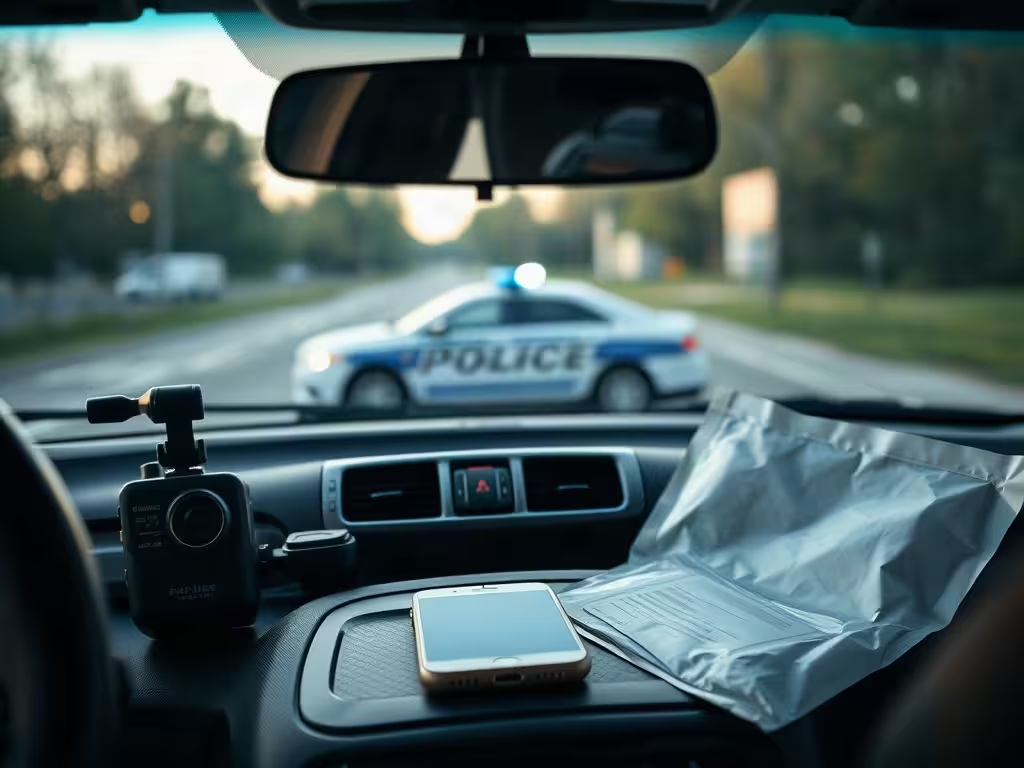
Dash-cam footage can become evidence in an Indiana crash or traffic case, but the recording does not decide fault by itself. Courts and investigators can consider vehicle camera evidence when a party can show what the clip depicts, how the device recorded it, and whether the file remains reliable.
Indiana appellate decisions recognize the “silent witness” theory for video recordings. The theory can authenticate an automatic recording through evidence about the system and its handling, even when no person personally watched the events unfold.
Authentication under Indiana Evidence Rule 901
Indiana Evidence Rule 901 requires evidence sufficient to support a finding that an item is what its proponent claims. For a dash-cam clip, that can include testimony from the driver, information about the camera, timestamps, and evidence that the clip depicts the crash location or traffic stop.
The recording should also remain clear enough to help rather than force a factfinder to speculate. An unclear plate, missing timestamp, or broken sequence may not bar the clip in every case, but it can reduce its force.
The silent-witness foundation for automatic recordings
Indiana courts have applied the silent-witness theory to video recordings. In cases involving automatic cameras, appellate authority describes proof about operation, timing, processing, and chain of custody as relevant to the foundation for the recording.
Those details give the clip a history. You should be able to explain which camera captured it, when the event occurred, whether the device overwrote older footage, and who handled the file after the incident.
Why clarity and context affect usefulness
A short clip can mislead if it begins after the relevant driving behavior or omits the moments before impact. Preserve surrounding footage when possible, because the minutes before and after an event may show speed, road conditions, lane position, or what happened after the collision.
Indiana’s evidence rules generally call for an original recording to prove its content, while duplicates can be admissible unless authenticity becomes a genuine issue or admission would be unfair. You can review the state’s Indiana Rules of Evidence for the governing evidence framework.
How to Preserve Dash-Cam Footage After an Incident
After a crash or traffic encounter, save the recording before the device overwrites it. Copy the file to another storage location, but keep the original source file unchanged.
That simple step protects car accident footage from accidental loss. It also gives you a cleaner account of how the clip moved from the camera to an insurer, officer, attorney, or court.
Save the original recording promptly
Remove or protect the memory card if doing so does not interfere with safety or law enforcement instructions. Save the relevant clip and a reasonable amount of footage before and after the event.
Do not trim the original file. If you need a shorter version for review, create a separate copy and label it clearly as an excerpt.
Record the camera setup and file context
Write down the device model, vehicle, camera position, date and approximate time, and whether audio was enabled. Take a photograph of the windshield camera placement if the mounting location could matter later.
These notes can help explain the recording’s source. They can also help answer questions about whether the clip came from an automatic system and whether the file changed after capture.
Share footage carefully with insurers, police, or counsel
An insurer or law enforcement agency may request the clip after an incident. Ask what file format they need, keep a record of what you send, and retain the original even after sharing a duplicate.
You should speak with your own attorney before making broad public claims from a clip or giving up the only copy. The Indiana Court of Appeals has discussed authentication standards for recorded evidence in its video-evidence decisions, which is why context matters.
Key takeaways
Use your dash cam as if another person may need to understand the recording later. Check your windshield camera placement from the driver’s seat, decide whether you need audio, and learn how your device overwrites files before an incident occurs.
If a crash or traffic stop happens, save the original recording, note the setup, and preserve the surrounding footage. Those steps give you a more reliable record to discuss with an insurer or an Indiana civil rights attorney.
Related reading on Audit Faction
- Best dash cams for recording police encounters
- Police abuse of power patterns
- How recording shaped a drunk-driving case
FAQ
Can I mount a dash cam on my windshield in Indiana?
Indiana’s windshield rule describes a lower-corner allowance farthest from the driver for certain nontransparent material. For a typical vehicle, the passenger-side lower corner presents the clearest fit, but the statute does not name dash cameras and the device must not obstruct your view.
Does Indiana require consent for dash-cam audio?
Indiana Code § 35-31.5-2-176 addresses interception of an electronic communication and includes consent language for a sender or receiver. It does not resolve every ambient-audio situation, so you should use caution and seek advice when a clip captures private or sensitive conversations.
Can police use my dash-cam video after a traffic stop?
Police may review footage you provide, and footage may later become relevant evidence. Keep the original file and document the camera setup so you can explain where the recording came from and whether it changed.
Should I give an insurer an edited dash-cam clip?
Keep the original first. You can create a separate excerpt for convenience, but an edited clip can omit context and raise questions about authenticity, so preserve the complete source recording and the surrounding footage.