
Sommaire
TL;DR
- Virginia dash cam laws permit a non-live-streaming camera when its placement does not substantially block the driver’s view.
- The clearest statutory placement route puts the camera, wires, and attachments wholly or mostly behind the rear-view mirror.
- Audio needs separate attention. Virginia’s interception law turns on consent and the circumstances of the conversation.
- Footage can support a claim or court case, but you still need to show that the recording is what you say it is.
A driver who reviews a recording after a traffic stop often wants one answer first: can this footage help, or did the camera create its own problem? Under virginia dash cam laws, you can generally use a non-live-streaming dashboard camera in 2026, subject to placement and audio-recording limits.
The details matter. A camera placed in the wrong part of the windshield can raise a visibility issue, while an audio track can trigger a separate analysis under Virginia’s interception statute.
Check the current DashOne Pro offer, shipping, package contents, and return terms. The merchant makes the product claims on its sales page; this publication has not independently tested the camera.
Check DashOne Pro before deciding
Virginia dash cam laws: the short legal answer
Virginia’s vehicle code expressly protects a narrow, practical setup. It says the windshield-obstruction rule does not prohibit a dashboard camera when federal rules do not otherwise bar it and the camera, wires, and attachments sit wholly or mostly behind the rear-view mirror without creating an added obstruction.
That language matters because it does not ban every windshield camera. It identifies a placement that drivers can use while keeping the road view clear. We reviewed the governing statute on October 14, 2026. See Virginia Code § 46.2-1054.
Virginia also draws a line between ordinary in-car video recording and live streaming while driving. The live-streaming statute says it does not prohibit dashboard cameras that do not stream live content. A camera recording to local storage therefore sits in a different legal category from manipulating a device for a live stream while driving.
Where Virginia dash cam laws allow you to mount a camera
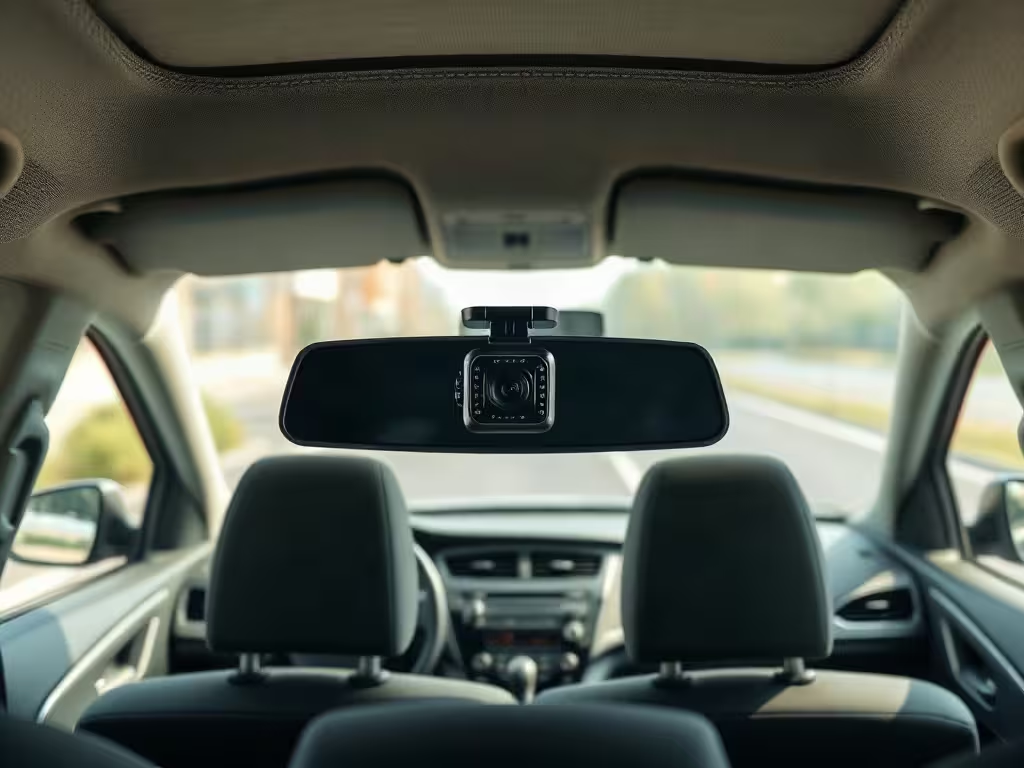
The controlling question is whether an object substantially obstructs your clear view through the windshield, front side windows, or rear window. The statute covers more than the camera itself. A dangling power cable, adhesive mount, or accessory can matter if it adds to the blocked sightline.
The most defensible windshield camera placement follows the statutory language closely:
- Put the camera wholly or mostly behind the rear-view mirror.
- Conceal the wires and attachments as much as the setup permits.
- Check the driver’s view from the seat, including the road ahead and both front side windows.
- Recheck after adjusting the mirror, because a mount that shifts into view can change the practical result.
Virginia Code § 46.2-1054 also says an officer cannot stop a vehicle solely for a violation of that section. Evidence obtained through a stop that violates that restriction cannot come into a later proceeding. That rule does not turn poor placement into a good idea. A driver still faces the visibility standard, and another lawful basis for a stop can change the situation.
The statute does not draw a universal map of every lawful windshield location. It draws a boundary around substantial obstruction and specifically recognizes the behind-the-mirror setup. Treat that as your starting point, then inspect the installation from the driver’s actual position before you drive.
Audio Recording Rules for Virginia dash cams
Virginia’s audio rule does not work like the mounting rule. The interception statute permits recording a wire, electronic, or oral communication when the recorder participates in the conversation or one party has given prior consent. That is often called one-party consent, but the label should not replace the facts.
The statute defines an oral communication around a speaker’s justified expectation that the conversation will not be intercepted. A passenger, police officer, and pedestrian do not each receive their own automatic dash-cam rule. The analysis turns on the communication, who took part in it, what the recorder captured, and whether the circumstances supported an expectation against interception.
A camera recording road conditions outside the vehicle creates a different question from a microphone collecting an interior conversation. In-car video recording can be lawful while the audio track still requires care. If you were not a party to a recorded conversation, do not assume the camera’s presence supplies consent.
See the DashOne Pro merchant’s current offer details before buying. Any camera features, specifications, shipping terms, and package descriptions come from the merchant, not an independent Audit Faction test.
Intentional interception, disclosure, or use outside the statute’s exceptions can carry serious consequences. Consult a civil-rights attorney in your state when your audio question turns on a passenger conversation, a private setting, or a planned disclosure of the recording. The governing language appears in Virginia Code § 19.2-62.
Match the camera to the recording rules
Review the current package, then confirm mounting and audio rules before recording in your state.
Using dash-cam footage after a Virginia traffic stop or crash
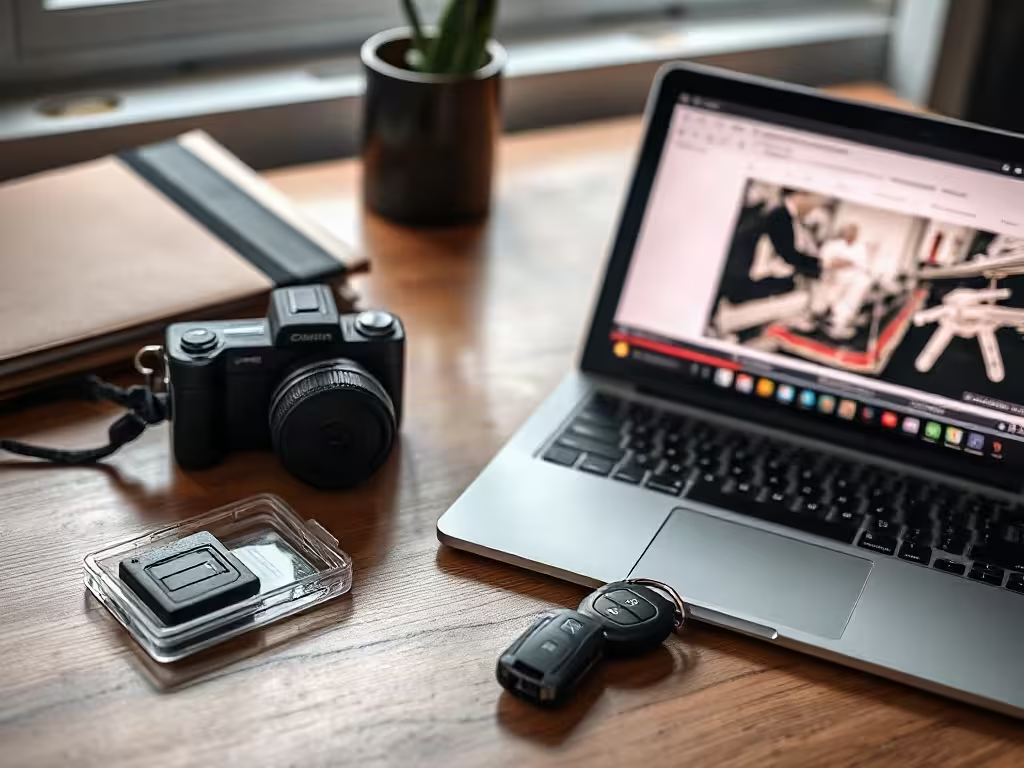
Dash cam footage can enter a Virginia civil or criminal proceeding, but a recording does not prove itself. Virginia’s authentication rule requires evidence sufficient to support a finding that the item is what its proponent claims it is.
For a driver, that means you should be able to explain what the camera recorded, when you obtained the file, and why the clip fairly represents the event. A witness familiar with the recording may help establish that foundation. The available rule does not prescribe a dash-cam-specific system for original files, metadata, deletion, or preservation.
Still, practical records can protect the usefulness of footage. Save the recording promptly, keep the original file available, note when you copied it, and avoid editing the only version. If an insurer, attorney, or court process requests the file, preserve the request and the version you produced. Virginia civil discovery reaches electronically stored information and can require production in a reasonably usable form.
This is documentation advice, not a claimed automatic legal duty for every driver. A crash, insurance dispute, or lawsuit can create facts that call for prompt legal guidance. The point is simple: a short edited clip may persuade someone online, but a full recording and a clear account of its source carry more weight when a claim reaches a formal proceeding.
What can happen when a dash cam is used unlawfully
A visibility violation under Title 46.2 generally falls within the traffic-infraction framework when the code does not set a separate penalty. The mounting issue centers on substantial obstruction, not merely the fact that a camera touches the windshield.
Live streaming creates a separate risk. A driver who violates the live-streaming rule and becomes involved in an accident while doing so may face an additional fine of up to $500. That provision does not target a dashboard camera that records without live streaming.
Audio carries the heavier exposure. An unlawful interception can constitute a Class 6 felony. The person whose communication was unlawfully intercepted, disclosed, or used can also bring a civil action seeking available damages, punitive damages, attorney fees, and litigation costs.
The evidence consequence matters too. Virginia’s interception chapter bars wire or oral communications, and evidence derived from them, when disclosure would violate that chapter. Footage can therefore capture something relevant and still create an admissibility problem if the audio was obtained or shared unlawfully.
Verify DashOne Pro’s current price and terms through the merchant offer. Treat the merchant’s package and performance descriptions as merchant claims, and confirm the details before purchase.
Before you buy
Verify the package before you rely on it
- Confirm what the current package includes
- Check shipping and return terms
- Test storage and footage retrieval after delivery
Before you install a camera, sit in the driver’s seat and check the road view with the mirror adjusted
Before you install a camera, sit in the driver’s seat and check the road view with the mirror adjusted. Keep the device and wiring behind the mirror where the statute identifies that setup, then decide whether you need the microphone on at all. After a collision or traffic stop, save the full file, write down what happened, and seek legal advice before sharing an audio recording whose consent question is unclear.
FAQ
Are dash cams legal in Virginia?
Yes. Virginia law recognizes dashboard-camera use when the setup meets the placement conditions and the camera does not live stream while driving.
Can you mount a dash cam on a Virginia windshield?
Virginia does not impose a blanket windshield-camera ban. The statute specifically addresses a camera, wires, and attachments that sit wholly or mostly behind the rear-view mirror without adding an obstruction to the driver’s view.
Can a dash cam record conversations in Virginia?
It depends on consent, who participated in the conversation, and whether the speaker had a justified expectation against interception. Consult a civil-rights attorney in your state for a fact-specific audio question.
Can dash-cam footage be used as evidence in Virginia?
It may be used, but the person offering it must authenticate the footage as what they claim it shows. Keep the original file and a clear record of how you saved or copied it.
Related reading on Audit Faction
- How civilian recording can document a traffic stop
- What to do after a police encounter
- Understanding your Fourth Amendment rights during a traffic stop
- How to preserve video evidence after an incident
This post may contain affiliate links. If you click them, I might earn a small commission (it costs you nothing and helps me keep shipping quality articles every day for your reading pleasure).