
Table of Contents
TL;DR
- Position the camera so that it does not obstruct your view through the windshield or front side windows.
- While the vehicle moves, do not watch or handle a screen or removable device that shows or edits video.
- Protected conversations need your participation or one party’s prior consent under Louisiana’s one-party-consent rule.
- After a crash or an anticipated claim, stop the loop recording and keep the original file untouched.
Before you mount a dash cam, check whether it blocks your view, whether you can see its screen while driving, and whose conversation its microphone will capture.
If you are shopping for a camera, the DashOne Pro offer sits on the merchant page, where you can confirm the live price, package, shipping, and return terms: DashOne Pro.
Louisiana dash cam laws regulate mounting and use through driving rules
Start with the windshield: choose a mounting position that keeps your view of the road clear.
The windshield rule turns on the driver’s clear view
R.S. 32:361.1 bars operating a motor vehicle with any object or material placed on or affixed to the front windshield or front side windows that obstructs or reduces the driver’s clear view through those surfaces. The cited text carves out statutory exceptions, but it prescribes no special dash-cam mounting zone and says nothing about dashboard mounting.
The test is functional: does the object obstruct or reduce your clear view? A compact camera tucked behind the mirror can still fail if it blocks part of the glass. A larger unit mounted low and central is not automatically safe. Sit in the driver’s seat and look through the windshield and both front side windows before you trust a mount.
The statute does not designate a universal mounting location
The statute gives no approved coordinates. It draws no line between front-facing cameras, rear-facing cameras, or cameras installed behind the rearview mirror. A seller who promises a “legal” mounting spot is describing a marketing position, not a statutory safe harbor.
Is Your Dash Cam Setup Louisiana-Legal?
Five questions on mounting, screens, audio, and what happens to the footage. Each answer lands on one outcome and points you to the part of this guide that covers the rule behind it. Nothing you select leaves this page.
Your answers changed. Press Show my profile to refresh the result.
Louisiana driving laws restrict screens and device handling in motion
Passive recording differs from interacting with the device. Louisiana separates the two, and the second category carries the sharper restrictions.
A moving-image screen cannot serve entertainment or business applications in the driver’s view
R.S. 32:365 bars driving a vehicle equipped with a television receiver, screen, or other means of visually receiving a broadcast or video signal that produces entertainment or business applications when the moving images are visible to the driver while the vehicle is in motion. The exceptions described in the statute cover vehicle-information, navigation, mapping, and maneuvering displays; they do not describe a dash-cam preview.
Portable-device restrictions cover viewing and editing video
R.S. 32:59 defines operating a wireless telecommunications device to include accessing, viewing, posting, editing, or creating a video, photograph, or other image, plus reading, composing, browsing, transmitting, saving, or retrieving electronic data. The same statute excludes any device or component permanently affixed to the vehicle and any device used hands-free. That exclusion is limited to the definition of wireless telecommunications device.
Lawfully stationary and statutory exceptions remain narrow
The device statute applies to operation on public roads and highways, and it yields when the vehicle is lawfully stationary or another listed exception applies. Those carve-outs are specific. They do not give a driver a general license to scroll, trim, or caption footage while the car is in gear. Leave the phone and the camera interface alone until you park.
Audio Recording Rules require consent when a conversation is protected
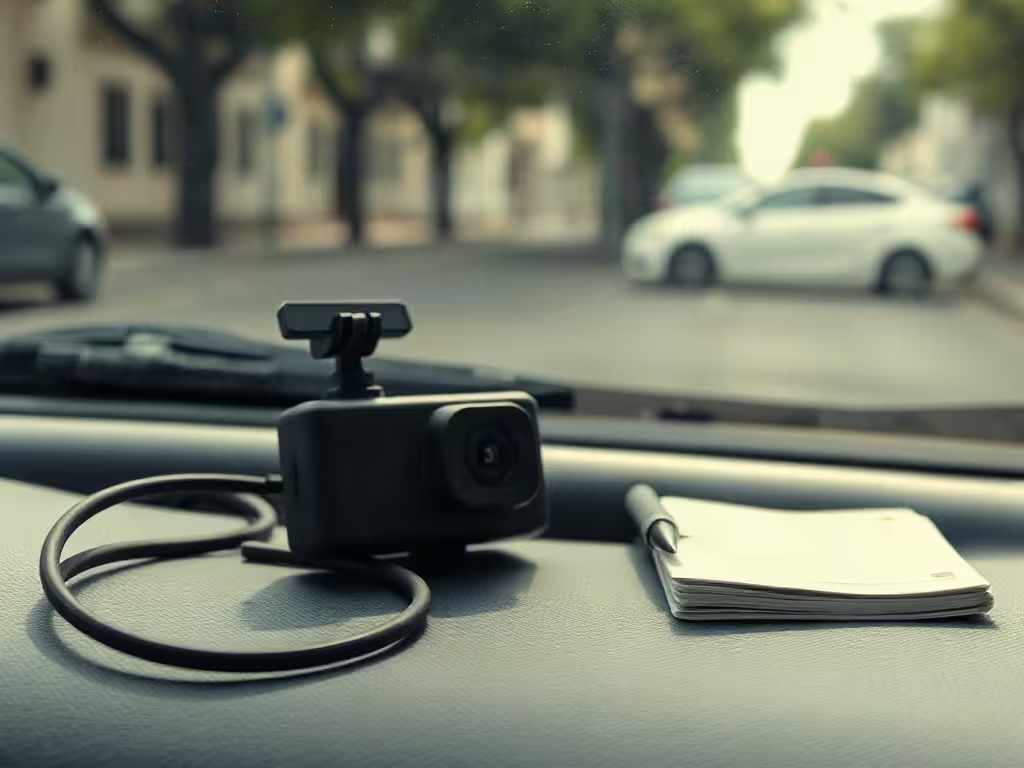
A camera that captures sound runs into a separate statute. Louisiana’s consent rule depends on whether the conversation is protected in the first place, and that question is fact-specific.
One participant or another party can provide prior consent
R.S. 15:1303 makes it lawful for a person not acting under color of law to intercept a wire, electronic, or oral communication when that person is a party to the communication, or when one party has given prior consent. That is the one-party consent rule in practice. The permission carries an exception: the recording cannot be made to commit a criminal or tortious act, or another injurious act.
A justified expectation of privacy depends on the circumstances
R.S. 15:1302 defines an oral communication as an utterance by a person who shows an expectation that the communication is not being intercepted, under circumstances that justify that expectation. A shouted remark on a sidewalk and a quiet exchange between two people inside a closed car do not present the same facts.
The Fifth Circuit applied that idea in Edwards v. State Farm Insurance Co. (1987), a case about a phone call made from a car. The court found no objectively reasonable expectation of privacy in that setting and treated the communication as outside Louisiana’s privacy protection. That ruling rests on its facts, and it does not make every conversation inside or near a vehicle public.
Unlawful interception or disclosure can create criminal and civil exposure
R.S. 15:1303 sets a criminal penalty of a fine of not more than $10,000 and imprisonment of not less than two years nor more than ten years at hard labor. On the civil side, R.S. 15:1312 gives the person whose communication was intercepted, disclosed, or used a cause of action for actual damages of at least $100 a day or $1,000, whichever is greater, plus attorney fees, costs, and punitive damages. Good-faith reliance on a court order is a complete defense.
The DashOne Pro merchant page is the place to confirm what the current package includes and what the seller says about recording features. Review the live price, shipping, and return terms there before you buy: DashOne Pro.
Dash-cam footage can qualify as evidence when it is authenticated and relevant

Footage does not enter a case because it exists. A court first asks whether the recording is what you say it is, then whether it bears on a disputed fact, and finally whether other concerns outweigh its value.
Authentication must show that the recording is what its proponent claims
Code of Evidence Article 901 requires evidence sufficient to support a finding that the matter is what its proponent claims. The article lists illustrative methods: a witness with knowledge, distinctive characteristics, or proof that the process producing the result is accurate. A driver who can testify to the camera’s operation and the file’s chain of custody gives a court a cleaner basis than a party who simply hands over a file.
Relevance does not guarantee admission
Article 402 makes all relevant evidence admissible unless the Constitution, the Code of Evidence, or other legislation says otherwise, and it makes irrelevant evidence inadmissible. Article 403 adds the balancing step: a court may exclude relevant footage when its probative value is substantially outweighed by the danger of unfair prejudice, confusion of the issues, or misleading the jury, or by undue delay or waste of time.
Original files and metadata can support authentication
Keep the original file and its metadata, and keep an unedited copy. A trimmed clip or a re-encoded export gives the other side an argument that the recording has been altered. None of this guarantees admissibility. It gives your lawyer the cleanest record to work with.
Police and litigants can obtain footage through different legal processes
Sharing footage with police is voluntary until it is not. The legal process that reaches your camera depends on whether the matter is civil or criminal.
Civil discovery can reach recordings and storage devices
Code of Civil Procedure Article 1461 lets a party serve a request to produce and permit inspection, copying, testing, and sampling of designated documents or electronically stored information, including images, sound recordings, and other data. The request reaches material in the responding party’s possession, custody, or control. If you are a party to a civil suit, your dash-cam file can fall inside that request.
A subpoena can compel specifically described electronic information
Article 1354 lets a subpoena order a person to appear and produce books, papers, documents, tangible things, or electronically stored information in that person’s possession or control, if the subpoena gives a reasonably accurate description. Objections, motions to compel, undue-burden protections, and court modification remain available. A subpoena is not a blank check, but it can reach a memory card.
A criminal search warrant requires probable cause and particularity
Code of Criminal Procedure Article 162 allows a search warrant only on probable cause established to a judge’s satisfaction by an affidavit from a credible person reciting facts. The warrant must particularly describe the person or place to be searched, the things to be seized, and the lawful purpose. When police seek data from your dash-cam storage device by warrant, that warrant must meet these probable-cause and particularity requirements.
Deleting or altering crash footage can trigger evidentiary consequences
If you think a recording could matter to a claim, keep the original file and a separate copy.
Potential litigation can trigger a duty to preserve footage
The federal district court in Wright v. National Interstate Insurance Company (2017) described spoliation as the destruction or significant and meaningful alteration of evidence. It also said a duty to preserve arises when a party knows or should know that certain evidence is relevant to pending or future litigation. The Louisiana Court of Appeal, Fourth Circuit, applied a similar trigger in Danna v. Ritz-Carlton Hotel Company (2021), where the duty began when the defendant had notice of potential litigation.
Intentional destruction can support sanctions or an adverse presumption
Danna recognized a cause of action for intentional spoliation while noting that Louisiana does not recognize one for negligent spoliation. A court may draw an adverse presumption that destroyed evidence would have been unfavorable, though the presumption is optional and limited to the issue the evidence addressed. The Louisiana Supreme Court in Reynolds v. Bordelon (2015) pointed to discovery sanctions, criminal sanctions, preservation contracts, and preservation orders as the available remedies for first-party spoliation.
Routine good-faith data loss receives limited statutory protection
Article 1471 of the Code of Civil Procedure says that, absent exceptional circumstances, a court may not impose sanctions on a person or party for failing to provide electronically stored information lost through the routine, good-faith operation of an electronic information system. That protection is narrow. It covers routine operation, not a deliberate deletion after a collision.
Publishing dash-cam footage online can create separate legal risks
Posting a clip can inform the public and create a new set of claims at the same time. Public visibility reduces some privacy exposure, but it does not erase defamation or false-light risk.
False captions or factual assertions can create defamation risk
Yanong v. Coleman (2021) set out the Louisiana elements: a false and defamatory statement about another person, an unprivileged publication to a third party, fault amounting to negligence or more, and resulting injury. Privileges, the public or private status of the person, truth, and context can change the analysis. A caption that names a driver and asserts a fact you cannot support is the kind of sentence that invites a claim.
Publicly visible conduct usually carries less privacy protection
Stern v. Officer John Doe, City of New Orleans, and WGNO (2001) found no expectation of privacy for a person filmed on a public sidewalk or in a truancy center, and it found no false-light claim where the broadcast contained no false information. That result rested on public visibility and accurate reporting. It does not guarantee that every clip shot from a car is lawful to publish.
Editing that creates a false impression can change the analysis
Stern described false light as publicity that unreasonably places a person before the public in a false position, and it required the portrayal to be objectionable to a reasonable person and to contain falsity or fiction. Mahfouz v. Davenport (2014) added that an invasion-of-privacy claim requires conduct that is both unreasonable and a serious interference with a privacy interest. Cutting a clip to imply a sequence that did not happen moves the analysis toward those claims.
Louisiana commercial vehicle rules require a qualifying insurance discount
Commercial fleets face a different question. A 2025 statute, Act 19 (HB 549), created a discount that took effect January 1, 2026, and it defines the equipment narrowly.
Qualifying equipment must pair a 1080p dash cam with telematics
R.S. 22:1482.2 defines a dashboard camera as a dashboard-mounted video recording device capable of continuous loop recording at a minimum resolution of 1080p, designed to capture footage of the road ahead. The camera must pair with a compatible telematics system. Both systems must meet the commissioner’s minimum technical standards, including compatibility for data verification.
Continuous operation and annual verification preserve eligibility
The statute conditions the discount on installation and operation at policy issuance or renewal, continuous use during the policy term, and proof with annual verification. The equipment and use conditions line up this way:
| Requirement | What the statute requires |
|---|---|
| Camera type | Dashboard-mounted, continuous loop recording, minimum 1080p, captures the road ahead |
| Pairing | Compatible telematics system for data verification |
| Installation | Installed and operational at policy issuance or renewal |
| Standards | Meets the commissioner’s minimum technical standards |
| Use | Remains in continuous use during the policy term |
| Proof | Verified with specified proof and annual verification |
Failure to keep both systems operational can forfeit the discount at renewal.
The mandatory discount applies only to the liability premium
Every authorized Louisiana commercial motor vehicle insurer except a surplus-lines insurer must provide an actuarially justified liability-premium discount for each qualifying commercial vehicle, including fleet operations, on policies issued or renewed on or after January 1, 2026. The mandate does not extend to collision, comprehensive, or other coverage unless the insurer chooses. Regulations may allow actuarially justified insurer exemptions. The statute fixes no flat percentage; the amount depends on loss experience, claims data, or other relevant factors.
DashOne Pro buyers should verify the live offer before purchasing
The merchant page for DashOne Pro presents the current camera offer and package details, as of October 13, 2026. Those details remain merchant claims about the product and the offer. They do not establish that the device meets any Louisiana requirement.
The merchant page provides the current package and terms
Check the current price, shipping, package contents and return terms before you buy.
The camera’s claimed features do not establish Louisiana compliance
A merchant’s description of a camera does not decide whether the mount obstructs your clear view, whether the screen violates R.S. 32:365 while you drive, or whether the audio capture fits R.S. 15:1303. Those questions turn on how you install and use the device in Louisiana. Check the seller’s claims, then apply the statutes to your own vehicle and your own footage.
For the current DashOne Pro package and terms, open the live merchant page and check the price, shipping, and return policy before ordering: DashOne Pro.
Key takeaways
Before you mount anything, sit in the driver’s seat and confirm the camera leaves the windshield and both front side windows clear. If the camera records audio, turn that feature off unless you are a party to the conversation or have one party’s consent. After a crash or a call from an insurer or a lawyer, stop the loop recording, pull the original file, and leave it unedited.
How can you use the recording in court?
Read how courts assess dash cam footage before you prepare a copy for your case.
Louisiana law can change after the November 13, 2026 review date
The Legislature can amend a statute, and a court can read an existing rule differently. If your question involves protected audio, compelled production, publication of a clip, or an active claim, consult a Louisiana civil-rights or evidence attorney before you act.
This post may contain affiliate links. If you click them, I might earn a small commission (it costs you nothing and helps me keep shipping quality articles every day for your reading pleasure).