
Table of Contents
TL;DR
- Maine dash cam laws let a private driver run a camera on public roads, and the installation must leave a clear and full view of the road (Title 29-A, §2082).
- A conversation participant usually falls outside the interception definition in Title 15, §709. A nonparticipant who records a protected conversation does not.
- Footage reaches a courtroom only after authentication under Maine Rule of Evidence 901, and the other side can still argue relevance, completeness, or unfair prejudice.
Maine dash cam laws let a private driver buy and run a camera on public roads. The state can still enforce one limit on that setup: the view through the windshield has to stay clear.
Most of the confusion here comes from mixing two bodies of law. Title 29-A, §2117 restricts automated traffic-surveillance cameras run by the State or a municipality. It says nothing about the unit you mount yourself. Your camera answers to §2082 on obstruction, to the interception statute on audio, and to the privacy sections further down.
If you want the hardware question first, the DashOne Pro offer page lists the package, price, shipping, and return terms. Those details come from the seller.
Check DashOne Pro before deciding
Maine · Title 29-A · Title 15
Maine Dash Cam Compliance Check
Three questions, one verdict. We built this checker around the provisions that decide most Maine dash-cam questions: the windshield rule, the one-party consent rule, and the private-place statutes. Your answers stay in this page and go nowhere.
This checker covers installation, audio, and private-place questions only. It does not settle insurance claims, evidence authentication, or police requests for footage.
maine dash cam laws permit private cameras on public roads
Maine has no statute that bans a camera on a private vehicle’s windshield. Legality turns on the obstruction standard in Title 29-A, §2082, which controls what a driver may place or hang inside the vehicle.
The section bars any object placed or hung in or on a vehicle in a manner that obstructs or interferes with the operator’s view, or that prevents a clear and full view of the road and traffic. A camera that sits outside the sight line clears the rule. One that eats into the view does not, and the statute carves out no exception for a small screen or a short arm.
Section 2082 controls whether the installation blocks the road view
The test follows the driver’s actual view while the vehicle operates. §2082 also covers obstructing material on the front, side, and rear windows, so a rear-facing camera on the back glass and a cradle on the dash share the same language.
A two-minute check settles most doubt. Sit in the driving position, set the mirror, and look through the arc the wipers sweep. Anything cutting into that arc shows up fast. Then check the line to the passenger-side mirror and confirm nothing crosses it.
Section 2117 restricts government enforcement cameras instead
Title 29-A, §2117 opens with a flat prohibition. Except as provided in subsections 1 and 2, the State or a municipality may not use a traffic surveillance camera. The statutory definition builds around devices that automatically record motor-vehicle violations using traffic-control or speed-measurement equipment.
The exceptions in subsections 1 and 2 cover school-bus enforcement and toll collection. None of that reaches a camera that records continuously and enforces nothing. Read §2117 as a ceiling on government surveillance hardware, then read §2082 for your own windshield.
Maine mounting rules require a clear and full road view
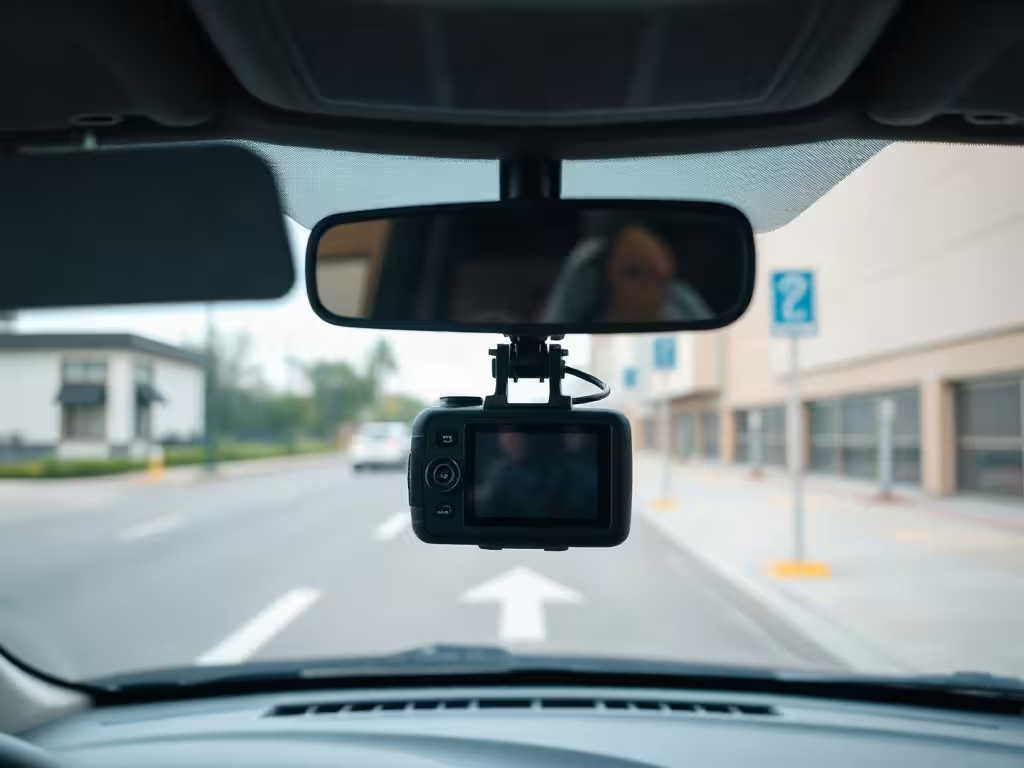
No Maine statute hands a passenger-car driver a marked rectangle on the glass. §2082 sets a performance standard instead, and that standard tracks the sight line rather than the mount type. Suction cups, adhesive plates, mirror clips, and dashboard pads all face one question: does the device interfere with your view or with the road?
Placement does most of the work. A common starting point is the upper center of the windshield, behind the mirror housing and above the wiper sweep, but Maine prescribes no universal mounting zone; what decides it is whether the lens leaves your own view of the road clear. A dashboard pad works when the hood line stays visible and the screen stays dark.
Windshield and dashboard mounts remain subject to the same visibility test
An obstruction violation needs no large object. §2082 names windshield, dashboard, window, and other in-vehicle placement, and an officer applies the statute from the roadside, often after dark when a lit display throws glare across the glass.
Two habits keep an installation defensible. Route the cable along the headliner and down the pillar so it never crosses your field of view, and switch off any always-on display while the car moves.
Commercial-vehicle camera rules allow defined windshield zones
Trucks and buses under the Federal Motor Carrier Safety Regulations work from a different rulebook. 49 CFR §393.60 lets qualifying camera or video safety technology sit on the windshield no more than 8.5 inches (216 mm) below the upper edge of the wiper-swept area and no more than 7 inches (175 mm) above the lower edge, and the device must stay outside the driver’s sight lines.
The definition in 49 CFR §393.5 covers systems and devices that contain cameras, lidar, radar, sensors, or video. The electronic Code of Federal Regulations carried that rule as current on November 12, 2026. The measurements govern regulated commercial vehicles, and a passenger car draws no benefit from them.
Audio Recording Rules allow participants to record with limits
Video and audio part company here. Federal courts treat visual recording of police in public as protected speech under Glik v. Cunniffe (1st Cir. 2011) and Fields v. City of Philadelphia (3d Cir. 2017), and neither case settles what your microphone captures. Audio falls to state wiretap law, and every state writes its own version.
Title 15, §709 defines “intercept” as hearing or recording the contents of a wire or oral communication by any person other than the sender or receiver. A driver in a conversation acts as the sender or the receiver of it, which puts that driver outside the definition. The statute also narrows “oral communications” to speech uttered by a person who exhibits an expectation that the communication is not being intercepted, under circumstances that justify the expectation.
Participant status changes the interception analysis
§710 supplies the criminal half. A person who intentionally or knowingly intercepts a protected communication without prior authority commits the offense, and separate language covers knowingly disclosing or using contents obtained through interception.
Your status follows the conversation rather than the car. A driver speaking with a passenger counts as a participant in that exchange and turns into a bystander to the call coming through the next car’s open window. The statute does not travel with you.
A justified expectation of privacy can protect vehicle conversations
Expectation decides the outcome. A shouted exchange at a fuel pump, an order placed at a drive-through speaker, and a call held on speakerphone in a crowded lot each present different facts, and a court weighs them one case at a time.
For most drivers the live question stays narrower. A microphone picks up everything in range: passengers who never agreed to it, a telehealth call, a child in the back seat. Leave audio off unless the trip justifies it, and tell the people who ride with you when it stays on.
Passenger and rideshare settings raise consent questions this statute does not resolve by itself. Consult a Maine civil-rights attorney before you lean on such a recording in a dispute.
Employer monitoring rules add notice and job-duty conditions
Title 26, §620-A limits audiovisual monitoring of an employee in the employee’s personal vehicle or on the employee’s property as a means of employer surveillance, unless the employer requires the monitoring for the functions of the job. The employer must also give notice before monitoring starts.
Security and safety cameras fall outside the statutory definition, and so do certain devices installed in vehicles the employer owns. A delivery driver with a company-installed camera faces a different analysis than a driver whose employer asks for access to a personal dash cam.
With the audio rules settled, the DashOne Pro package page shows the seller’s current price, shipping, and return terms. Every product detail on that page remains the merchant’s claim.
Match the camera to the recording rules
Review the current package, then confirm mounting and audio rules before recording in your state.
Maine privacy statutes restrict cameras in private places
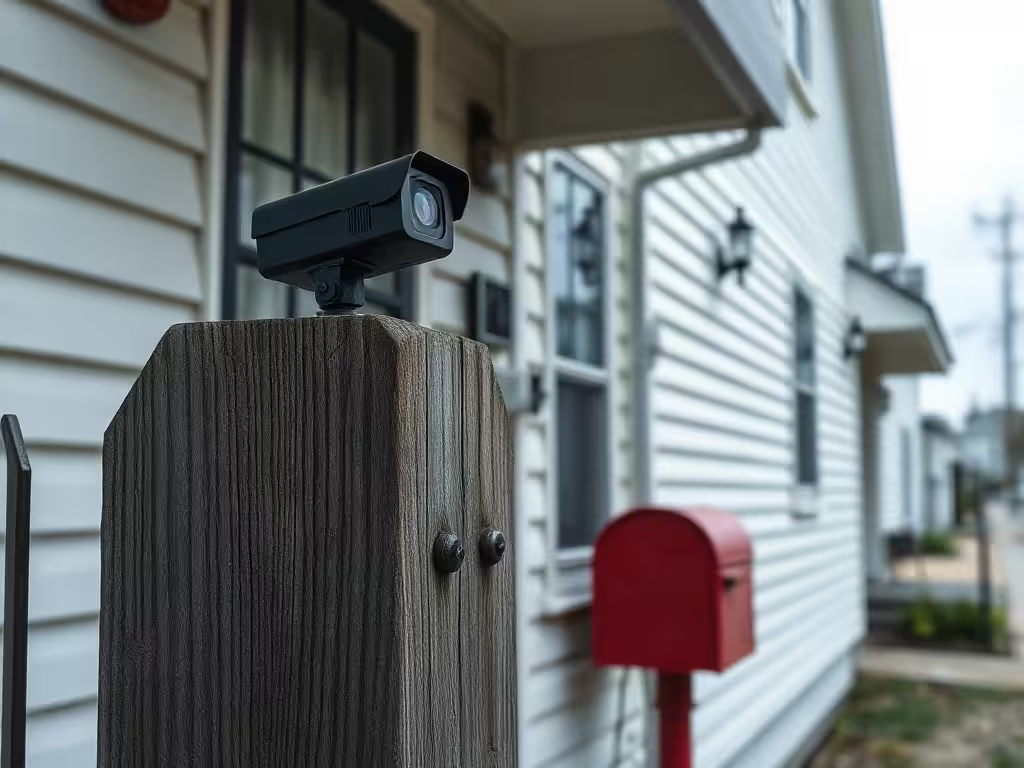
Maine privacy law treats ordinary recording from a public road differently from surveillance of a private place. Title 17-A, §511 targets a different act: installing or using a recording device in a private place without the consent of the people entitled to privacy there.
The statute defines a private place as one where a person may reasonably expect to be safe from surveillance. That line matters for parked cars and for where the lens points. A dash cam that keeps rolling inside a garage, into a fenced yard, or through an open door sits closer to §511 than a camera aimed down the interstate.
Private places carry a reasonable expectation against surveillance
Consent separates a lawful recording from a violation. Ask before you point a lens into a space someone controls, and treat a closed door as the end of what the road made visible.
Unattended cameras on another owner’s land require legal authority
Title 33, §2001 governs equipment left running without you. A camera may not sit unattended outside on another person’s private property without written landowner consent or a warrant, and consented or warrant-authorized equipment must carry the labeling the statute specifies. The Legislature amended that section in 2025 (PL 2025, chapter 267, §8).
A dash cam parked on someone else’s land and left recording while you sleep matches this fact pattern. The property owner’s permission, in writing, or a warrant, decides the question.
The parked-vehicle exception remains limited to theft or vandalism deterrence
One exception covers a camera used to deter theft or vandalism of a motor vehicle while that vehicle is temporarily parked (PL 2013, chapter 382). The language stays narrow. It addresses deterrence of theft or vandalism against a parked car and grants nothing beyond that, and other privacy statutes keep their force.
Section 511-A narrowly restricts certain nonconsensual intimate images
Title 17-A, §511-A, in the version amended by PL 2025, chapter 400, punishes intentional or knowing dissemination of an image of another person in a state of nudity or engaged in a sexual act. The offense requires an identifiable person, no consent to the dissemination, intent to harass, torment, or threaten, and no public or journalistic purpose.
That statute does not bar publishing ordinary crash footage. It targets a defined category of intimate images, and each element must line up before it reaches a case.
Maine courts assess whether dash-cam footage qualifies as evidence
A file on a memory card proves nothing until a court accepts it. Maine Rule of Evidence 901 puts the burden on the proponent, who must produce evidence sufficient to support a finding that the item is what the proponent claims it is. Witness knowledge, distinctive characteristics, or proof that the recording system produces accurate results can carry that burden.
Authentication opens the door. It leaves every other objection standing.
Rule 901 requires proof that the recording is what its proponent claims
Build the record before anyone asks for it. Export the native file, keep the original card, log the camera’s clock offset against a known time signal, and write down who handled the file and when.
An incomplete or misleading clip can face exclusion
State v. Hussein, 2019 ME 74 (May 21, 2019), shows the second gate. The Law Court applied Rule 403 and Rule 106 to video and noted that a court may exclude evidence when its probative value is substantially outweighed by a danger of unfair prejudice or of misleading the jury. An incomplete clip feeds that analysis.
Trimming a recording to the impact and cutting the ten seconds before it invites exactly that objection.
Authentication does not resolve every evidentiary objection
An amendment to Rule 902, approved October 8, 2026 and effective November 1, 2026, lets certain electronic records self-authenticate. The rule leaves hearsay, relevance, and, in criminal cases, the confrontation right untouched.
For a crash claim, hand over a copy and keep the only original file. Amica’s published guidance tells policyholders to notify the insurer that video exists and to ask how to submit it. An insurer then assesses the whole record it receives, and a preserved original does more work there than a clipped highlight.
Police can receive footage voluntarily or seek legal process
An officer who asks for your card makes a request, not a demand. Title 16, §644 allows a government entity to obtain qualifying electronic-device content information without a warrant when the owner or user gives informed, affirmative consent, subject to federal limits and the statute’s public-information and emergency exceptions.
Consent is the fast path, and it stays optional. Decline, and the agency turns to legal process instead.
Owner consent can authorize voluntary disclosure
Informed consent means you know what leaves your hands. Ask which files the officer wants, whether the agency copies the whole card or one clip, and how you get a receipt. Copy the card first, then hand over the copy.
Warrants and subpoenas can govern compelled access
A valid search warrant covers provider-held content under §642. Maine Rule of Unified Criminal Procedure 17A lets a criminal subpoena demand documentary evidence that includes electronically stored information, photographs, and videos. Subpoenas can be challenged or modified, and protected material may need prior judicial review before anyone sees it.
State-held video can become criminal discovery material
State v. Reed-Hansen, 2019 ME 58 (revised July 11, 2019), covers the other direction. Once the State holds a police dash cam in a criminal case, Rule 16(c) can require disclosure of video material relevant to preparing the defense, and a late handover can draw a judicial sanction.
That decision addresses State-controlled video after a clearly framed discovery request. It gives you no mechanism to force a private driver or a camera vendor to preserve a file before deletion, so preservation stays your job.
The DashOne Pro offer shows its current terms on the merchant page
Everything in this section comes from the seller, and the seller can revise it at any time. As of October 13, 2026, the DashOne Pro merchant page presented the camera offer together with the package details, and it listed the price, shipping terms, and return policy then in effect.
Read that page for what the package contains and what the return window covers, then confirm the terms before you pay. The live offer holds the current numbers.
Review the current DashOne Pro package and terms.
Before you buy
Verify the package before you rely on it
- Confirm what the current package includes
- Check shipping and return terms
- Test storage and footage retrieval after delivery
maine dash cam laws allow recording but limit mounting and audio
Choose a mount that leaves the wiper sweep and the mirror sight lines clear, then sit in the driver’s seat and verify it before the car moves. Switch audio off unless a specific trip needs it, and warn your passengers when it stays on.
If a crash or a police request makes the file matter, copy the original export to a second drive the same day, record the camera clock against your phone, and keep the card. Decline a verbal request for the card when you want a judge in the loop, and let the agency serve a warrant or subpoena.
Disputes over a protected conversation, a recording made on private property, or a compelled handover of footage belong with a Maine civil-rights attorney who can test the statute against your facts.
How can you use the recording in court?
Read how courts assess dash cam footage before you prepare a copy for your case.
This post may contain affiliate links. If you click them, I might earn a small commission (it costs you nothing and helps me keep shipping quality articles every day for your reading pleasure).