
Sommaire
TL;DR
- Vermont dash cam laws do not expressly ban dash cams as a device category. They regulate windshield obstruction, device handling, recording, and evidence.
- For an ordinary vehicle, 23 V.S.A. § 1125 identifies two limited windshield spaces: the lower right-hand corner and the upper left-hand corner.
- Audio, passenger privacy, and recordings aimed into homes require separate legal analysis.
- Courts may admit authenticated footage, but legality, relevance, privilege, and discovery can still limit its use.
- We reviewed the cited law on October 18, 2026.
You hold the camera against the windshield and test two positions. One captures the road cleanly but sits near the center glass. The other stays out of your sightline but may miss part of the lane.
Under vermont dash cam laws, that choice matters. Vermont does not expressly prohibit dash cams as a device category, but 23 V.S.A. § 1125 restricts items placed on or behind specified vehicle windows. Separate rules may govern handling, audio capture, private spaces, and later use of the recording.
We reviewed the current authorities on October 18, 2026. Several questions remain unanswered because Vermont’s statutes do not expressly classify dashboard-mounted, rear-window-mounted, or factory-integrated dash cams.
Check DashOne Pro before deciding
TL;DR
Legality and the limits of the available authority
Vermont law does not expressly declare that every dash cam installation is lawful. Section 1125 instead controls what may cover or hang behind the windshield, vent windows, and the side windows immediately beside the driver.
A lawful setup therefore depends on placement and use. Audio and privacy rules then govern what the device records.
Permitted windshield spaces
For an ordinary vehicle, § 1125 identifies two relevant spaces:
- A space no larger than 4 inches high by 12 inches long in the lower right-hand corner.
- A space no larger than 2 inches high by 2.5 inches long in the upper left-hand corner.
Those measurements describe statutory exceptions for material or items. The statute does not label either space as a camera-specific mounting zone.
Audio, privacy, and evidence cautions
Federal law supplies the reported baseline for protected oral communications, while Vermont privacy statutes address specified intimate recording, home surveillance, and hidden devices placed on private property.
Footage also needs authentication before a court can admit it. Authentication alone does not settle relevance, hearsay, privilege, prejudice, discovery, or whether the recording was lawfully acquired.
vermont dash cam laws: Are Dash Cams Legal While Driving?
Section 1125 does not expressly ban dash cams as a device category. It regulates window obstruction rather than camera ownership, so compliance with that section turns on mounting. A driver may also face § 1095b if the camera qualifies as a portable electronic device and the driver handles it while operating the vehicle.
What Vermont law expressly regulates
Section 1125 bars operating a vehicle with material or items painted, adhered, or hung on or behind specified transparent windows, subject to listed exceptions. For hanging objects, the prohibition applies when the item materially obstructs the driver’s view.
The text names rearview mirrors and certain electronic toll transponders. It does not name dash cams.
What the statute does not expressly decide
The available authority does not state that mere possession of a dash cam is lawful independently of mounting and use. Nor does it create a blanket camera exception for the center of the windshield or the area behind the rearview mirror.
That gap calls for a conservative installation. Keep the camera within a listed space, preserve your view, and avoid stretching an exception written for another device.
First CTA surface after the legal answer
DashOne Pro’s merchant page contains the seller’s current offer information. Audit Faction has not independently tested the camera, and the editor has not supplied the approved /v/ slug, so we cannot insert the required affiliate link without inventing a destination.
Where Vermont Law Allows a Windshield-Mounted Dash Cam
Lower right-hand windshield placement
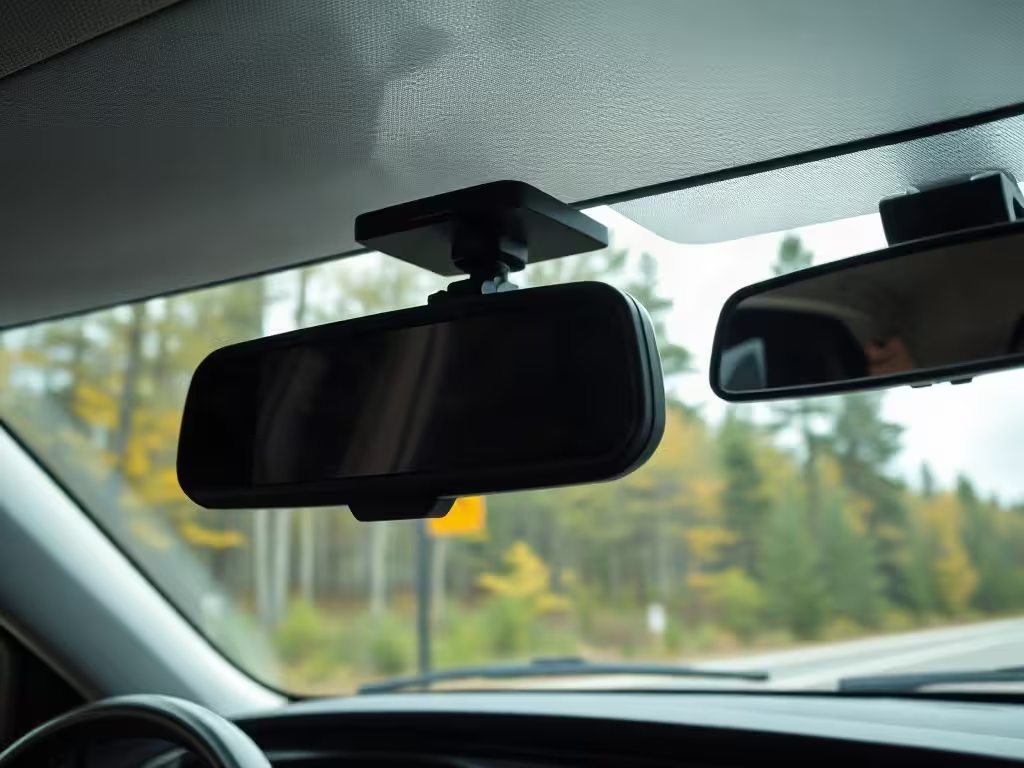
Section 1125 permits material or items in a space no larger than 4 inches high and 12 inches long in the lower right-hand corner of an ordinary vehicle’s windshield.
This exception measures the entire permitted space, not merely the camera lens. A mount, adhesive pad, and camera body that extend beyond it may fall outside the text.
Upper left-hand windshield placement
The second relevant space measures no more than 2 inches high and 2.5 inches long in the upper left-hand corner.
That opening is much smaller. Measure the installed assembly before driving rather than relying on the dimensions printed for the camera body alone.
Why mounting outside an exception creates an obstruction issue
Section 1125 generally reaches items painted or adhered on or over the covered windows. It also reaches items hung behind them when they materially obstruct the driver’s view.
The statute does not create a general windshield exception merely because a device records the road. A center-mounted camera may therefore raise a § 1125 issue even if the driver considers the view acceptable.
Dashboard, Rear-Window, and Factory Camera Mounts in Vermont
Rear-window obstruction and the two-mirror condition
Section 1125 permits obstruction of rear side windows and the back window only when secure mirrors on both sides give the driver a clear view of the roadway behind and along both sides of the vehicle.
The statute does not decide whether every small rear camera counts as an obstruction. Its two-mirror condition still matters when the installation blocks any part of the rear glazing.
Secure mounting if the camera is a portable electronic device
If a dash cam meets § 1095b’s definition of a portable electronic device, “securely mounted” means that it sits in an accessory designed for hands-free use, does not violate § 1125, and either follows the manufacturer’s specifications or remains completely stationary during typical driving.
That definition ties device stability to lawful windshield placement. A firm suction cup does not cure a mount that conflicts with § 1125.
No camera-specific rule for dashboard or factory-integrated systems
The available statutes do not expressly classify dashboard mounts, rear-window mounts, or factory-integrated cameras. Section 1095b separately exempts use of a manufacturer-installed or securely mounted GPS or navigation system, but that wording addresses navigation equipment.
We would not extend that exception to a camera without supporting authority.
Using or Viewing a Dash Cam While Driving in Vermont
When the portable-device rule may apply
23 V.S.A. § 1095b bars non-hands-free use of a qualifying portable electronic device while operating a moving vehicle in places open to vehicle traffic. On a public highway, the rule also reaches a vehicle temporarily stopped for traffic, a signal, or another delay.
The statute’s application depends on whether the dash cam fits its device definition and whether the driver’s conduct counts as “use.” Set the camera before moving.
Hands-free use and compliant activation
Section 1095b exempts hands-free use. It also covers activation or deactivation when the device is securely mounted, or when the driver uses an internal vehicle or device feature without holding the device.
A driver may pull safely and lawfully to the side of or off the highway before handling the equipment. Ordinary violations carry a civil penalty of $100 to $200 for a first violation and $250 to $500 for a second or subsequent violation within two years, plus license points.
Why § 1095 does not clearly classify an ordinary road view as entertainment
Section 1095 prohibits operating a moving vehicle on a Vermont highway with a visible screen transmitting a moving entertainment picture.
The text does not expressly classify an ordinary live or recorded road view as entertainment. That narrow wording should not be converted into a broader rule governing every dash cam screen.
Audio Recording Rules for Vermont Dash Cams
Federal participant-consent baseline
The Reporters Committee for Freedom of the Press guide, last updated in June 2020, reports no Vermont statute that generally governs ordinary in-person, telephone, or electronic conversation recording.
The guide identifies 18 U.S.C. § 2511 as the federal baseline: a participant, or someone acting with one participant’s consent, may generally record unless the recording serves a criminal or tortious purpose. Calling Vermont simply a “one-party consent state” strips away those conditions.
Reasonable expectations against interception
The federal rule protects an oral communication when the speaker exhibits an expectation against interception and the circumstances justify that expectation.
Road noise or words audible in public may not receive the same treatment as a quiet conversation inside a closed vehicle. The sources do not decide every in-car setting, so the surrounding facts matter.
Passenger, rideshare, and employee questions the available sources do not resolve
The reviewed sources do not establish a general notice method or a universal duty to disable audio for passengers. They also do not resolve routine rideshare recording, workplace monitoring, or a conversation that crosses state lines.
A protected communication may carry additional consequences. In Vermont v. Gagne (2016), the Vermont Supreme Court addressed the secret video and audio recording of an attorney consultation after a DUI arrest, found a privacy violation in that specialized setting, and declined to dismiss the prosecution because the defendant did not establish the required prejudice.
Consult a civil-rights attorney in your state before recording passengers, employees, rideshare users, interstate conversations, or privileged communications.
Second CTA surface after this section
The DashOne Pro merchant page is the place to verify the seller’s current information. We cannot say that the camera has an audio-disable control, or describe any other unverified characteristic, because the supplied facts do not establish one.
The approved cloaked /v/ URL also remains unavailable pending an editor-supplied slug.
Match the camera to the recording rules
Review the current package, then confirm mounting and audio rules before recording in your state.
Recording People, Homes, and Activity Outside the Vehicle
Ordinary public activity
The Vermont Attorney General stated in guidance published June 11, 2025, that recording people in public without consent is generally lawful and that recording government officials’ public actions may receive free-speech protection.
That general guidance does not erase privacy laws. The place, camera position, subject matter, and use of the recording can change the analysis.
Hidden surveillance devices placed on private property
13 V.S.A. § 3835 prohibits placing a camera or other surveillance device on privately owned real property with the intent to conduct surveillance unless the person first obtains the owner’s written consent.
The statute defines a surveillance device as one hidden or obscured from plain view that observes private property or activity in a way that invades a reasonable expectation of privacy. A dash cam passing on a public road does not automatically fit that definition merely because it captures a house.
Voyeurism and home-or-residence privacy after July 1, 2026
The version of 13 V.S.A. § 2605 effective July 1, 2026, prohibits intentional recording of another person’s intimate areas or sexual conduct without the required knowledge and consent when the statutory privacy conditions exist.
It also prohibits intentional surveillance or recording, without knowledge and consent, of a person who holds a reasonable expectation of privacy within a home or residence. The statute reaches conduct far narrower than ordinary roadway recording, but an in-car camera can still implicate it if intentionally aimed or used in the prohibited manner.
The narrow limits of State v. Costin
In State v. Costin (1998), the Vermont Supreme Court held that a police camera capturing only what an officer could see from the same lawful position with the naked eye did not trigger Article 11 on those facts. The camera used a narrow field and did not record sound.
The court also recognized that video surveillance of a protected area may trigger Article 11. The opinion did not decide private dash-cam recording of passengers or in-car conversations.
Penalties for Unlawful Dash Cam Use in Vermont
Traffic penalties for prohibited device use
If § 1095b applies, the ordinary civil penalty runs from $100 to $200 for a first violation and from $250 to $500 for a second or subsequent violation within two years. The statute also assigns license points.
Higher penalties and additional points apply in designated school or work zones under stated conditions. Section 1125 may support an obstruction citation, but the supplied authority does not identify a specific § 1125 fine, so we do not assign one.
Private-property surveillance civil penalties
A violation of § 3835 carries a civil penalty of no more than $50 for a first violation and no more than $250 for a second or subsequent violation.
Those penalties attach to the statute’s defined conduct: placing a hidden or obscured, privacy-invasive surveillance device on privately owned real property without prior written consent.
Voyeurism crimes and the limited private cause of action
For an adult victim, a first violation of § 2605(b), (c), or (d) can carry imprisonment of no more than two years, a fine of no more than $1,000, or both. A second or later offense involving an adult victim can carry no more than three years, a fine of no more than $5,000, or both.
The statute also creates a private cause of action when a defendant intentionally displays or discloses to a third party an image recorded in violation of subsection (c), and that disclosure causes the plaintiff harm. It does not create a general damages claim for every unwanted dash-cam image.
Consequences the available sources do not establish
The available materials do not identify a camera-specific penalty for an improper dashboard mount, factory system, or ordinary passenger recording.
They also do not support a universal rule requiring notice, disabling audio, or obtaining every occupant’s consent. Those questions turn on facts the reviewed authorities have not resolved.
Can Dash Cam Footage Be Used as Evidence in Vermont?
Authentication under V.R.E. 901
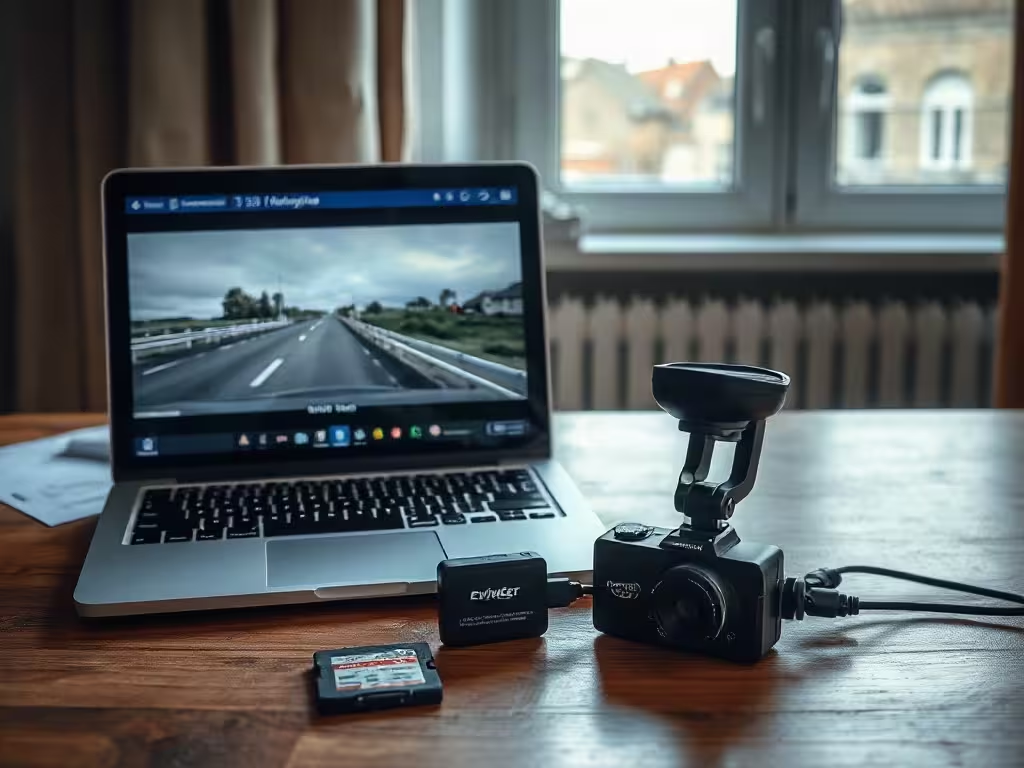
V.R.E. 901 requires enough evidence to support a finding that the video is what its proponent claims. A knowledgeable witness may identify it, or the proponent may describe the recording system and show that the process produces an accurate result.
Preserve the original file, metadata, and device settings. Document when you copied the footage and avoid editing the original, because those steps can help establish chain of custody and accuracy.
Authentication opens only one gate. Relevance, hearsay, prejudice, privilege, acquisition, and discovery remain separate questions.
Voluntary delivery to police and use in an insurance claim
In In re Morrell Shafritz, Docket No. 23-CV-01915, decided April 14, 2026, a Vermont Superior Court record described a person who controlled a home camera system, supplied it to police, and watched the video with officers. The decision illustrates voluntary delivery, not a general duty to surrender private dash-cam files.
The Vermont Department of Financial Regulation stated on April 1, 2026, that insurers commonly use photographs and video during virtual adjustment of auto and homeowner claims. That advisory does not require an insurer to accept dash-cam footage or require a driver to produce it in every claim.
Discovery sanctions in State v. Timothy Davis
In State v. Timothy Davis (2024), prosecutors supplied the defense with an officer’s dashboard-camera video after additional requests. The trial court barred the State from using the material because of the discovery violation.
The Vermont Supreme Court upheld that sanction. The defendant remained free to offer the evidence, which shows how a procedural defect can restrict one party without making the recording unusable for everyone.
Why unlawful recording does not trigger one automatic exclusion rule
Courts do not apply one automatic result to every improperly created recording. The forum, recorder, violated law, remedy, prejudice, and method of obtaining the evidence can each matter.
Vermont v. Gagne supplies one example. Although the court found that secretly recording the protected attorney consultation violated privacy rights in that setting, it did not dismiss the charges because the record lacked the required prejudice.
Government misconduct, suppression, and the limits of State v. Geraw and State v. Birchard
In State v. Geraw (2002), the Vermont Supreme Court ordered suppression after police secretly recorded an interview inside the defendant’s home without judicial authorization. The court expressly confined the holding to the facts before it, where privacy inside the home stood at its highest.
State v. Birchard (2010) addressed evidence following unlawful police conduct. It recognized inevitable discovery and independent source as potential routes around exclusion, but those doctrines concern constitutional violations attributed to the government. They do not settle the treatment of every privately recorded dash-cam file in a criminal, civil, or insurance matter.
DashOne Pro Offer: What to Verify Before Buying
Audit Faction has not independently tested DashOne Pro. Every product detail must remain a claim from the merchant.
The article brief requires an approved /v/ cloaked affiliate link, but no slug was supplied. We have therefore omitted the link instead of inventing one.
Check the current merchant price and shipping terms
Use the merchant’s live page to check the current price and shipping terms. Those terms can change, and the verified editor notes do not supply figures suitable for publication here.
Confirm package contents and return terms
Read the merchant page for the current package contents and return terms before placing an order. Treat those statements as seller representations rather than findings from an Audit Faction test.
Do not infer legal mounting compliance from the product page
A merchant’s mounting instructions do not establish compliance with Vermont law. Measure the complete installed assembly against § 1125 and keep it from obstructing your view.
Before you buy
Verify the package before you rely on it
- Confirm what the current package includes
- Check shipping and return terms
- Test storage and footage retrieval after delivery
Run this five-point check before you drive:
Run this five-point check before you drive:
- Measure the entire mount against the applicable § 1125 windshield space.
- Secure the device and finish setup before entering traffic.
- Analyze audio separately from video, especially with passengers or protected conversations.
- Keep the lens away from intimate activity and privacy-protected areas in homes or residences.
- Preserve the original file, metadata, and an untouched copy after an incident.
The statutes leave passenger notice, workplace monitoring, interstate audio, and several non-windshield installations unresolved. Consult a Vermont civil-rights attorney about those fact-specific questions.
Related reading on Audit Faction
No internal links appear here because the supplied materials do not identify verified Audit Faction article titles or URLs. Suitable verified targets would cover civilian recording, preserving video evidence, traffic-stop rights, body-camera access, or dash-cam evidence.
Affiliate disclosure placement
This post may contain affiliate links. If you click them, I might earn a small commission (it costs you nothing and helps me keep shipping quality articles every day for your reading pleasure).