
Table of Contents
TL;DR
- VIOFO A119 V3 records to a microSD card and has a 2-inch screen without Wi-Fi. Choose it for a simple local workflow; buy the card and optional HK3 parking kit separately.
- VIOFO A229 Pro gives you 4K front and 2K rear recording while Wi-Fi stays off. Add a memory card and the optional HK4 kit for parking mode.
- Garmin Dash Cam Mini 3 keeps front-only recording compact and saves clips to a memory card. The card costs extra; Vault and remote connected features use a separate paid plan.
Owning a dash cam without subscription means you can capture and retrieve ordinary driving footage without maintaining a paid service. It does not mean every cloud or cellular feature comes with the camera.
The distinction depends on the documented recording path. A camera may save video to a microSD card or internal storage while charging separately for remote viewing, extended cloud retention, live alerts, or LTE connectivity.
Which dash cam without subscription records locally in 2026?
Choose the A119 V3 for a screen and local card access, the A229 Pro for front-and-rear coverage, or the Mini 3 for a compact front camera with phone access.
| Model or line | Core recording path | What may cost extra | Strength of the evidence |
|---|---|---|---|
| VIOFO A119 V3 | Optional microSD card up to 256GB | HK3 hardwire kit for parking mode | Local-only workflow inferred from official specifications |
| VIOFO A229 Pro | Optional microSD card | Card, HK4 hardwire kit, interior camera, or other accessories | VIOFO states that recording continues with Wi-Fi off |
| Garmin Dash Cam Mini 3 | Compatible microSD card | Vault, remote Live View, and parking power hardware | Garmin explicitly separates saved local video from paid Vault features |
| Nexar beam2 Mini, beam2, and Nexar One | Internal local storage with app access over local Wi-Fi | $9.99 monthly LTE plan under the cited U.S. offer | Nexar explicitly states that core recording works without a paid subscription |
| Nextbase 122 renewed | Local recording with a two-inch screen | No connected service appears in the cited specifications | Local-only workflow inferred from official specifications; stock and condition require a live check |
| Redtiger F17 Elite | Included microSD card in the cited bundle | Hardware or services not established by the cited listing | Local storage and direct transfer are documented, but the no-subscription condition is not stated as explicitly |
VIOFO models keep recording locally when Wi-Fi stays off
VIOFO states that its cameras continue recording whenever they receive power, regardless of Wi-Fi status. Its app and Wi-Fi connection remain optional for that local workflow.
The VIOFO A119 V3 specifications list a two-inch display, no Wi-Fi, no Bluetooth, loop recording, and microSD support up to 256GB. You can record to the card and review footage on the camera without connecting to a cloud service.
The A229 Pro also records locally. Buyers supply a compatible card and purchase the HK4 separately if they want its documented parking modes.
Garmin Mini 3 saves footage locally while Vault remains optional
Garmin Dash Cam Mini 3 records to a compatible memory card and protects saved clips without Vault. Garmin states that compatible cameras can save video regardless of subscription, while paid Vault plans extend online retention.
Remote Live View, remote Wi-Fi functions, and automatic Vault storage require a paid plan. Garmin dash cams lack internal file storage, so ordinary recording still requires a compatible memory card.
Nexar connected cameras keep core recording free but reserve LTE services
Nexar explains which local and paid features remain available for beam2 Mini, beam2, and Nexar One. Core recording does not require a paid subscription. The free workflow uses local Wi-Fi to connect the camera and phone.
The cited U.S. LTE Protection Plan cost $9.99 per month when reviewed in October 2026. It added remote streaming, emergency alerts, GPS tracking, connected parking features, and cloud storage, while local recording remained available without that plan.
Nextbase and Redtiger document local workflows with narrower proof
The renewed Nextbase 122 listing describes local recording, a two-inch screen, and no Wi-Fi, Bluetooth, or GPS. That combination supports a local-only workflow, but renewed availability and condition can change.
Redtiger documents an F17 Elite package with a memory card, local Wi-Fi, USB mass-storage transfer, and card-reader access. Those facts establish local storage and retrieval. They do not support the broader claim that Redtiger guarantees subscription-free use across the product’s life.
DashOne and CamHandy do not meet the recommendation threshold
The DashOne seller page does not document an app, Wi-Fi, LTE, cloud storage, or a subscription. That silence does not establish a contractual no-fee workflow, so DashOne does not qualify for a recommendation based on this condition.
CamHandy also falls short of a practical buying recommendation. Its checked store showed a $79.99 price and “Out of Stock,” and the U.S. checkout path was not verified.
Local storage determines how long subscription-free footage remains available
Local recording gives you physical or nearby access to video, but it does not preserve every drive indefinitely. Capacity, resolution, channel count, and loop-recording rules determine when older footage disappears.
Loop recording replaces footage that has not been saved
Garmin overwrites unsaved video after its microSD card fills. Saved clips remain protected from ordinary loop recording.
Nexar connected cameras follow a similar cycle in internal storage. New drives replace older recordings when that storage fills.
Protected clips remain available until storage or handling rules intervene
The A229 Pro locks impact-triggered parking files when used with its separately sold HK4 kit. That protection blocks routine overwriting, but you should still export evidence promptly because finite storage, card failure, formatting, or loss of the camera can remove the only copy.
Garmin warns that a memory card holds limited footage and directs users to export saved recordings to a phone. A protected clip still needs a separate copy if it may support an insurance claim, complaint, or court filing.
Card, internal, and SSD storage support different retention needs
The A119 V3 supports microSD cards up to 256GB. Redtiger lists external microSD support up to 512GB for the ViewClear 70, built-in 128GB or 256GB storage for the F77, and an included 128GB card in the cited F17 Elite package.
VIOFO’s current A229 Pro product page lists cards up to 512GB, while a separate manual-search result states 256GB and favors 128GB. Check the manual revision and firmware documentation for the exact unit before buying a card.
VIOFO says the A329S can write to a compatible external SSD up to 4TB. That option targets long trips where ordinary loop recording might replace earlier footage, though actual retention changes with capacity, channel count, bitrate, and driving time.
Direct transfers keep local dash cam footage under your control
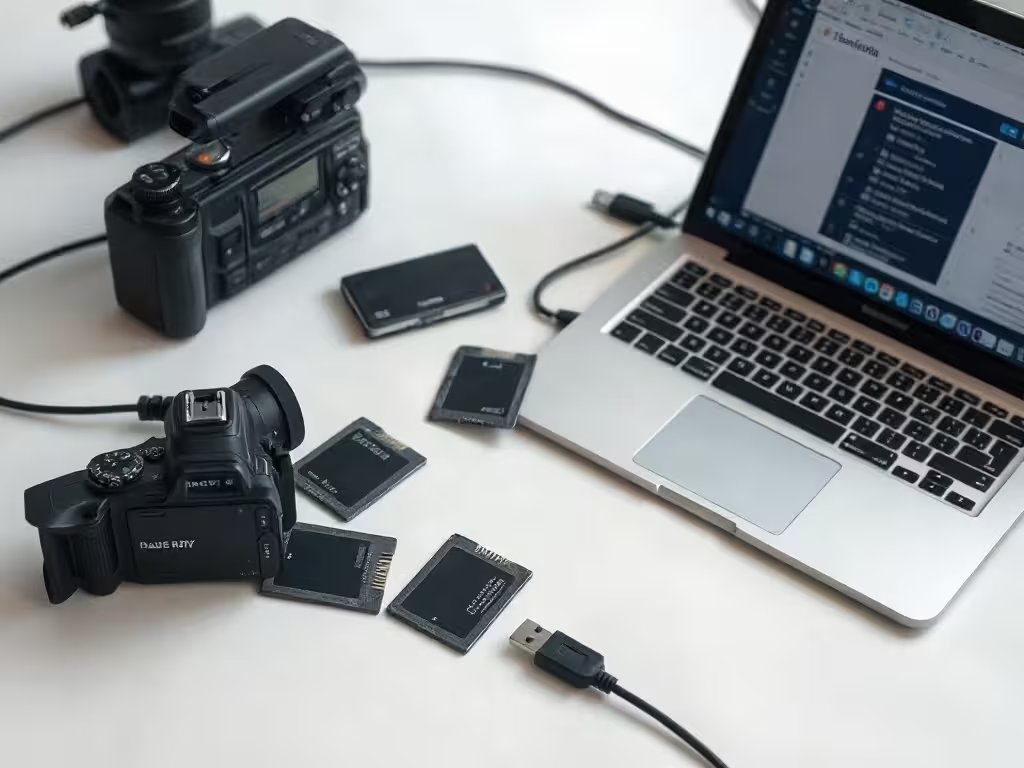
A local camera should give you a documented route from the recorder to another device. Depending on the model, that route may use camera Wi-Fi, a removable card, or a USB data connection.
Wi-Fi transfers send selected files to a phone
Garmin Drive connects to the Mini 3 over Wi-Fi and transfers selected recordings to a phone. Nexar’s app also downloads full-quality local video while the phone remains connected to the camera’s Wi-Fi.
Redtiger’s F17 Elite broadcasts a local Wi-Fi network for its mobile app. That network handles a direct camera-to-phone connection; it does not supply internet or cloud access by itself.
Cards and USB connections move footage to a computer
Garmin directs Mini 3 users to check the memory card with a computer when a clip does not appear in the app. Older Nexar Pro, Beam, NEXC1, and NEXS1 models also support removable-card access through a reader.
Redtiger documents two computer-transfer paths for the F17 Elite:
- Connect a data-capable USB cable and select mass-storage mode.
- Remove the card and insert it into a reader.
VIOFO’s display-equipped models support on-device review, and their removable cards provide another route to a computer.
Saved copies prevent routine loop recording from erasing needed clips
Export the full file before routine driving fills the card or internal storage. Preserve the original file when practical, and work from a copy if you need to trim or compress video for sharing.
A downloaded clip also protects against loss of the camera, card corruption, accidental formatting, or later overwriting. Confirm that the exported file opens and plays before erasing anything from the recorder.
Camera layouts determine which evidence each model can capture
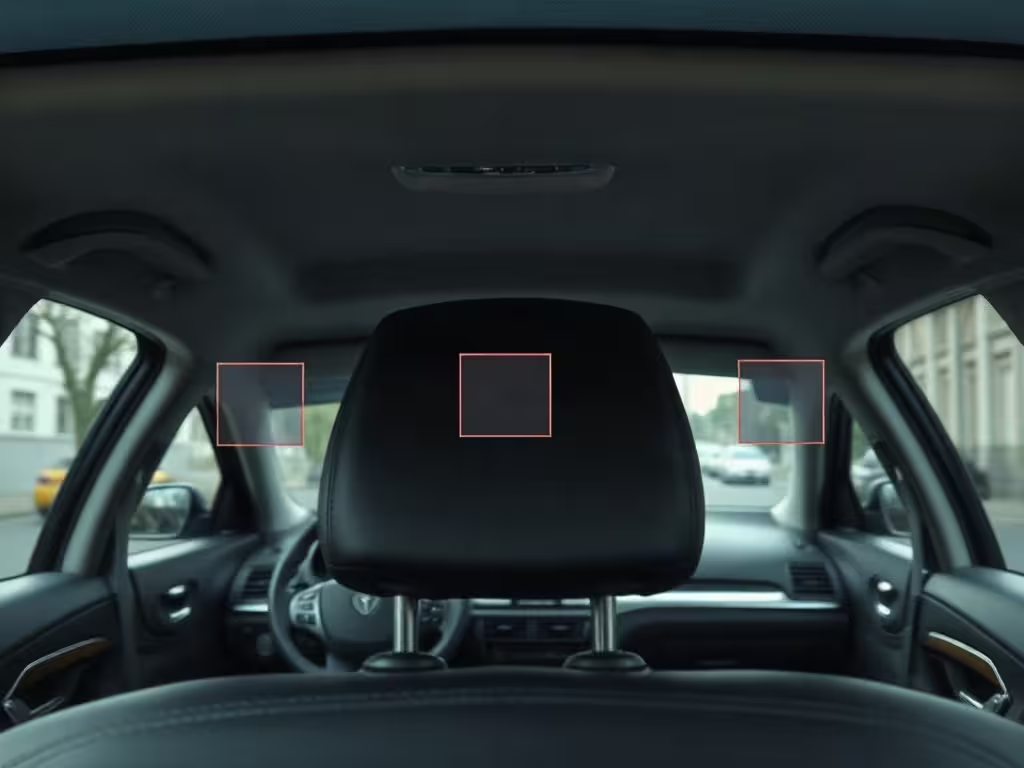
Channel layout matters more than a headline resolution alone. A front camera records the road ahead, while rear and cabin channels capture different events that the front lens cannot see.
Garmin Mini 3 keeps front-only recording compact
Garmin describes the Mini 3 as an ultracompact front-only camera. It records 1080p video across a 140-degree field of view and uses a built-in polarizer.
That format suits drivers who want a small windshield-mounted camera and need only the forward scene. It cannot record the cabin or the view behind the vehicle.
Redtiger F17 Elite covers the road, cabin, and rear
The F17 Elite records three channels: 4K front, 1080p cabin, and 2.5K rear. That layout can document the road, passenger compartment, and traffic behind the vehicle.
The configuration fits rideshare and other passenger-carrying work where cabin footage matters. Redtiger states that the rear camera is not waterproof and must mount inside the vehicle, usually on the rear window.
VIOFO A229 Pro balances 4K front and 2K rear coverage
The two-channel A229 Pro records 4K front video and 2K rear video at 30 frames per second, with HDR listed for both channels. Buyers can add an interior module to expand the system to three channels.
A September 2024 Vortex Radar comparison found that the A229 Pro’s 4K image showed more clarity than the two compared 2K sensors and reduced ambiguity in some license-plate digits. That test does not guarantee readable plates in every scene, speed, angle, or lighting condition.
VIOFO A329S raises front recording to 4K at 60fps
The two-channel A329S records 4K front video at 60 frames per second and 2K rear video at 30 frames per second. VIOFO lists 140-degree front and 160-degree rear fields of view.
A November 2024 Vortex Radar comparison favored HDR over 60fps for the tester’s nighttime scenes and recommended switching to 4K at 30fps with HDR after dark. The same comparison reported that another tester obtained different results, so those findings should not be treated as a universal night-performance ranking.
Optional SSD storage extends A329S road-trip retention
VIOFO positions the standard A329S for everyday driving and documents compatible external SSD storage up to 4TB. The larger storage pool can retain more road-trip footage before loop recording reaches older files.
The manufacturer describes the change as extending storage from days to weeks. Actual retention depends on the SSD, active channels, bitrate, and daily recording time.
Parking mode works without a subscription only when continuous power is available
A camera cannot watch a parked vehicle after switched power shuts off unless another power source takes over. Local parking surveillance therefore depends on a compatible hardwire kit, always-on connection, or external battery.
Remote parking alerts and local parking video solve different problems. A camera may record an impact to local storage without sending anything to your phone.
Hardwire kits enable local parking surveillance
The required hardware varies by camera:
- VIOFO A119 V3 uses the separately sold HK3.
- VIOFO A229 Pro uses the separately sold HK4 for buffered event detection, time-lapse, or low-bitrate continuous recording.
- VIOFO A329S uses the HK4 or HK6. The HK6 supports its configurable cutoff-voltage function.
- Garmin Mini 3 requires an always-on 12V connection or Garmin’s parking-mode cable.
- Redtiger ViewClear 70 requires a hardwire kit for parking surveillance.
Nexar reserves remote parking connectivity and alerts for its LTE service on the cited connected cameras. That paid connection should not be confused with the camera’s core local recording.
Voltage cutoffs and timers reduce battery-drain risk
VIOFO documents a parking timer and low-voltage cutoff for the A329S with the HK6. The timer stops recording after the selected period, while the cutoff disconnects the camera before the vehicle battery falls below the configured level.
Garmin measured Mini 3 Parking Guard consumption at 78 mA at 12V with pre-recording disabled and 150 mA at 12V with it enabled. Those figures describe electrical draw, not a guaranteed recording duration in a particular vehicle.
External batteries can extend VIOFO parking recording
VIOFO lists its 7,650 mAh BP100 battery as compatible with the A229 Pro 2CH. The manufacturer reports up to about 20 hours of low-bitrate parking recording under its typical conditions.
That figure remains conditional. Camera settings, battery condition, temperature, and the number of active channels can shorten recording time.
Heat and battery condition limit real recording time
Garmin warns that battery age and temperature can reduce capacity and weaken discharge protection. The selected cutoff and recording duration also affect how long Parking Guard runs.
The A229 Pro manual recommends time-lapse recording when a vehicle sits outside in summer. It advises shutting down the camera if cabin temperature exceeds 60°C because higher heat can cause recording errors or irreversible damage.
One-time hardware and optional services shape the real cost
A subscription-free dash cam can still require several purchases before it records reliably. The camera price covers only part of the setup when a card, reader, parking cable, battery, or professional installation comes separately.
| Cost item | Documented figure | Scope |
|---|---|---|
| Redtiger F17 Elite Basic bundle | $239.99 | November 2026 U.S. listing with camera, hardwire kit, and 128GB microSD card |
| VIOFO HK6 hardwire kit | $25.99 to $32.99 | Cited A329S accessory guidance; seller and configuration can affect price |
| Nexar LTE Protection Plan | $9.99 per month | Cited U.S. connected-service offer; plan price and contents can change |
Local recording still requires suitable storage hardware
Garmin dash cams require compatible memory cards because they do not store files internally. VIOFO also sells several cameras without a card, so the buyer must add a suitable model and capacity.
Continuous video writing wears cards over time. Budget for a high-endurance replacement card and, if your computer lacks the correct slot, a card reader.
Parking surveillance adds power and installation costs
Hardwire kits usually sell separately unless a package expressly includes one. Rear-camera wiring and concealed power routing can also lead a buyer to pay for professional installation.
The November 2026 Redtiger F17 Elite Basic listing bundled the camera, hardwire kit, and 128GB card for $239.99. Promotional pricing and package contents can change, so confirm the live listing before comparing it with a camera-only price.
Cloud and LTE plans remain optional service costs
Nexar’s cited $9.99 monthly LTE plan added live streaming, emergency alerts, GPS tracking, parking connectivity, and cloud storage. Core recording remained free on beam2 Mini, beam2, and Nexar One.
Garmin similarly separates local saved video from paid Vault retention and remote features. Buyers who only need removable local evidence can skip those connected services, while buyers who need off-site access must account for the recurring charge.
Installation and app requirements change how each dash cam operates
Local recording does not make setup identical across brands. Some cameras record after receiving power and a formatted card, while connected models require an account and supported phone.
Nexar requires a supported phone and account registration
Nexar instructs beam2 Mini users to install the Nexar Connect app and create an account. The cited requirements specify Android 10 or later, or iOS 15.4 or later, with the best support tied to a phone number registered in a supported country.
The installation procedure uses included clips and a trim tool to hide and secure the power cable around the windshield. Local app downloads require the phone to remain connected to the camera’s Wi-Fi until transfer finishes.
Garmin Drive requires a compatible mobile operating system
Garmin Drive requires Android 9 or later on a 64-bit device, or iOS 16.4 or later under the November 2026 requirements. Full app functionality also depends on the phone’s Wi-Fi and cellular capabilities.
Garmin directs Mini 3 owners to power the camera with the supplied vehicle USB cable and adapter during initial card formatting. A computer USB port may not deliver enough power for that setup.
Redtiger keeps its F17 Elite rear camera inside the vehicle
The F17 Elite’s rear camera mounts inside the vehicle because it is not waterproof. The normal location is the rear window, which requires routing its cable through the cabin.
The camera’s local Wi-Fi connects it to the Redtiger app. A USB data cable or card reader gives the user a separate computer-transfer path.
VIOFO can install firmware without its mobile app
VIOFO documents a card-based firmware process. Download the correct .bin file, copy it to the microSD card through a reader or USB-C data connection, insert the card, and power the camera.
The firmware file must match the exact model and hardware revision. Using the wrong file can interrupt the update or leave the camera inoperable.
Choose the channel layout before comparing connected features
Choose the channel layout before comparing connected features. A front-only Mini 3, a front-and-rear A229 Pro, and a three-channel F17 Elite preserve different parts of an incident.
Then verify the exact model’s storage limit, compatible card, parking-power hardware, and paid-service terms. Treat remote viewing, cloud retention, LTE alerts, and local recording as separate line items.
Before relying on the system, record a short drive, export the original file, and confirm that it plays on another device. That check proves the complete evidence path from lens to saved copy.
Compare screen access and total purchase costs
If you also want to review clips without a phone, compare dash cams with screens. If the upfront cost matters most, compare dash cam packages under $100 and include the required storage in your total.
How did we check local recording and service costs?
Audit Faction has not independently tested the cameras in this comparison. Manufacturer specifications establish channel layouts and recording modes, while the limited comparative image findings in this guide apply only to the cited VIOFO testing.
We used manufacturer specifications, manuals, support pages, and the seller listings cited in this guide. The November 2026 checks distinguish core local recording from optional cloud, LTE, alerts, and remote viewing. Local-only conclusions for the A119 V3 and renewed Nextbase 122 follow from their documented specifications; they are not lifetime guarantees against future fees. Silence about subscriptions does not prove that a product is fee-free.
Hardware and service prices refer to the specific packages and observations described above. Recording-duration figures depend on storage capacity, active channels, bitrate, driving time, and power settings. Confirm the selected package and any optional service before ordering.