
Sommaire
TL;DR
- Dash cam laws by state do not turn on one nationwide rule in the record reviewed for this guide.
- Mount placement can trigger separate road-view and airbag restrictions in Maine and Michigan.
- Audio creates a distinct risk when a recording captures a private conversation.
- The available sources do not supply a complete state-by-state chart, so you should verify current law where you drive and record.
You clip a camera near the rear-view mirror before leaving for work, then wonder whether that simple setup could create a legal problem. Dash cam laws by state can involve the camera’s placement, its microphone, the privacy of passengers, and how you later share the recording.
This guide reflects authorities reviewed through October 9, 2026. It does not treat a limited set of statutes and decisions as a complete fifty-state survey, and it gives general information rather than legal advice.
Check DashOne Pro before deciding
dash cam laws by state: What this guide can confirm
The supplied record does not establish that any state generally prohibits private drivers from using a dash camera. It also does not establish a complete nationwide rule set for dashboard camera rules.
A camera aimed through the windshield raises one question. A microphone that captures a private conversation raises another, and public sharing can add a third. You should separate those choices before treating a camera as a simple vehicle accessory.
Video recording and audio recording are different legal questions
Video of a public road may record activity that other drivers and pedestrians can observe. Audio can capture words spoken inside a vehicle, where privacy statutes may matter.
A device can therefore create a recording issue even if its windshield mount complies with a traffic rule. Turning off audio may narrow the facts at issue, but it does not decide every vehicle privacy laws question.
Why a state-by-state check matters before you drive
State law can regulate view obstruction, recording of private conversations, and recording in a private place through different provisions. The facts also matter, including where the camera sits, who speaks, and whether the recording reaches the public.
Check the current statute and local rules for the state where you use the vehicle. If a passenger, a workplace vehicle, or a dispute changes the stakes, consult a civil rights attorney in your state before relying on a recording.
State guide index
| State | Mounting issue | Audio issue | Detailed guide |
|---|---|---|---|
| Indiana | Indiana Code § 9-19-19-3 protects the driver’s clear view and describes a limited lower-corner allowance | Indiana’s interception statutes cover electronic communications and require a fact-specific consent analysis | Indiana dash cam laws |
| Maine | Objects cannot obstruct or interfere with the driver’s windshield view | Check the current state recording law before enabling a microphone | Coverage below |
| Michigan | A device must avoid the airbag deployment area and the driver’s view | Private conversations and private places receive separate statutory protection | Coverage below |
| Washington | Verify the current windshield rule for the exact mount | Private-conversation recording generally requires consent from all participants, subject to exceptions | Coverage below |
| Connecticut | Verify the current windshield rule for the exact mount | The authority reviewed here addresses private telephonic communications and does not answer every in-car conversation | Coverage below |
Virginia, Wisconsin, and the remaining states still require dedicated reviews before this index can become a complete survey.
Dash cam mounting rules in Maine and Michigan
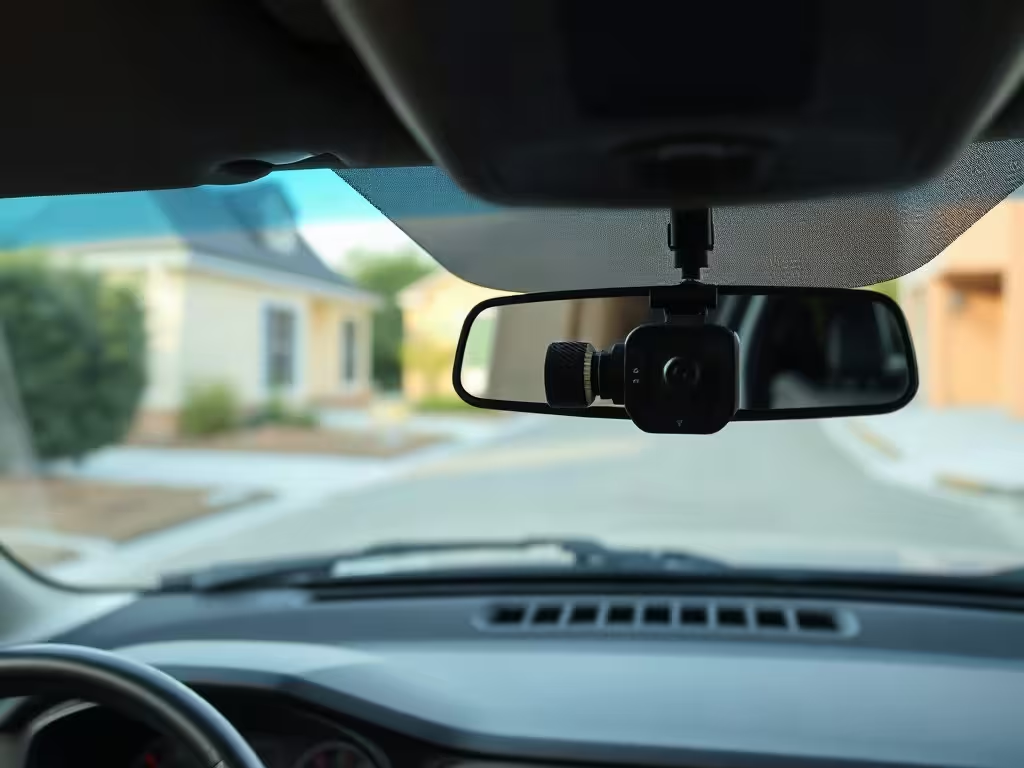
The available mounting authorities address road visibility and airbag deployment, rather than naming every possible dash camera. That distinction matters because a mount may fit one vehicle differently from another.
Maine: Avoid any placement that obstructs the road view
Maine law bars operating a vehicle with an object placed or hung in or on it when the object obstructs or interferes with the operator’s windshield view, or prevents a clear and full view of the road and traffic conditions.
The statute excerpt does not specifically name dash cameras. Still, the practical question for a Maine driver remains physical and direct: does the device block your view through the windshield or your view of the road?
Michigan: Keep the device outside the airbag deployment profile
Michigan permits certain aftermarket visual devices on the windshield or above the dashboard when the device stays outside the vehicle’s airbag deployment profile and does not interfere with the operator’s view. The cited Vehicle Code language does not expressly identify dash cameras.
For that reason, you should inspect the mount’s position against the vehicle’s airbag areas and your sightline before driving. A small camera can still create a larger problem if its bracket, cable, or screen intrudes into either space.
What the cited statutes do not decide about a particular dash cam mount
These sources do not create a universal rear-view-mirror rule or identify every lawful dashboard location. They also do not resolve how another state treats a windshield-mounted device.
Keep the lens useful without putting hardware in your line of sight. Review the vehicle manual, inspect the airbag zones, and verify the applicable windshield mounting rules before you drive.
Dash cam audio rules by state: Michigan, Washington, and Connecticut
The record supports specific rules in Michigan, Washington, and Connecticut. It does not support a complete consent-law map for every state.
Michigan: Consent and private conversations
Michigan’s eavesdropping statute makes it a felony to willfully use a device to eavesdrop on a private conversation without consent from all parties. The statute excerpt does not decide whether a particular conversation inside a vehicle counts as private.
Michigan also prohibits recording sounds or events in a private place without consent from people entitled to privacy there. It separately bars distributing a recording when the person knows or reasonably believes the recording violated that private-place rule.
Washington: Consent before recording a private conversation
Washington law prohibits recording a private conversation with an electronic device without first obtaining the consent of all people engaged in the conversation, subject to statutory exceptions. The quoted rule does not determine whether a particular conversation in a vehicle is private.
The Supreme Court’s discussion of the Washington Privacy Act supplies the text here, but it does not answer every fact pattern involving in-car audio recording. You should seek state-specific legal advice if the recording may affect employment, family litigation, or a civil claim.
Connecticut: The limited telephonic-communication rule
Connecticut’s cited statute addresses oral private telephonic communications. It requires all-party consent, recorded verbal notice at the beginning, or a recurring warning tone, subject to listed exceptions.
That rule does not alone resolve ordinary dash-cam audio inside a vehicle. You should not treat it as a general answer for every spoken conversation a camera captures.
Why muting audio can reduce a separate recording issue but does not answer every privacy question
Disabling the microphone can prevent the device from capturing speech. That step can reduce the risk tied to a private-conversation recording rule, but it does not settle questions about video, mount placement, or a private place.
Treat audio as a deliberate setting. If you cannot identify the rule that applies to your circumstances, leave it off until you can.
Match the camera to the recording rules
Review the current package, then confirm mounting and audio rules before recording in your state.
Passengers, public roads, and dash cam privacy
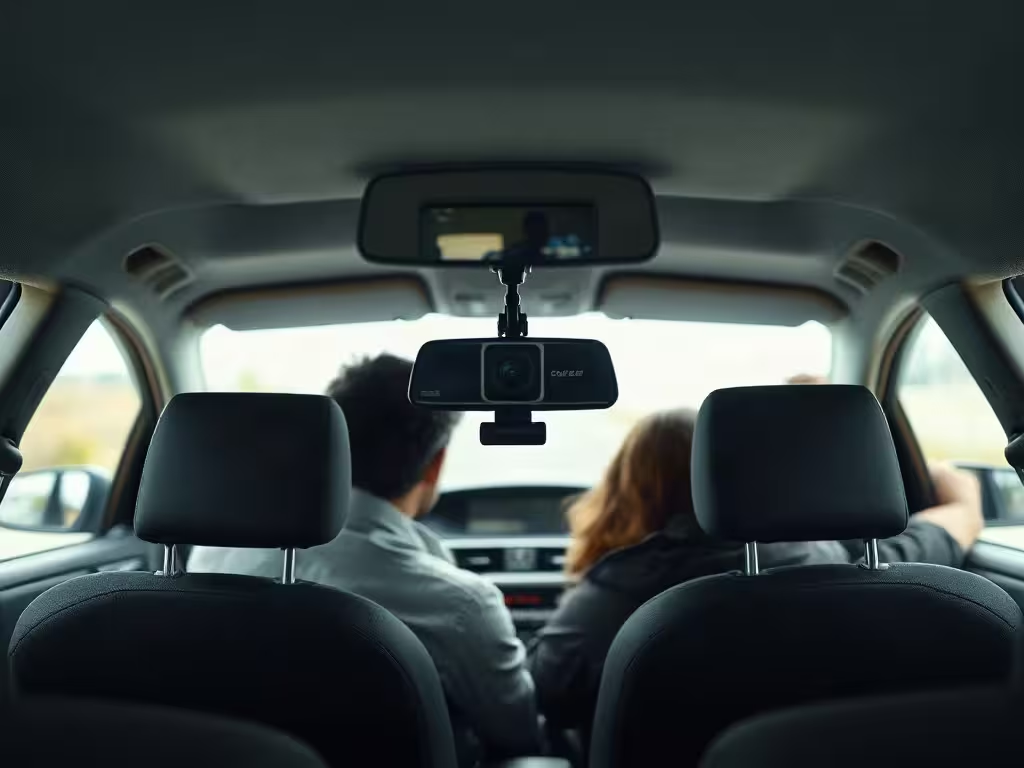
The public roadway and the vehicle cabin do not carry the same facts. A camera can point outward while its microphone captures a conversation between occupants, and a cabin-facing lens can record passengers whose expectations may differ from those of people outside.
A California appellate court held that a trial court erred when it treated dash-cam recordings of exchanges in a public parking lot as confidential communications under Penal Code section 632. The same decision noted that evidence obtained in violation of that statute is inadmissible, which shows why the setting and content of a recording matter. A separate California decision found that a driver had not shown a subjective expectation of privacy in recorded vehicle data while driving on a public roadway, where others could observe the vehicle’s movements, braking, and speed. Neither decision creates a blanket rule for all dash camera footage, all passengers, or public publication.
Public-road footage does not answer every privacy question
Footage of a road can document what the camera sees outside the vehicle. That does not resolve whether the device also records private speech or activity inside the cabin.
Keep those functions separate when you assess a recording. An outward-facing camera with muted audio presents different facts from a cabin-facing camera with an active microphone.
Private-place and private-conversation limits in Michigan
Michigan’s cited provisions focus on private conversations and private places. The excerpts do not determine whether a particular vehicle qualifies as a private place or whether every in-car conversation qualifies as private.
Those unanswered facts carry real weight. You should avoid assuming that the location alone settles the privacy analysis.
A practical notice approach before recording passengers
Tell passengers that the vehicle uses a dash camera and say whether it records audio. Ask for clear agreement before you record a conversation that may be private, particularly where Michigan or Washington law may apply.
A written notice can help document what you told a passenger, but this guide does not establish that a sign alone satisfies every consent rule. Obtain legal advice where the recording could become evidence or reach a public audience.
When to ask a civil rights attorney in your state
Talk with counsel before recording a sensitive conversation, using a cabin-facing camera for work, or publishing footage that identifies people. You should also seek advice when the recording may enter a criminal case, a Section 1983 claim, an insurance dispute, or family-court litigation.
Before you buy
Verify the package before you rely on it
- Confirm what the current package includes
- Check shipping and return terms
- Test storage and footage retrieval after delivery
Key takeaways
Before you install a camera, identify where it will sit, whether it will record sound, and who may appear or speak in the footage. Then read the current law for each state where you drive.
Preserve the original file if an incident occurs, avoid editing it before an insurer or lawyer can review it, and limit public sharing until you understand the privacy issues. Our guide to the best dash cams for recording police encounters explains the preservation workflow.
Related reading on Audit Faction:
- Indiana dash cam laws
- DashOne Pro dash cam review
- Wi-Fi dash cam features and limits
- Police abuse of power patterns
FAQ
Is it legal to use a dash cam in every U.S. state?
The available record does not establish that any state generally bans private drivers from using dash cameras. It also does not provide a complete fifty-state analysis, so you should verify current law where you drive.
Where can I mount a dash cam legally?
In Maine, an object cannot obstruct or interfere with your windshield view or clear view of the road and traffic. In Michigan, certain aftermarket visual devices may sit on the windshield or above the dashboard when they avoid airbag deployment areas and do not interfere with the operator’s view.
Can my dash cam record audio?
Audio can trigger separate rules for private conversations. Michigan and Washington address consent for recording private conversations, while Connecticut’s cited rule concerns oral private telephonic communications and does not decide ordinary in-car recording.
Do I need to tell passengers about a dash cam?
The supplied authorities do not create one nationwide passenger-notice rule. You should tell passengers about the camera, disclose whether audio records, and obtain clear consent before recording a conversation that may be private.
Can dash-cam footage be used as evidence?
Dash camera footage may become relevant to an insurer, law enforcement agency, or court, but admissibility and sharing can depend on how the recording was obtained. California’s cited decision states that evidence obtained in violation of Penal Code section 632 is inadmissible, so preserve the original recording and seek legal advice before relying on it.
This post may contain affiliate links. If you click them, I might earn a small commission (it costs you nothing and helps me keep shipping quality articles every day for your reading pleasure).