
Sommaire
TL;DR
- This dashone pro vs camhandy review separates seller-published features from real-world performance that the available record does not independently confirm.
- DashOne Pro markets dual-camera coverage and phone-based footage retrieval, while CamHandy markets an on-device screen and a BlackBox Viewer workflow.
- Both brands describe parking recording and locked collision clips, but parked-car power requirements remain a key checkout question.
- The U.S. offers reviewed on October 9, 2026 listed DashOne Pro at $39.99 and CamHandy at $59.99 for one unit.
- Confirm the memory card, shipping, return terms, and final price before you buy.
After a crash, footage only helps if you can find it, preserve it, and assess what it actually shows. That is the standard we apply to this dashone pro vs camhandy comparison in 2026. The available record supports a careful feature comparison, but it does not include representative independent tests of either car camera in traffic, darkness, or fast-moving plate-read conditions.
The seller claims still matter because they describe the products buyers may receive. They do not settle how either device performs when glare hits a windshield, rain blurs a lens, or a vehicle moves through a dark intersection.
DashOne Pro vs CamHandy: What the published specifications establish
Published front and rear coverage
DashOne Pro’s seller page describes full-HD recording through dual wide-angle cameras, with a 170° front view and a 140° rear view. That rear-facing layout gives it a published coverage advantage over CamHandy, whose seller describes one wide-angle front lens.
CamHandy’s seller also describes full-HD video and infrared night vision. Its published specifications describe a front-facing driving footage device, while DashOne Pro’s seller describes a system that records both directions around the vehicle.
What both sellers claim about nighttime footage
Both sellers say their products can capture license plates and other road details at night. DashOne Pro attributes that claim to enhanced night vision, and CamHandy attributes its claim to infrared night vision and its lens.
Those statements come from product marketing. They do not identify vehicle speed, distance, rain, glare, plate reflectivity, or the conditions under which either camera captured usable collision recording.
What the available evidence does not establish
The record does not establish either camera’s frame rate. It also does not contain a representative independent comparison of night footage, road signs, plates, or impact details.
You should treat nighttime plate capture as unverified until you see footage recorded in conditions close to your own commute. A seller’s still image or broad claim cannot show whether a moving plate remains readable after compression and windshield reflections affect the video.
DashOne Pro vs CamHandy setup and footage retrieval
Mounting and vehicle power
DashOne Pro’s seller describes a suction mount, a windshield or dashboard placement, and a cable that connects to a cigarette-lighter port. The seller says the camera starts when the vehicle starts.
CamHandy is described as USB-powered on its product page. Its seller says the package includes the camera, a USB car charger, and an instruction manual, but the available description does not confirm a memory card in the box.
Phone, screen, and app workflows
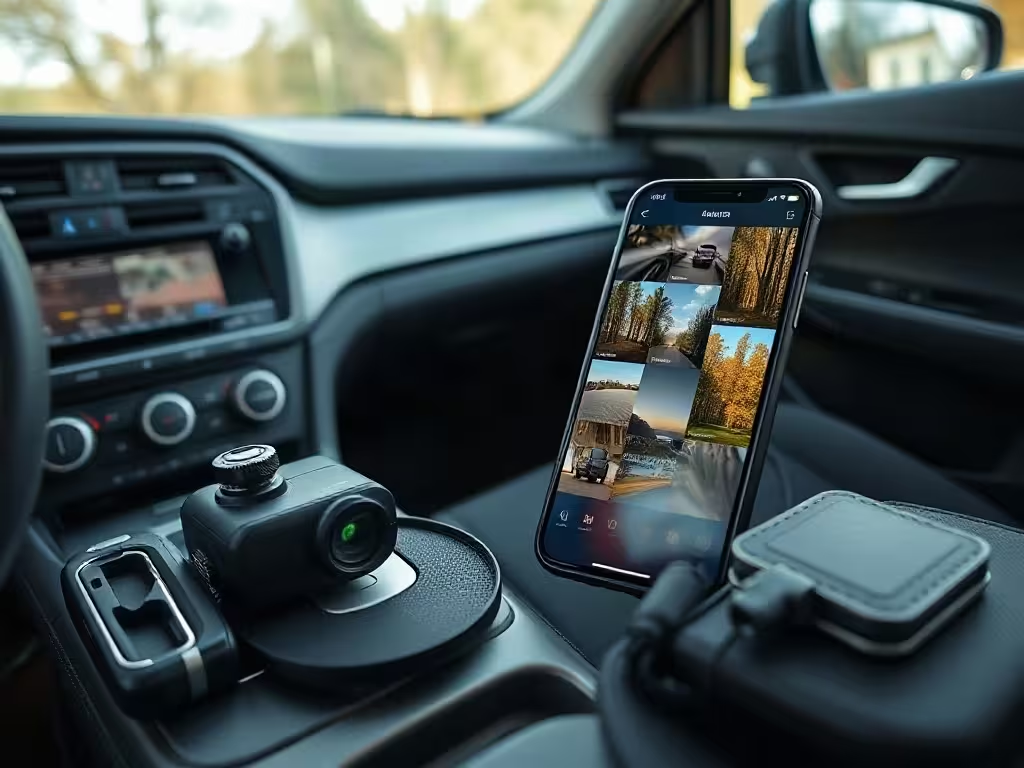
DashOne Pro’s seller says WiFi and a mobile app let you review, download, and share footage without removing the card. That could suit a driver who expects to export a clip quickly after an incident, but the available record does not independently test app compatibility or reliability.
CamHandy reportedly uses a small on-device display and a BlackBox Viewer app workflow. The display gives you a direct way to inspect a clip at the car, while the app may help when you need to move footage elsewhere. This dash cam comparison cannot establish which workflow fails less often in ordinary use.
Storage details to verify before ordering
CamHandy reportedly supports a microSD card, but the available account does not clearly confirm card inclusion. A CamHandy sales page has separately advertised a memory card.
A third-party checkout review says DashOne Pro buyers should budget for a microSD card. Verify card inclusion, supported capacity, card type, and the steps for viewing protected clips before placing either order.
Parking recording: What each dash cam says it can preserve
Motion and impact detection claims
DashOne Pro’s seller says its low-power parking mode wakes when it detects motion or an impact. CamHandy’s seller says its parking monitor detects nearby motion and can record possible theft or vandalism.
Both descriptions identify a parking monitor feature. Neither description, standing alone, proves uninterrupted surveillance while the vehicle sits unattended for long periods.
Locked clips and normal overwrite
Each seller says a G-sensor detects sudden impacts and locks the resulting footage against normal overwrite. CamHandy also says it loops over older files when storage fills.
Locked footage only protects evidence if the camera receives power, detects the event, and writes the file correctly. You should learn where locked clips appear in the app or on the card before you need one.
Why parked-car power matters
A third-party review based on a DashOne Pro checkout observation reports that its parking recording works while the vehicle supplies power. That limitation matters for anyone who expects coverage after ignition-off.
CamHandy’s seller says the camera records at ignition-on or when it senses motion, then enters sleep after inactivity with the ignition off. The available record does not explain the continuous-power requirement for CamHandy or establish a verified hardwire method for either product.
DashOne Pro vs CamHandy price, returns, and ownership costs

Why listed prices need a checkout check
The U.S. offers reviewed on October 9, 2026 listed one DashOne Pro camera at $39.99 and one CamHandy camera at $59.99. Shipping, tax, bundle contents, and the live offer can change the amount you pay.
That conflict makes a live checkout more useful than a promotional price card. Check the exact bundle, shipping total, and any post-purchase add-ons before entering payment details.
Memory cards, shipping, and return costs
Storage may add to the ownership cost for both products. CamHandy’s reported bundle description does not clearly include a card, and the DashOne Pro review says a card is an extra item to budget for.
DashOne Pro’s reported seller terms also place return shipping on the buyer. Neither available record establishes recurring subscription charges, professional hardwire costs, or replacement-card pricing for both products.
Published return and warranty terms
CamHandy’s seller advertises a refund promise. The available excerpt does not establish a corresponding warranty term, support record, or independent reliability evidence.
An Access Newswire report describes DashOne Pro seller-published terms that include a limited warranty, exclusions, buyer-paid return shipping, and a money-back guarantee. Those terms describe the seller’s published position, not the quality of actual customer support. Read the current terms at checkout because this dashone pro vs camhandy comparison cannot verify that they remain unchanged.
Which dash cam fits your recording priorities
For rear coverage and phone access
DashOne Pro may fit a driver who wants the seller-described rear camera and phone-based retrieval path. That choice rests on published features, not an independent finding that its app, night footage, or dual-camera recording performs better on the road.
For an on-device display
CamHandy may fit a driver who prefers to view footage on the device before opening an app. Its seller also describes automatic recording with ignition and motion detection.
You can check the current CamHandy offer. Confirm the package contents, shipping charge, and return terms before payment.
The available evidence does not establish that the screen makes export easier, or that the camera captures better evidence after a collision.
When neither product has enough verified evidence
Neither product has enough available independent evidence to support a definitive recommendation for nighttime plate capture or continuous parked-car protection. If those needs drive your purchase, ask the seller for unedited sample footage and written power requirements.
That is the practical limit of this dashone pro vs camhandy review. The published claims describe features, while the missing test record leaves the harder evidence questions open.
Key takeaways
Before buying, save screenshots of the live offer, package contents, return terms, and any parking-mode instructions. Then confirm how you will power the camera after ignition-off and how you will retrieve a locked clip. If you expect driving footage to support an insurance claim or police report, test the device on your own route before relying on it.
Related reading on Audit Faction
- Read the full DashOne Pro review
- Compare Wi-Fi dash cam features and limits
- Choose a dash cam for recording police encounters
FAQ
Does either camera have verified nighttime license-plate capture?
No available independent test in the record verifies nighttime plate capture for either product. Both sellers make that claim, but the published descriptions do not identify representative lighting, distance, motion, or weather conditions.
Does either camera record while a car is parked?
Both sellers describe motion-triggered parking recording. A third-party DashOne Pro checkout review says recording depends on vehicle-supplied power, while CamHandy’s continuous-power requirement remains unclear in the available record.
Is a memory card included with either dash cam?
The available sources do not clearly confirm card inclusion for CamHandy, and a third-party review describes a microSD card as an extra DashOne Pro expense. Confirm the bundle contents at checkout.
Which camera is easier to retrieve footage from?
DashOne Pro’s seller describes WiFi and phone-app downloads. CamHandy reportedly uses its display and a BlackBox Viewer app. The available evidence does not independently establish which workflow works more reliably.
This post may contain affiliate links. If you click them, I might earn a small commission (it costs you nothing and helps me keep shipping quality articles every day for your reading pleasure).