
Table of Contents
TL;DR
- The cited 2026 Wyoming dash cam laws do not expressly name dash cams as permitted or prohibited devices.
- A camera mount cannot materially obstruct, obscure, or impair your clear view through the windshield, side windows, or rear window.
- Dash-cam audio generally requires you to participate in the conversation or obtain one party’s prior consent, subject to statutory limits.
- Footage can support a court case, but relevance, authenticity, accuracy, completeness, and other evidence rules still control admission.
Wyoming dash cam laws do not supply a simple yes-or-no rule. Our review found no provision in the cited 2026 Wyoming code that expressly permits or prohibits the device itself, but state rules governing window obstructions, intercepted conversations, privacy, and evidence shape how you can use one.
Legal review date: October 28, 2026. Laws change, and the facts inside a particular vehicle matter.
If you are comparing cameras, check the current DashOne Pro offer only after you understand those rules. The merchant presents the current package and purchase terms. Audit Faction has not independently tested the camera.
Check DashOne Pro before deciding
Wyoming Dash Cam Laws in 2026: What the Code Actually Says
The targeted review found no Wyoming statute expressly permitting or prohibiting dash cams as devices. Wyoming instead regulates their use through W.S. 31-5-955, which prohibits material on the windshield, side windows, or rear window when it materially obstructs, obscures, or impairs the driver’s clear view.
No express dash-cam provision was located
That research gap does not establish blanket legality. It means the cited code provision does not name dash cams, so you must apply rules written for vehicle visibility and other conduct.
Ownership and operation also pose different questions. A camera sitting in a box does not affect your view; a camera mounted in the wrong place can.
The operative rule is driver visibility
The 2026 Wyoming motor-vehicle equipment statute bars a driver from operating a vehicle with material on the front windshield, side windows, or rear window that materially obstructs, obscures, or impairs the driver’s clear view of the highway or an intersecting highway.
That Wyoming windshield obstruction law supplies a functional test. The placement and its effect on your view carry more weight than the camera’s label.
Where a Dash Cam Can Be Mounted in Wyoming
W.S. 31-5-955 does not designate an automatically lawful mounting zone. It also sets no dash-cam dimensions.
Mount the camera where its body, screen, cable, adhesive pad, and any attached equipment leave your driving view clear. A small unit can still obstruct a critical sightline.
The statute uses a visibility test, not camera dimensions
The legal question turns on material impairment. Wyoming’s provision does not supply a fixed number of inches, a maximum screen size, or a universal position that guarantees compliance.
Check the installation from the driver’s normal seated position. A location that works in one vehicle may block the highway or an intersection in another because windshield angles, mirrors, dashboards, and driver height differ.
Mounting configurations that can create an obstruction
A configuration can implicate the statute when it materially interferes with the driver’s clear view through a covered window. That may include:
- A camera or display placed in the driver’s forward sightline
- A large mounting plate or suction assembly that blocks part of an intersection
- A cable routed across a required viewing area
- A rear-facing unit or accessory that materially impairs the rear-window view
- A side-window installation that blocks the driver’s view of approaching traffic
These examples apply the statutory visibility test. Wyoming’s cited law does not declare each configuration unlawful in every vehicle.
The general traffic penalty and its repeat-offense limits
Where the motor-vehicle act supplies no different penalty, W.S. 31-5-1201 treats a violation as a misdemeanor. The maximum punishment escalates only under the stated repeat-conviction conditions.
| Conviction | Statutory condition | Maximum penalty |
|---|---|---|
| First | First conviction | $200 fine |
| Second | Same offense within one year | $300 fine |
| Third or later | Qualifying conviction within one year after the first conviction | $500 fine, six months’ imprisonment, or both |
The repeat levels do not apply merely because a driver has unrelated traffic convictions. They require the same offense and the statute’s one-year timing conditions.
Audio Recording Rules for Wyoming Dash Cams
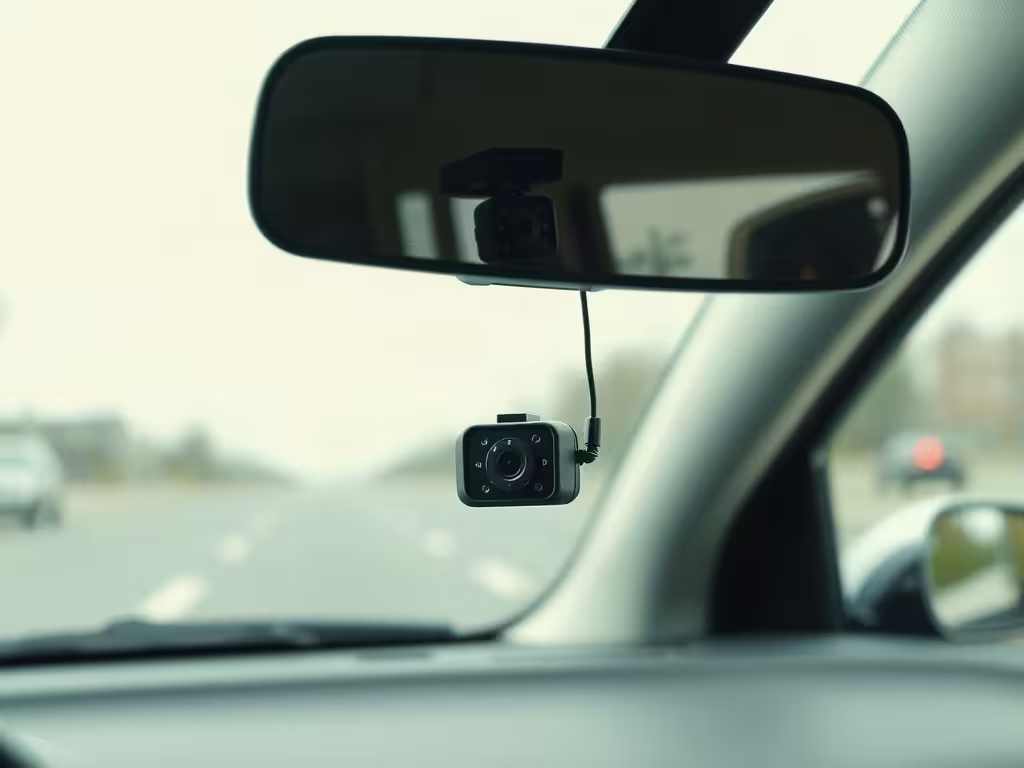
Wyoming generally follows a one-party consent rule. You may intercept a conversation when you participate in it or one party gives prior consent, unless the interception serves the purpose of committing a criminal or tortious act.
That rule requires context. A running microphone may capture passengers, mechanics, valets, police officers, or bystanders even when you did not turn it on for their conversations.
When one-party consent applies
Under Wyoming’s communication-interception statute, one party’s prior consent can suffice. If you participate in the conversation, you ordinarily satisfy the party requirement yourself, subject to the statute’s criminal-or-tortious-purpose limitation.
A camera owner who leaves the vehicle may no longer participate in conversations recorded inside it. At that point, the recorder would need another basis under the statute, such as one participant’s prior consent, if the captured speech qualifies as protected oral communication.
When occupants may reasonably expect privacy
Wyoming defines protected oral communication by asking whether the speaker expects the conversation to escape interception and whether the circumstances justify that expectation. The statute does not declare every conversation inside every vehicle private.
A reasonable expectation of privacy can depend on who occupies the vehicle, who owns it, whether the recorder remains present, whether occupants received notice, and the surrounding circumstances. The supplied authorities do not settle every passenger, rideshare, employee, mechanic, or unattended-vehicle scenario.
Consult a civil-rights attorney in your state before relying on one-party consent in a fact-specific situation, especially when recording people while you are absent.
Wyoming criminal and civil exposure
Subject to the statute’s exceptions and special categories, unlawful interception can constitute a felony punishable by a fine of up to $1,000, imprisonment for up to five years, or both.
Wyoming law also authorizes a person whose communication was unlawfully intercepted, disclosed, or used to seek:
- Actual damages, with a statutory minimum of $1,000 for each day of violation
- Punitive damages
- Reasonable attorney fees and litigation costs
Those remedies remain subject to statutory limitations and defenses, including the good-faith defense referenced in W.S. 7-3-710. The presence of a remedy does not establish liability in a particular dispute.
The parallel federal interception rule
Federal law generally reaches the same starting point for a private person not acting under color of law. 18 U.S.C. § 2511 permits interception when the recorder participates or one party gives prior consent, unless the interception aims to commit a criminal or tortious act prohibited by federal or state law.
Subject to federal exceptions, a violation can carry a fine and up to five years’ imprisonment. Federal civil relief may include damages, punitive damages, attorney fees, and litigation costs under 18 U.S.C. § 2520.
Once you have decided whether audio recording fits your circumstances, you can review the merchant’s current DashOne Pro offer. Check the product page for the current package details, and do not assume any audio feature or setting that the merchant does not state.
Match the camera to the recording rules
Review the current package, then confirm mounting and audio rules before recording in your state.
Video Privacy Rules Inside and Around a Vehicle
Silent video and intercepted speech raise different legal questions. Wyoming’s interception statute defines protected oral communication through a justified expectation against interception, while visual recording can implicate common-law privacy or the voyeurism statute.
Location matters. So does what the lens captures.
Public-road video and private seclusion
In Howard v. Aspen Way Enterprises, Inc. (2017), the Wyoming Supreme Court recognized the intrusion-upon-seclusion tort and explained that observing or photographing someone on a public highway ordinarily creates no intrusion liability because the person’s appearance remains open to public view.
The opinion also recognized a boundary. Concealed matters can remain private even when a person stands in a public place, so “visible from somewhere” does not resolve every privacy question.
Recording inside a vehicle
A forward-facing camera that captures public roads generally records a different setting from a cabin camera aimed at occupants. Inside a vehicle, the analysis can turn on the subject, the camera’s placement, notice, consent, and the circumstances surrounding the recording.
The available authorities do not establish a rule that every vehicle interior remains private or public. Apply the reasonable-expectation inquiry to the actual recording.
Wyoming voyeurism restrictions
W.S. 6-4-304 can reach a person who knowingly or intentionally uses an image-recording device to commit the underlying voyeurism offense. Its elements include nonconsensual clandestine, surreptitious, prying, or secretive viewing in an area where the subject reasonably expects privacy.
When those requirements are met, image capture can constitute a felony punishable by up to five years’ imprisonment, a fine of up to $5,000, or both. An ordinary road recording does not satisfy those elements merely because another person enters the frame.
Why recording and publishing are separate questions
Under Howard, an intentional intrusion into private seclusion can create liability even if nobody publishes or otherwise uses the image. The recording act itself can supply the intrusion.
Publishing footage can raise additional issues, but the supplied authorities do not define every publication claim or platform-specific use. Review sensitive footage with a Wyoming attorney before posting it when passengers, private conduct, medical events, homes, or identifying details appear.
Can Wyoming Dash-Cam Footage Be Used as Evidence?
Yes. Wyoming courts can consider dash-cam footage, but the proponent must satisfy the applicable evidence rules. A recording does not become admissible merely because a camera created it.
What Davis v. State establishes
In Davis v. State (2025), 2025 WY 120, docket S-25-0106, decided November 6, 2025, the Wyoming Supreme Court considered an officer’s observations, training and experience, and dash-cam footage when it affirmed a finding of reasonable suspicion for a traffic stop.
The decision demonstrates actual judicial use of dash-cam evidence. Its holding does not admit every recording in every civil or criminal case.
Authentication under W.R.E. 901
W.R.E. 901 authentication requires evidence sufficient to support a finding that an exhibit matches what its proponent claims it to be. For dash-cam footage, that can require testimony or other evidence connecting the file to the camera, vehicle, date, location, and incident.
In Barnes v. State (1993), the Wyoming Supreme Court explained that a proponent of photographic evidence must establish an accurate representation of the depicted scene or object. Authentication and relevance remain distinct requirements.
Relevance, accuracy, alteration, and completeness
Relevant footage still can draw objections when it presents only part of an event, distorts what occurred, or shows signs of editing or fabrication. The absence of the original may also require an explanation.
In Baker v. State (2022), the Wyoming Supreme Court addressed a secondary recording of surveillance footage when the original remained unavailable. The court considered the effort to obtain the original, the absence of bad faith, accuracy testimony, completeness, distortion, prejudice, and the jury’s role in assigning weight.
That fact-specific ruling does not guarantee admission of a copied dash-cam clip. It identifies the kinds of disputes that arise when the native file disappears.
Machine data and embedded human statements
In Blair v. State (2022), the Wyoming Supreme Court explained that computer-generated data does not secure automatic admission. A device may malfunction, return inconsistent results, or suffer tampering, and authentication rules address those concerns.
A dash cam may also embed time stamps, coordinates, speed data, labels, or other machine output. The proponent still must establish what that data represents and whether the system produced it reliably.
When hearsay may remain a separate issue
Pure machine output generally presents a different question from a human assertion because hearsay concerns statements made by people. Voices captured on the recording, manually entered labels, or narrated descriptions can trigger a separate hearsay analysis.
An exception or non-hearsay use may apply. That determination depends on the speaker, purpose, proceeding, and offered statement.
How to Preserve Dash-Cam Footage After an Incident
Preservation starts before anyone argues about fault. Keep one native version untouched, then review and share duplicates.
The following checklist draws from DOJ electronic-evidence guidance. It offers sound preservation practices but does not replace Wyoming’s case-specific evidence rulings.
Keep the native file and metadata
- Retain the original file or single best copy in its native format.
- Preserve associated metadata, including available creation, access, device, and location information.
- Stop the camera from overwriting the relevant segment.
- Keep the memory card when practical, and record which camera and vehicle produced the footage.
The DOJ warns that merely opening a file outside a suitable review system can change metadata, including the last-accessed date. Loss of relevant metadata can also produce spoliation disputes or sanctions in litigation.
Review a duplicate instead of the original
Export a working copy and conduct playback, clipping, enhancement, or analysis on that duplicate. Preserve the source file separately.
If you must create a shorter clip for an insurer or attorney, keep the full recording. A trimmed excerpt can omit context that later affects relevance, completeness, or weight.
Document transfers and avoid edits
Record when you exported the file, where you stored it, and who received each copy. A simple custody log can identify every transfer without turning routine preservation into guesswork.
Avoid filters, annotations, compression, or format conversion on the native file. If you create an edited version for viewing, label it and retain the unaltered source plus the steps used to produce the derivative.
Checking the Current DashOne Pro Offer

The merchant’s live page presents the current DashOne Pro offer. Use it to verify the price, shipping terms, package contents, and return terms before paying, because the supplied editorial review from October 13, 2026 does not establish what the merchant lists today.
Audit Faction has not independently tested the camera. Every product characteristic on that page remains a merchant claim unless supported by a separate source.
Details to verify on the merchant page before buying
Before checkout, confirm:
- The current price and quantity selected
- Shipping charges and estimated terms
- Every item included in the package
- Mounting hardware and compatibility stated by the merchant
- Any audio capability or control stated by the merchant
- Return deadlines, conditions, and instructions
Check the current DashOne Pro offer and terms. Save a copy of the offer and return terms shown when you order.
Before you buy
Verify the package before you rely on it
- Confirm what the current package includes
- Check shipping and return terms
- Test storage and footage retrieval after delivery
Use a three-part routine
Use a three-part routine. Place the camera where the full installation leaves your clear view unobstructed, make a deliberate consent and privacy assessment before enabling audio, and preserve the untouched native recording plus metadata after an incident.
Fact-specific audio, privacy, and admissibility disputes can turn on details that no general article can settle. Consult a Wyoming civil-rights attorney about your circumstances.
Related reading on Audit Faction
Verified Audit Faction titles and URLs were not supplied with this brief. Add three to five descriptive internal links here after the targets have been confirmed; inventing titles or destinations would misdirect readers.
This post may contain affiliate links. If you click them, I might earn a small commission (it costs you nothing and helps me keep shipping quality articles every day for your reading pleasure).