
Sommaire
TL;DR
- Michigan has no statute that specifically bans dash cams.
- Michigan dash cam laws require placement that preserves the driver’s view and safe control of the vehicle.
- Recording a private conversation or private place triggers a separate consent and privacy analysis.
- A court still tests dash-cam evidence for authentication, relevance, completeness, and signs of alteration.
A Michigan driver presses a camera mount against the windshield, then pauses. The practical question is not whether owning the camera breaks the law. It is whether that position blocks any part of the road, puts a moving image in the driver’s view, or captures audio that Michigan protects.
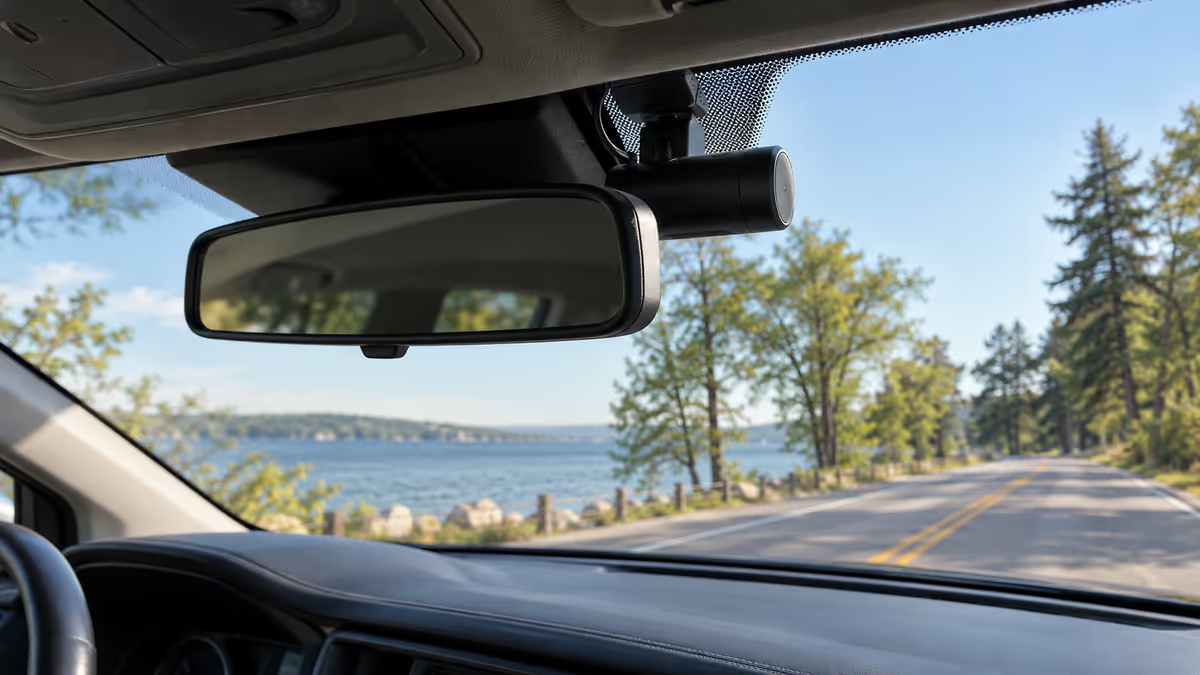
Michigan dash cam laws generally permit you to install and operate a camera when it does not obstruct your clear view or prevent safe operation. If the equipment blocks the view through the rear window, you also need two properly adjusted outside mirrors.
We reviewed every legal source cited here on October 22, 2026. The answer comes from Michigan’s vehicle, privacy, and evidence rules rather than a single dash-cam statute.
Check DashOne Pro before deciding
DashOne Pro offer and merchant-stated terms
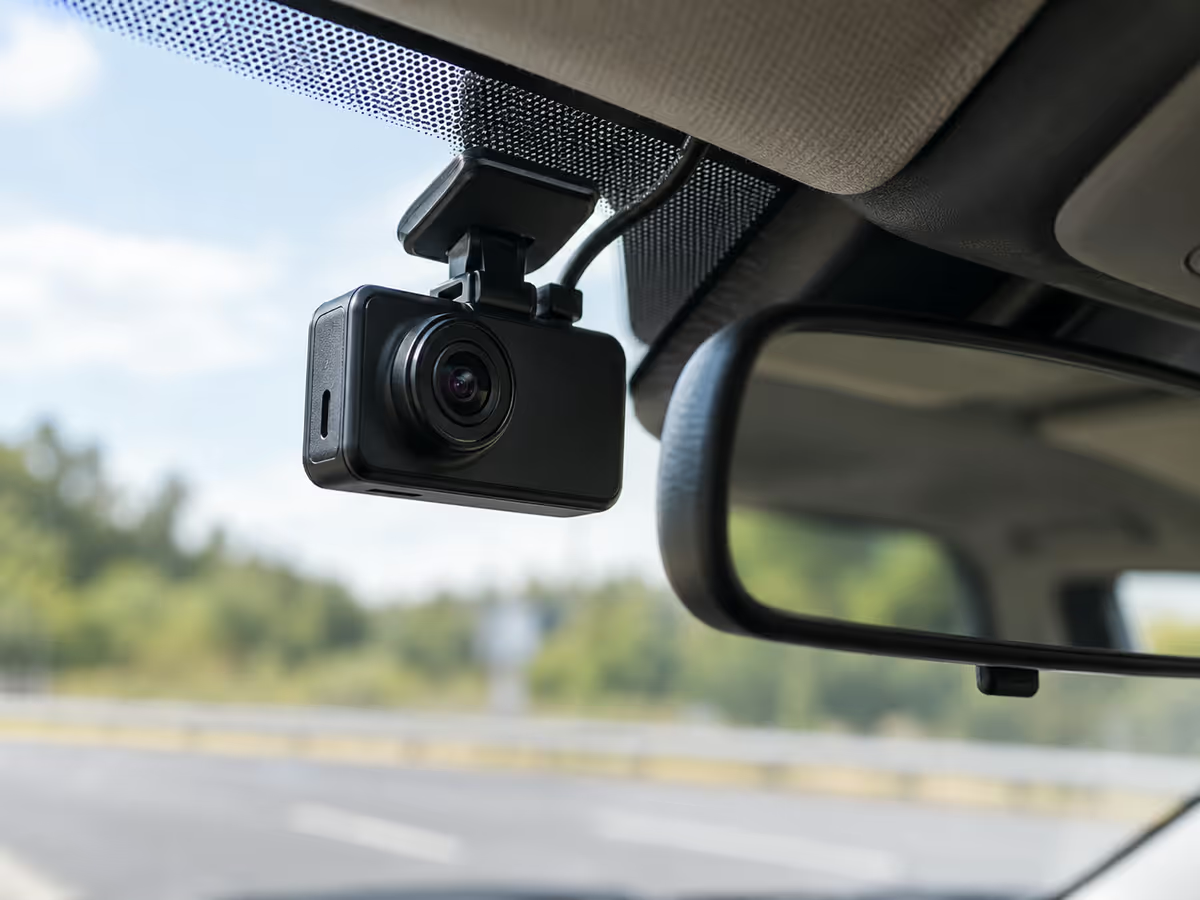
What the merchant claims
The DashOne Pro merchant presents the camera and its package on its sales page. Audit Faction has not independently tested the camera, so we cannot verify its performance or treat any merchant description as a test result.
The factual brief supplies no approved /v/ affiliate slug and no verified product specifications. We therefore cannot publish a compliant purchase link or describe features that the merchant alone has claimed without the editor first supplying those details.
What buyers must verify on the live offer page
Before buying, verify the current:
- Price
- Shipping terms
- Package contents
- Return terms
Those terms can change. The merchant’s live page controls its offer, but it does not establish whether any particular installation complies with Michigan law.
What michigan dash cam laws permit as of October 22, 2026

Michigan generally permits dash cams when the camera does not obstruct the driver’s vision, interfere with safe control, or create a separate violation through its screen or placement.
The Michigan State Police answer
The Michigan State Police Traffic Laws FAQ, updated September 22, 2026, says it is unaware of a Michigan Vehicle Code provision that would support a violation when:
- The driver can operate the vehicle safely.
- The camera does not obstruct a clear view of the highway or an intersecting highway.
- Two adjusted outside mirrors preserve the rearward view if the equipment impairs visibility through the rear window.
That statement gives official enforcement guidance. It does not bind a court or declare every possible mounting location lawful.
The continuous-recording exception in MCL 257.602b
Michigan’s distracted-driving statute generally restricts holding or using a mobile electronic device while operating on a public way, street, road, or highway. MCL 257.602b expressly excepts a mobile device used solely to record or broadcast continuous video inside or outside a motor vehicle.
The Legislature added that exception through an amendment effective June 30, 2023. The section also covers a device placed in a mount and used within one of its listed exceptions.
Why lawful use remains conditional on safe operation
The recording exception does not erase the rest of the Vehicle Code. A camera can fall within MCL 257.602b and still create an equipment problem if it blocks the driver’s view.
Ownership, recording, and lawful placement remain separate questions.
Where Michigan law allows a dash cam to be mounted
Passenger vehicles and the unobstructed-view test
MCL 257.709 bars you from operating a vehicle with an object that obstructs your vision. It does not name a universal dash-cam zone, maximum camera size, approved corner, or mandatory dashboard position.
For a passenger vehicle, use a position that keeps the camera body, mount, and cable outside every road and intersection sight line. Check the position from your normal seated posture before driving.
Rear-window obstruction and two adjusted outside mirrors
MCL 257.709 also addresses the view behind the vehicle. When something obstructs visibility through the rear window, the vehicle must carry two outside rearview mirrors, one on each side, adjusted so the operator can see the highway behind.
That rule can matter for rear-facing equipment as well as cargo or other objects. The statute focuses on the resulting view.
Screens visible to the driver while the vehicle is moving
MCL 257.708b generally prohibits operating a vehicle on a Michigan highway while a television or similar electronic device displays a video image visible to the operator. The statute lists exceptions, including displays that enhance or supplement the driver’s view.
A record-only camera with its screen turned off avoids the basic operator-viewable-image issue. Whether a live display falls within an exception depends on what it shows and how it functions.
Why MCL 257.708b does not authorize every windshield-mounted dash cam
The statute expressly permits windshield or above-dashboard mounting for certain aftermarket accessory-control and vehicle-information or navigation displays described in subsections 2(a) and 2(b). Those devices must stay outside the airbag deployment profile and cannot interfere with the operator’s view or control.
That language does not expressly classify every record-only dash cam as an authorized subsection 2(a) or 2(b) device. Drivers should not treat it as blanket approval for any windshield position.
Airbag clearance also matters as a physical safety issue. Follow the vehicle manufacturer’s placement warnings.
Different federal placement rules for qualifying commercial vehicles
Federally regulated commercial motor vehicles can fall under a different rule when the equipment qualifies as vehicle-safety technology. The ordinary federal envelope places qualifying equipment:
- No more than 4 inches below the upper edge of the windshield-wiper-swept area, or
- No more than 7 inches above the lower edge of that area, and
- Outside the driver’s sight lines to the road, signs, and signals.
FMCSA sometimes grants company-specific or equipment-specific exemptions for lower placement. Those exemptions do not extend to every consumer camera or Michigan passenger vehicle.
Audio Recording Rules Under Michigan Dash Cam Laws
Public-road video and reasonable expectations of privacy
An outward-facing camera ordinarily records roads and other places open to the public. Michigan defines a private place by whether someone may reasonably expect freedom from casual or hostile surveillance, excluding places accessible to the public or a substantial group of people.
The camera’s location alone does not resolve every privacy question. Pointing it into a home, restroom, changing area, or another place carrying a reasonable expectation of privacy can trigger MCL 750.539d.
When a vehicle interior may involve a private conversation
A vehicle interior is not categorically public or private. The occupants, surrounding circumstances, and nature of the conversation can shape whether someone reasonably expected privacy.
That makes cabin audio legally different from ordinary road video. Disabling audio before carrying passengers offers a simple precaution when you do not need a sound record.
Participant recording under Sullivan v. Gray
MCL 750.539c uses all-party-consent language for willfully eavesdropping on a private conversation. But in Sullivan v. Gray (Mich. Ct. App. 1982), docket No. 57301, the published Michigan Court of Appeals interpreted “private discourse of others” to exclude a person recording a conversation in which that person participates.
Under Sullivan, a driver who takes part in an in-vehicle conversation does not commit statutory eavesdropping merely by recording it without the other participants’ permission. The Michigan Supreme Court has not squarely decided that participant-recording issue, so the distinction between the statutory wording and appellate interpretation deserves caution.
Nonparticipant recording and all-party consent
A recorder who does not participate in a private conversation stands on different ground. MCL 750.539c requires permission from everyone engaged in that conversation.
A driver cannot safely assume that being near a conversation makes the driver a participant. Leaving a camera running to capture other people’s private discussion can expose the recorder to the statute.
Private-place recording under MCL 750.539d
MCL 750.539d separately bars installing, placing, or using a device in a private place, without consent from the people entitled to privacy there, to observe, record, transmit, photograph, or eavesdrop on sounds or events.
This provision reaches visual material as well as audio. A concealed camera aimed into a private place can therefore raise a different issue from a visible road camera.
Consult a Michigan civil-rights attorney before relying on cabin audio in a disputed situation. The recorder’s participation, the occupants’ expectations, and the place captured can change the analysis.
CTA surface 2 with merchant-claim and no-independent-test labels
The DashOne Pro merchant maintains the live source for its current camera offer. Audit Faction has not independently tested the product, and the brief supplies neither verified specifications nor the approved root-relative /v/ slug needed for a compliant affiliate link.
Any buyer should confirm the camera’s audio controls and current package terms directly on the approved merchant page once the editor supplies that URL. Product settings do not decide whether recording a particular conversation is lawful.
Match the camera to the recording rules
Review the current package, then confirm mounting and audio rules before recording in your state.
Using Michigan dash-cam footage after a crash or traffic incident
Providing a copy to police
You may offer footage to the police after a crash or traffic incident. Before handing over a file, preserve the original recording and note what you copied, when you copied it, and how you transferred it.
Police acceptance does not establish authenticity or guarantee that a court will admit the file. The footage may also capture conduct beyond the event you intended to report.
Submitting footage with an insurance claim
Michigan’s Department of Insurance and Financial Services instructs claimants to give an insurer reasonable information requested as proof of a claim and to cooperate as the policy requires. Allstate’s insurer-specific guidance also lists available dash-cam footage among information that may support an auto claim.
The required submission method depends on the insurer, policy, and claim instructions. Keep the original even if an adjuster asks for a compressed upload.
Why submission and admissibility are different questions
Police officers, adjusters, and courts answer different questions. An insurer may consider a clip during claim handling even when no judge has ruled on its admissibility.
In court, the proponent must connect the file to what it supposedly depicts. Relevance, completeness, editing, and preservation can then affect admission or the weight given to it.
The limited holding of People v. Munshaw
In People v. Munshaw, Michigan Court of Appeals docket No. 366399, issued February 12, 2025, the court considered digital material that a private person gave to police. The unpublished opinion concluded that even an assumed violation of Michigan’s eavesdropping statute would not, by itself, trigger exclusion where the private citizen did not act as a police agent and no concurrent constitutional violation occurred.
That decision is unpublished and nonbinding. Its reasoning does not make unlawful recording harmless, and it does not settle admissibility in every civil or criminal case.
How Michigan courts authenticate and assess dash-cam evidence
Authentication under MRE 901
MRE 901 requires enough evidence to support a finding that an item is what its proponent claims. Michigan court guidance says a person familiar with a photographed scene or object may lay a foundation by testifying that the image accurately reflects it.
For dash-cam footage, the foundation may address the camera, date and time, location, file extraction, and whether the video fairly depicts the event. The necessary proof depends on the particular file and claim.
Relevance and unfair-prejudice analysis
MRE 401 asks whether evidence tends to make a consequential fact more or less probable. MRE 403 permits exclusion when unfair prejudice, confusion, delay, or other listed dangers substantially outweigh probative value.
A clear view of the collision may carry substantial probative value. Unrelated cabin audio or inflammatory material outside the incident can raise a different balance.
Completeness and missing context under MRE 106
When a party introduces part of a recorded statement, MRE 106 permits the opponent to require other portions that fairness calls for at the same time. The rule does not independently make inadmissible material admissible.
Preserve the minutes before and after an incident. A short exported clip can omit braking, lane position, speech, or other context that changes how the event reads.
Original files, metadata, alteration claims, and chain of custody
Practical preservation steps include:
- Lock or protect the incident file before loop recording overwrites it.
- Retain the original storage medium or original exported file.
- Preserve surrounding footage and available metadata.
- Record the date, method, and destination of each export.
- Work from a copy and leave the original unedited.
- Avoid filters, annotations, recompression, or format conversion on the working original.
Michigan court guidance says a break in chain of custody does not automatically require exclusion. Preservation defects generally affect weight unless a vital link is missing or the record indicates tampering, but the result remains fact-specific.
Sharing or publishing Michigan dash-cam recordings
Private audio and knowing disclosure
MCL 750.539e can punish a person who divulges or uses information while knowing, or having reason to know, that it came from illegal eavesdropping. Publishing a recording therefore presents a separate question from making it.
Participant status, consent, and whether the conversation was private all matter. Consult counsel before releasing disputed cabin audio.
Private-place recordings and distribution
MCL 750.539d separately covers knowing distribution, dissemination, or transmission of material obtained through the statute’s private-place violation. Its distribution offense carries a higher maximum penalty than a first unlawful-recording offense under that section.
Ordinary footage of a public road is not prohibited merely because someone appears in it. A recording that reaches into a private place requires a different analysis.
Why public posting can affect evidence preservation
Social-media platforms may recompress video, strip metadata, trim the file, or separate it from its original name. Comments and captions can also create avoidable disputes over context.
Preserve the untouched source before publishing anything. If litigation or an insurance dispute looks possible, give counsel the original before circulating an edited copy.
Penalties for unlawful mounting, recording, or disclosure
The equipment civil infraction
A violation of the vehicle-equipment provisions covering MCL 257.709 is a civil infraction under MCL 257.683(6), subject to listed statutory exceptions. Unless another amount applies, MCL 257.907 sets a civil fine of no more than $100.
Court costs and assessments remain separate. The final amount can therefore exceed the civil fine itself.
Criminal exposure for unlawful interception
Conduct satisfying MCL 750.539c can constitute a felony carrying up to two years in prison, a fine of up to $2,000, or both. A first violation of MCL 750.539d(1)(a), covering nonconsensual device use in a private place, carries the same stated maximum.
The prosecution must still prove the elements of the applicable offense. A camera’s presence does not establish those elements by itself.
Criminal exposure for knowing distribution
Knowing distribution, dissemination, or transmission of material obtained through a private-place violation under MCL 750.539d can carry up to five years in prison, a fine of up to $5,000, or both.
Knowing disclosure of information illegally obtained through eavesdropping under MCL 750.539e carries up to two years and $2,000. The two provisions cover different conduct.
Civil remedies
MCL 750.539h permits a person injured by a violation of Michigan’s eavesdropping chapter to seek injunctive relief as well as actual and punitive damages. Whether those remedies apply, and in what amount, requires a judicial determination based on the record.
Why unlawful collection does not always mean automatic exclusion
A statutory violation and evidentiary exclusion involve separate legal tests. The unpublished Munshaw decision illustrates that separation where a private citizen, acting independently of police, supplied material and no concurrent constitutional violation required exclusion.
A court may still reject footage for lack of authentication, irrelevance, unfair prejudice, missing context, or other evidentiary defects. Illegality may also produce criminal or civil consequences even if a judge admits the file.
Check the current DashOne Pro offer before buying
The merchant’s live page is the place to confirm the current DashOne Pro price, shipping, package contents, and return terms. Audit Faction has not independently tested the camera.
The editor must supply the approved root-relative /v/ URL before publication. Adding a guessed slug would create an unverified commercial link and could send readers to the wrong offer.
Before you buy
Verify the package before you rely on it
- Confirm what the current package includes
- Check shipping and return terms
- Test storage and footage retrieval after delivery
michigan dash cam laws 2026: Mounting, Audio, and Evidence Rules
Before driving, sit in your normal position and confirm that the camera, mount, and cable block no part of the road or an intersecting highway. Check that any screen will not display prohibited operator-viewable video while the vehicle moves.
Decide whether you need audio. Disable it when private-conversation concerns outweigh its value, and consult a Michigan civil-rights attorney when participant status, consent, or a private place is disputed.
If an incident occurs, protect the original file, surrounding footage, and metadata before the camera overwrites them. Confirm the date and time setting now. A clean original gives police, an insurer, counsel, or a court a stronger record to evaluate.
Related reading on Audit Faction
The brief supplies no verified Audit Faction archive titles or root-relative paths. Add three to five editor-approved internal links here before publication; inventing titles or URLs would risk broken navigation and false attribution.
This post may contain affiliate links. If you click them, I might earn a small commission (it costs you nothing and helps me keep shipping quality articles every day for your reading pleasure).