
Table of Contents
TL;DR
- Alaska dash cam laws generally permit cameras in private vehicles, but the device and mount cannot obstruct, obscure, or impair the driver’s view.
- 13 AAC 04.225 sets no camera-size allowance, approved windshield zone, or separate limit for either side of the windshield.
- AS 42.20.310 requires consent from one party before a dash cam records an oral conversation.
- Courts may admit dash-cam footage when the proponent establishes relevance and authenticity. We reviewed the cited primary sources on October 29, 2026.
Alaska dash cam laws generally let you install and operate a camera if it does not impair your view of the road. Video and audio require separate legal analysis, however, and a recording that captures a crash may later draw an insurer’s request, a subpoena, or a search warrant.
We reviewed the current Alaska vehicle, eavesdropping, evidence, civil-procedure, and criminal-procedure authorities on October 29, 2026. The practical legal answer comes first: keep the complete installation out of your sightline, make a deliberate decision about audio, and preserve an incident file before the camera overwrites it.
If you are still choosing a camera, the DashOne Pro merchant page describes its current offer. Audit Faction has not independently tested the product, so confirm the live price, shipping terms, package contents, and return policy on the merchant’s page before buying.
Check DashOne Pro before deciding
alaska dash cam laws generally permit cameras that do not block the view
Alaska does not appear to prohibit private drivers from owning or using dash cams. The controlling statewide equipment rule focuses on what the installation does to the driver’s view.
What the statewide regulation actually says
13 AAC 04.225 bars driving with defective windshields or windows that obstruct, obscure, or impair the driver’s view. It also addresses signs, posters, and other nontransparent material that cause the same problem.
The regulation does not expressly name dash cams. Applying its visibility test to a camera therefore requires some judgment, but the safe reading remains narrow: neither the camera nor any part of its installation should interfere with what you can see from the driver’s seat.
How Anchorage adds a municipal visibility rule
Anchorage Municipal Code § 9.36.040(D) adds a local equipment rule within the municipality. It covers material on the front windshield, side wings, and side or rear windows when that material materially obstructs, obscures, or impairs the driver’s clear view of a street or intersecting street.
Drivers in Anchorage must satisfy both the statewide visibility standard and this municipal rule. The Anchorage language reaches more window locations and expressly asks whether the obstruction materially affects a clear street view.
Where Alaska drivers can mount a dash cam
The statewide rule supplies a result-based test rather than a map of approved mounting locations. Your entire installation must leave the driver’s view unobstructed.
Use visibility, not an unsupported size limit, as the mounting test
The consulted Alaska regulation contains no five-square-inch allowance. It also supplies no maximum camera dimensions, measurement method, approved windshield zone, or different limits for the driver’s and passenger’s sides.
That means Alaska law does not support a claim that any device becomes lawful merely because it fits within a stated number of square inches. Check the actual view from your normal driving position instead.
A position low on the windshield or behind the rearview mirror is not automatically lawful under 13 AAC 04.225. Seat height, windshield shape, mirror placement, and camera size all change the result.
Check the camera body, mount, cable, and screen together
Inspect the installation while seated and belted in your ordinary driving position. Look through the windshield, toward both front corners, and across any intersecting-street sightline.
Check all of these components:
- Camera body
- Adhesive pad or suction mount
- Articulating arm
- Power cable
- Display screen
- Any rear-camera wire crossing a window
A small camera can still create a larger obstruction through its bracket, hanging cable, or lit screen. Recheck the mount after adjustment because a loose joint can move the device back into your sightline.
Audio Recording Rules for Alaska dash cams
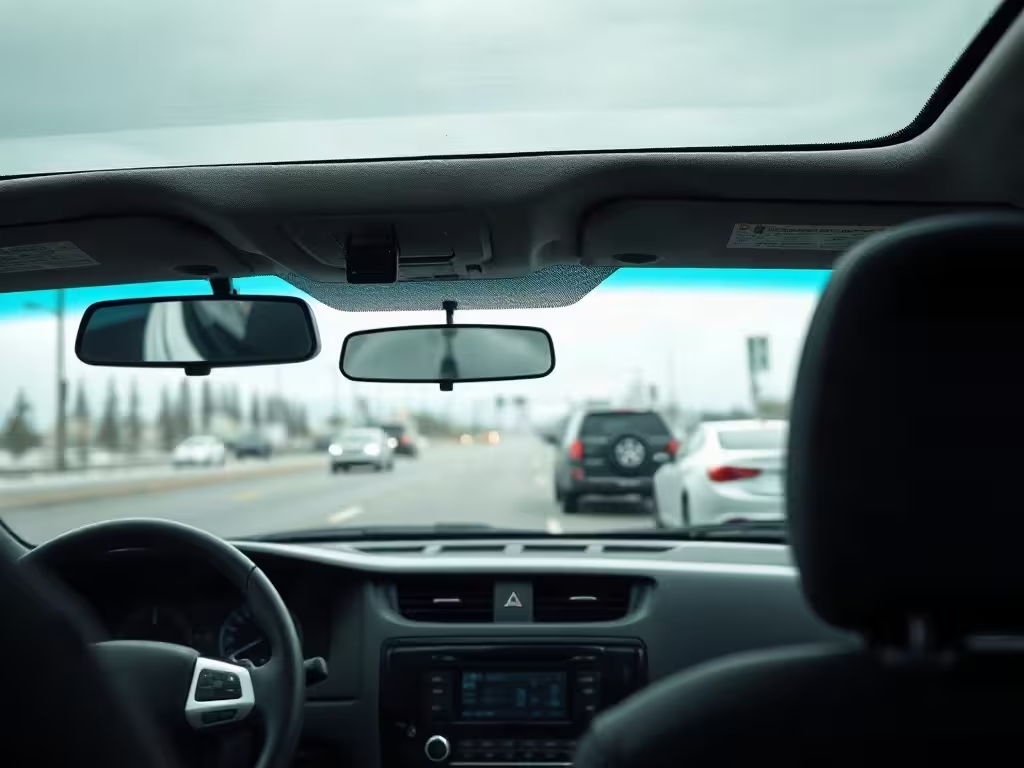
AS 42.20.310 makes Alaska a one-party-consent state for oral conversations. A dash cam may record a conversation when one participant consents, but the statute does not require consent from every occupant.
Whose consent is required inside the vehicle
When you take part in a conversation, your consent can satisfy the statute’s one-party requirement. If the camera captures a conversation between passengers and you are not a party, your consent alone does not fit that rule.
The statute defines an eavesdropping device broadly enough to cover equipment capable of hearing or recording oral conversations conducted in person, by telephone, or through another means. That language can reach a dash cam microphone.
Why silent video and recorded conversation require separate analysis
A camera can create two records at once: images of the roadway and voices inside the cabin. AS 42.20.310 regulates the oral-conversation component, so a lawful exterior view does not automatically make the audio lawful.
The statute does not state a general exception for conversations held in public or for conversations that lack a reasonable expectation of privacy. Do not rely on a public-location theory to bypass the consent requirement. If the driver will not participate in every recorded conversation, disabling audio offers the clearer course.
What the statutory exemptions do and do not cover
AS 42.20.320 lists narrow exemptions, including publicly made radio communications, incidental conversations during certain public broadcasts, emergency-service communications, specified law-enforcement activity, and limited parental interception involving a minor.
Those exemptions do not create a general dash-cam exception. AS 42.20.330 classifies a violation of AS 42.20.300 or AS 42.20.310 as a class A misdemeanor.
For a commercial vehicle, rideshare trip, borrowed car, or any setting where the driver may not join the recorded conversation, consult a civil-rights attorney in Alaska before leaving the microphone active.
The DashOne Pro merchant controls the specifications and terms displayed on its sales page. If its current listing claims audio recording or an audio-off control, verify that function directly with the merchant because Audit Faction has not tested it.
Match the camera to the recording rules
Review the current package, then confirm mounting and audio rules before recording in your state.
Privacy limits when a dash cam records people or property
Alaska authority supports a distinction between activity exposed to public observation and activity recorded where a person reasonably expects privacy. The available cases do not settle every civil or criminal question that a private dash-cam recording could raise.
What Cowles v. State establishes about publicly visible activity
In Cowles v. State (Alaska 2001), docket No. S-8831, the Alaska Supreme Court upheld silent covert video of a workplace desk visible through a public ticket window and open office door. The court explained that activity open to public observation generally does not receive Fourth Amendment protection.
The court contrasted photographing someone walking through a public park with filming inside an enclosed restroom stall. Purpose and grounds also mattered to its analysis.
Cowles involved government surveillance and constitutional limits on a state actor. It did not decide every rule governing a private driver who records people, homes, vehicles, or land from a public road.
What Alaska’s indecent-viewing statute specifically prohibits
AS 11.61.123 targets knowing viewing or production of a picture showing another person’s privately exposed genitals, anus, or female breast. “Private exposure” turns on circumstances in which the person reasonably believed the body or body part would not be viewed or pictured.
The statute does not create a general ban on filming every home, vehicle, person, or parcel of private property. It addresses specified intimate images under specified privacy conditions. Its posted-security-surveillance affirmative defense also carries its own limits and does not function as a blanket dash-cam exemption.
Why the available sources leave part of private civilian recording law unresolved
The available primary authority does not fully establish which restrictions apply to ordinary private dash-cam recording from a public road. Cowles concerned police surveillance, while AS 11.61.123 covers a narrow category of intimate imagery.
Other facts can change the analysis, including where the camera sits, what it captures, whether audio runs, whether recording continues on private property, and whether repeated filming forms part of other alleged conduct. Consult an Alaska civil-rights attorney when the recording extends beyond an ordinary road view.
When Alaska dash-cam footage can become evidence
A dash-cam file does not enter evidence merely because it exists. The proponent must connect the file to the event and satisfy the applicable evidence rules.
Authentication under Alaska Evidence Rule 901
Alaska Evidence Rule 901 requires evidence sufficient to support a finding that the item is what its proponent claims. A person with knowledge may identify the recording and explain why it accurately depicts the event.
Relevance also matters. A court can consider whether the file helps prove or disprove a disputed fact and whether another rule requires exclusion.
Original files, accurate duplicates, and disputed timestamps
Evidence Rule 1002 generally requires an original when a party seeks to prove the contents of a recording. Rules 1001 and 1003 recognize accurate electronic duplicates and generally admit them to the same extent unless a genuine authenticity question arises or substitution would be unfair.
In Thompson v. State (Alaska Court of Appeals 2009), the court addressed digital audio rather than dash-cam video. It explained that modern authentication asks whether the evidence supports a rational finding that the recording is authentic. The court did not require preservation of the recording device itself in every case.
Date and time can still become disputed facts. Alaska authority does not impose a dash-cam-specific rule requiring every driver to preserve all timestamps or metadata, but retaining available time information can help establish when an event occurred.
A practical preservation checklist supported by the evidence rules
After a crash, traffic stop, or use-of-force incident:
- Stop normal loop recording before it overwrites the incident, if you can do so safely.
- Retain the native file on the original card or device.
- Create an unmodified copy for review.
- Preserve the footage before and after the central event.
- Keep available timestamps, file names, and metadata.
- Record who copied the file, when, and by what method.
- Edit only a separate working copy.
- Keep any submission receipt from police, an insurer, or an attorney.
These steps support authentication and accuracy. They do not guarantee admission, and the evidence rules do not make each item an absolute condition in every case.
Police, subpoenas, warrants, and insurance requests
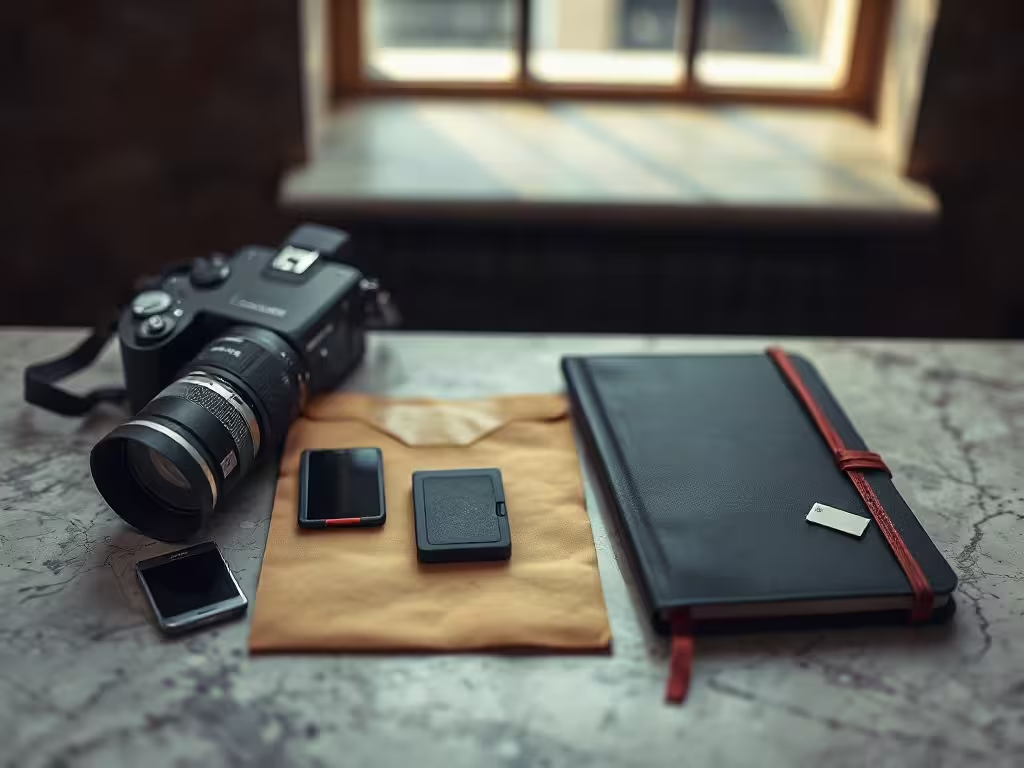
You may voluntarily share relevant dash-cam footage with police or an insurer. Compulsory legal process raises a different question.
An informal request is not the same as compulsory process
The consulted authorities create no blanket duty to surrender a recording merely because an officer, adjuster, or another driver asks for it informally. Ask whether the request is voluntary and preserve the file while you assess it.
Do not delete or alter potentially relevant footage after receiving a subpoena, court order, preservation notice, or litigation notice. If an informal request could affect criminal exposure, civil liability, or another person’s privacy, speak with counsel before handing over the only copy.
What a subpoena can require
Alaska Civil Rule 45 permits a subpoena to demand designated electronically stored information or tangible things and to specify the production format. A court may void or modify an unreasonable or oppressive civil subpoena. Unexcused noncompliance can lead to contempt.
Criminal Rule 17 similarly permits a subpoena for designated documents or objects. It also lets the court suppress or modify a demand when compliance would be unreasonable or oppressive.
A served subpoena calls for a timely response. Objections or requests to modify it ordinarily must travel through the court process rather than silence.
What a search warrant can authorize
Under Criminal Rule 37, a judge or magistrate judge may issue a warrant upon probable cause that identifies the property and describes the person or place to be searched. A warrant can authorize officers to search for and seize a specified camera, memory card, or recording.
When officers take property under a warrant, Rule 37 requires delivery or placement of the warrant materials and a receipt for the property taken. This procedure differs from a voluntary roadside request.
How an insurance policy may affect disclosure
The Alaska Division of Insurance advises claimants to contact the insurer promptly, ask which documents it needs, cooperate, supply information, and keep copies. That consumer guidance does not itself impose a universal legal duty to surrender every dash-cam file.
Your policy controls the precise contractual duties. Preserve the complete recording and ask the insurer to identify the policy term supporting its request if the scope remains unclear.
Check the current DashOne Pro offer
Audit Faction did not independently test DashOne Pro. The merchant page we read on October 13, 2026 presented the camera offer and package details, but those descriptions remain merchant claims.
Use the merchant’s live page to verify:
- Current price
- Shipping charge and delivery terms
- Package contents
- Return conditions
- Every claimed camera, storage, display, or audio feature
The approved Audit Faction /v/ slug was not supplied with this brief, so we have not invented or published an affiliate URL. Insert the verified cloaked link here after the slug is assigned.
Before you buy
Verify the package before you rely on it
- Confirm what the current package includes
- Check shipping and return terms
- Test storage and footage retrieval after delivery
A lawful Alaska setup begins with the view from the driver’s seat
A lawful Alaska setup begins with the view from the driver’s seat. Inspect the camera body, bracket, cable, and screen together, then move anything that obstructs, obscures, or impairs your view.
Choose the audio setting deliberately. When the driver will not participate in each conversation, disabling the microphone avoids relying on consent that may not exist.
If the camera captures an incident, preserve the native file and an unmodified copy before loop recording erases them. Keep available time information and consult an Alaska civil-rights attorney for fact-specific questions about recording, disclosure, or compulsory process.
Related reading on Audit Faction
No verified Audit Faction internal URLs were supplied with the brief. Add three to five confirmed links here covering civilian recording, dash-cam evidence, police requests for footage, or preservation of digital recordings. We have not fabricated titles or destinations.
This post may contain affiliate links. If you click them, I might earn a small commission (it costs you nothing and helps me keep shipping quality articles every day for your reading pleasure).