
Table of Contents
TL;DR
- Delaware dash cam laws generally permit video-only recording of visible activity on public roads, but no standalone dash-cam statute controls every use.
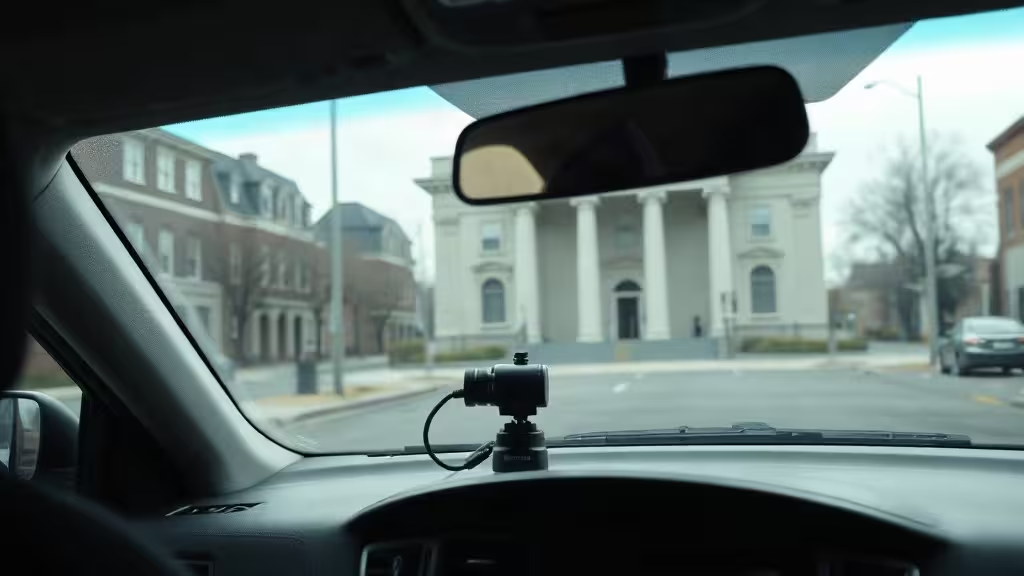
- As a precaution based on Delaware’s general prohibition on nontransparent material upon the windshield, side wings, and side or rear windows, keep the camera and mount off those surfaces. Delaware specifies no dash-cam-specific safe corner, size, or obstruction threshold.
- Disable the microphone or secure consent from every audible occupant because Delaware’s one-party and all-party consent provisions conflict.
- Improper mounting can draw a traffic fine. Unlawful interception can carry criminal penalties, civil damages, and evidentiary consequences.
Delaware dash cam laws let you record visible activity while driving on public roads, but the camera’s location and microphone create separate legal risks. Delaware applies its general traffic-safety, interception, and privacy laws rather than a statute written specifically for dash cams.
That means you should solve the legal questions before choosing a camera. Keep the unit away from regulated windows, preserve the rearview mirror’s function, and control the microphone.
Check the current DashOne Pro offer terms after deciding whether that setup fits your vehicle. The merchant page lists the current price, shipping, package contents, and return terms.
delaware dash cam laws permit road video under broader traffic and privacy rules
Delaware has no standalone dash-cam statute. Video-only recording of visible activity on a public highway generally falls under broader traffic-safety and privacy rules.
The distinction turns on public access and a person’s reasonable expectation of privacy. Ownership alone does not decide whether a location counts as public or private.
Public highways qualify as public places under Delaware law
Under 11 Del. C. § 1337, a public place includes any place accessible to the public or a substantial group. The statute expressly includes highways.
A forward-facing camera may therefore record visible traffic, road conditions, and events occurring in public view. That conclusion concerns video of visible activity. Audio inside the vehicle raises a different question.
Private-property access does not erase a reasonable expectation of privacy
A privately owned parking lot open to the public can differ from a closed garage, residence, or restricted work area. Section 1337 defines a private place as one where a person may reasonably expect protection from casual or hostile intrusion or surveillance.
Under 11 Del. C. § 1335(a)(1)-(2), violation of privacy can include trespassing with the intent to conduct surveillance in a private place or installing a recording device there without the consent of people entitled to privacy. Driving onto private property does not automatically violate that section, but public-road recording does not authorize surveillance-related trespass or device installation in a protected space.
Delaware mounting rules restrict devices attached to windshields and windows
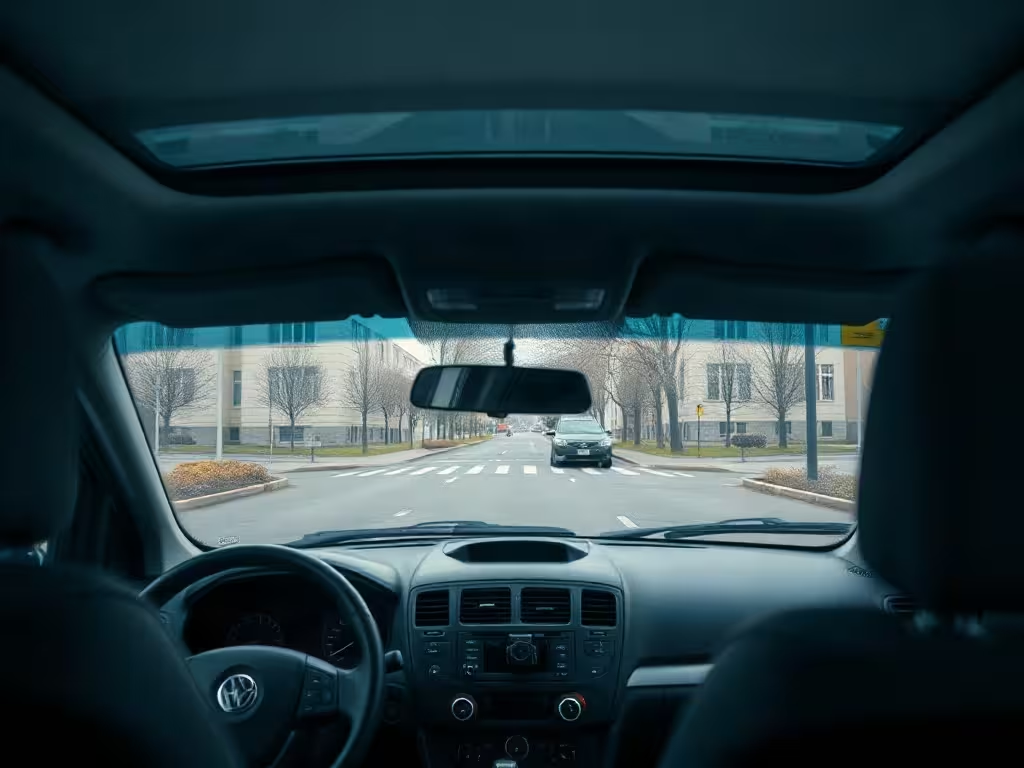
Delaware’s vehicle-equipment provisions in Title 21 control mounting. Section 4309(a) prohibits driving on a highway with nontransparent material upon the front windshield, side wings, or side or rear window, except a certificate or paper that the law requires you to display.
The provision does not name dash cams. It also supplies no express exception based on a camera’s dimensions or the amount of roadway it blocks.
Section 4309 provides no dash-cam-specific mounting exception
You should not assume that a lower corner, an area behind the mirror, or a small suction mount qualifies automatically. Section 4309(a) identifies no approved corner, maximum size, or quantitative visibility threshold.
A mount fixed to the dashboard or another interior surface avoids attaching the camera to the listed glass, but Delaware law does not expressly approve a particular dashboard position. Place the unit where neither the camera nor its hardware blocks your view.
Rearview-mirror equipment must preserve the driver’s rearward view
Section 4308 requires every motor vehicle to carry a mirror positioned so the driver can readily detect a vehicle traveling in the same direction and overtaking. A camera or bracket near the mirror must leave that function intact.
The statute creates a functional requirement rather than a dash-cam mounting authorization. Test the driver’s forward view and rearward view from the normal seating position before driving.
Audio Recording Rules require caution when a dash cam captures conversation
A silent road video and a recording of passengers talking do not present the same legal question. Delaware’s statutes contain two consent provisions that point in different directions, so the lowest-risk setup leaves the microphone disabled unless every audible occupant consents.
A protected oral communication requires a justified expectation against interception
Section 2401(13) defines an oral communication as speech made while the speaker exhibits an expectation that it will not be intercepted, under circumstances that justify that expectation. A private conversation inside a vehicle can meet that definition, depending on the facts.
Section 2402(c)(4) generally permits interception when the recorder takes part in the communication or one party gave prior consent. That exception does not cover interception undertaken to commit a criminal or tortious act.
Delaware’s two consent provisions point in different directions
Section 2402(c)(4) contains a one-party rule. By contrast, 11 Del. C. § 1335(a)(4) covers interception of private communications, including private conversation, without the consent of all parties.
Because both provisions remain in the Delaware Code, all-party consent supplies the cautious rule for dash-cam audio. Disable the microphone or tell every occupant that audio will be recorded and obtain consent before recording begins. If voices outside the vehicle may also be captured, consult a Delaware civil-rights attorney about the specific setting.
Larson v. Gibson addressed consent, choice of law, and authentication
In Larson v. Gibson (2025), No. 344, 2024, decided June 2, 2025, the Delaware Supreme Court recounted a Family Court ruling that treated Delaware as a one-party-consent state. The Family Court admitted secretly recorded interstate calls after deciding Delaware law applied and requiring authentication.
The decision arose from calls involving parties in Delaware and Pennsylvania. It does not erase § 1335(a)(4)’s all-party language or establish a dash-cam-specific rule.
Review the current DashOne Pro package and terms if you want a camera after settling the microphone setting. The merchant identifies the current offer details; verify whether the listed configuration lets you keep audio disabled.
Improper recording can trigger fines, criminal exposure, and civil damages
Mounting violations and unlawful interception follow different enforcement tracks. A window obstruction can produce a traffic fine, while unlawful audio recording can carry criminal and civil consequences.
Windshield violations carry escalating traffic fines
Section 4315(b) sets the penalty for a § 4309 violation:
- First offense: $10 to $28.75
- Subsequent like offense: $28.75 to $100
Those ranges apply because § 4309 falls within the group of equipment offenses covered by § 4315(b).
Unlawful interception can create separate criminal and civil liability
A violation of § 1335(a)(4), the all-party provision for private communications, carries a class A misdemeanor classification under § 1335(c).
Chapter 24 creates separate exposure. An intentional interception, disclosure, or use prohibited by § 2402(a), when no exception applies, can constitute a class E felony and carry a fine of up to $10,000.
Section 2409 also creates a civil cause of action. Available relief can include:
- Actual damages, with liquidated damages of $100 per day or $1,000, whichever is higher
- Punitive damages
- Reasonable attorney fees and litigation costs
The applicable offense and remedy depend on the conduct, the communication, and any statutory exception.
Delaware courts can restrict unlawfully intercepted audio evidence
A recording can depict a relevant event yet still face a challenge over how the audio was acquired. Legality and admissibility require separate analysis.
Chapter 24 governs disclosure and suppression in covered state proceedings
Section 2404 bars unlawfully intercepted wire or oral communications, along with evidence derived from them, from covered Delaware trials, hearings, agency proceedings, and other state forums when disclosure would violate Chapter 24.
Section 2407(i) lets an aggrieved person move to suppress an unlawfully intercepted communication or resulting evidence. These provisions do not establish that footage handed to police disappears automatically, and they do not state a rule for an insurer’s private claim process.
Authentication remains separate from lawful acquisition
A lawful recording still must be authenticated when a court requires proof that the file accurately represents what it purports to show. Larson illustrates that divide: the Family Court addressed the governing consent law and then required authentication before considering the recordings.
Preserve the original file, avoid editing it, and retain relevant timestamps and device information. If a recording may become evidence, ask counsel before circulating or altering it.
The Fourth Amendment exclusionary rule addresses government conduct
The Fourth Amendment exclusionary rule concerns evidence obtained through an unconstitutional government search or seizure. It does not automatically govern footage privately created by a dash-cam owner.
Delaware courts also recognize exceptions that can permit evidence despite earlier unlawful government conduct. A private recording dispute should therefore be analyzed under the applicable interception, privacy, evidence, and authentication rules rather than treated as a routine Fourth Amendment suppression issue.
The DashOne Pro merchant page shows the current offer terms
Compare the package contents with the equipment you need before ordering.
Before ordering, check the live DashOne Pro offer for:
- Current price
- Shipping terms
- Package contents
- Return terms
- Controls relevant to disabling audio
Confirm that the hardware can sit away from the windshield and windows while preserving the driver’s forward view and the rearview mirror’s required function. A camera’s design does not create an exception to 21 Del. C. § 4309.
Key takeaways
Set up the camera with the microphone off, keep the unit and mount away from the windshield and other regulated windows, and confirm that the rearview mirror still reveals overtaking traffic. Obtain every audible occupant’s consent before enabling audio.
Consult a Delaware civil-rights attorney when a recording captures a private conversation, involves access to a private place, or may become disputed evidence.
Related reading on Audit Faction explains recording and evidence rules
- Civilian recording rights during police encounters
- How dash-cam evidence enters a court case
- State audio-consent rules for vehicle recordings
- How to preserve video after a police encounter
This post may contain affiliate links. If you click them, I might earn a small commission (it costs you nothing and helps me keep shipping quality articles every day for your reading pleasure).