
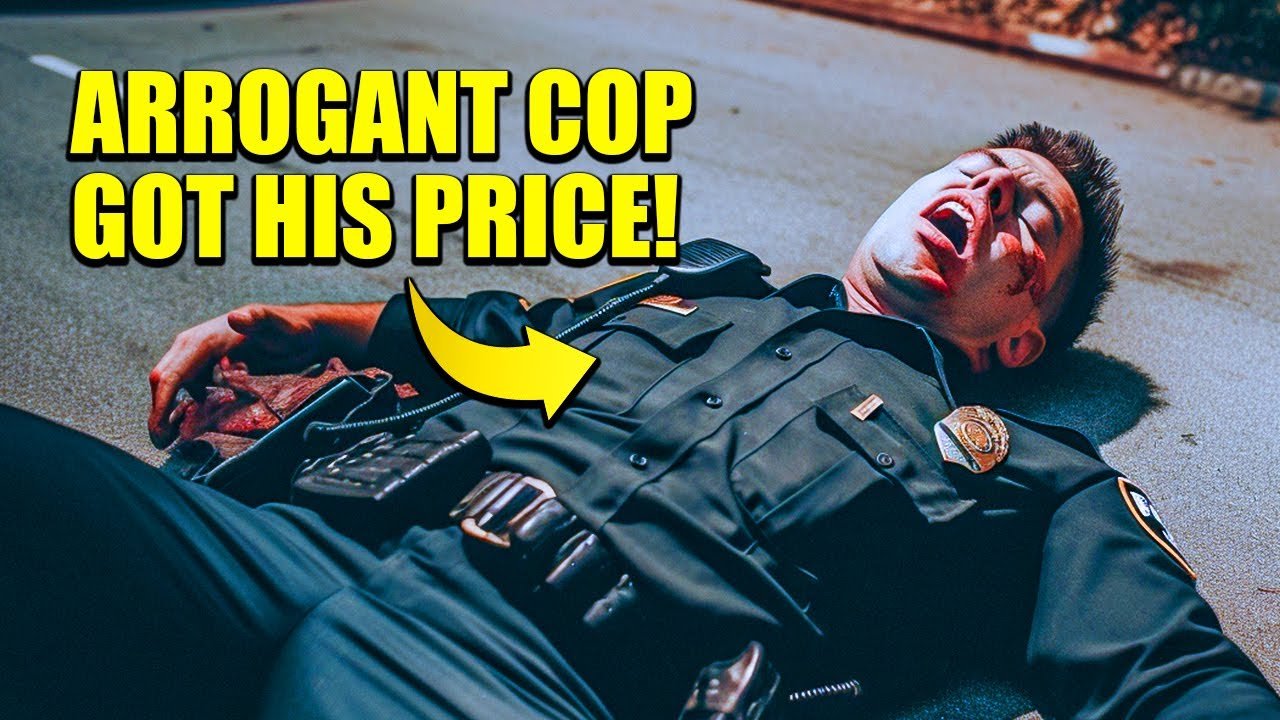
Arrogant cops are one of the most corrosive forces in a community's relationship with law enforcement. Who will grab a 17-year-old by the neck if not an officer convinced that the badge protects him from all accountability? Police brutality and abuse of power remain an ongoing issue across the United States. In 2026, the conversation has shifted: more states now mandate body cameras, and federal pattern-or-practice investigations have put several departments under a consent decree. The six cases below each ended with consequences for the officers involved — and they illustrate why oversight matters.
1. Officer Pulls Gun on Man for Filming in California
In Rohnert Park, CA, a man was tying up his boat when he noticed a police officer driving through his neighborhood. He decided to record the officer, which is within his rights. The officer took issue with being filmed, pulled over, and demanded the man take his hands out of his pockets. When the man hesitated, the officer reached for his gun before the man complied. The man pleaded with the officer not to touch him as the officer called for backup. The matter was investigated internally and the mayor and city manager announced consequences for the officer's overreach.
2. Sergeant Arrests Father for Witnessing Son’s Traffic Stop in Texas
In Keller, TX, Dylan Puente was stopped by Sergeant Blake Shimak for making a wide turn. Shimak handcuffed Puente for "acting suspiciously." When Puente's father Marco pulled up and parked across the street, Shimak threatened to arrest him too for obstructing traffic. Marco began photographing the arrest, angering Shimak who ordered another officer to arrest Marco. Marco was pepper sprayed while officers tried to take away his phone. Shimak had his rank reduced for his misconduct during the traffic stop.
3. Officer Speeds Away from Traffic Stop, Gets Fired
A Florida officer was pulled over for speeding 80 mph in a 45 mph zone on his way to work. He clashed with the deputy, refused to provide ID, and drove away at 90 mph before finally being caught. He was fired and charged with fleeing arrest and other violations.
4. Officer Tasers Disabled Man 4 Times While Arresting Him
In St. Petersburg, FL, a 64-year old disabled man in a wheelchair was arrested for outstanding warrants after panhandling at a convenience store. Although he was not aggressive, Officer Matthew Cavender tased him 4 times while he was on the ground. The police chief said the force was inappropriate and Cavender was fired.
5. Officer Chokes and Slams Teenager in Florida
In Largo, FL, Officer Brian Lioa had a confrontation with a 17-year-old boy. On video, Lioa can be seen grabbing the teen by the neck and slamming him onto the hood of a car, alarming bystanders. Lioa was shouting at and threatening others who approached. An investigation found Lioa broke conduct rules and he was terminated.
6. Officers Pepper Spray Black Army Lieutenant in Virginia
A Black and Latino army officer was pepper sprayed during a traffic stop in Virginia. The officer pepper sprayed him while he was still in his car after the man questioned why he had to get out of the vehicle. The officer did not follow department policies and was fired. His partner, a new recruit, remained employed. The lieutenant was awarded thousands of dollars in a legal dispute over the incident.
Police Accountability in 2026: What Has Changed
The cases above were documented over the past few years, but the structural conditions that produced them are still being addressed — slowly. According to the Bureau of Justice Statistics, an estimated 55.6 million U.S. residents had contact with police during a recent tracking period, with roughly 1.3% reporting that force was used or threatened. That figure translates to hundreds of thousands of incidents annually where the interaction could escalate the way it did in the examples above.
Two concrete shifts have taken hold heading into 2026. First, more than 25 states now have statutes requiring officers to activate body-worn cameras during public encounters, up from fewer than a dozen five years ago (National Conference of State Legislatures, 2025 tracking). Second, the Department of Justice's Civil Rights Division reopened its pattern-or-practice investigation program after a period of reduced activity, placing several large municipal departments under consent decrees that mandate use-of-force reporting and independent oversight.
Neither development is a guarantee. Cameras can be switched off, and consent decrees take years to produce measurable results. What has changed is the evidentiary baseline: an officer who escalates without cause now faces a much higher probability that the incident is recorded, reviewed, and shared. The six cases above all became public because someone had a camera. That is increasingly the norm rather than the exception.
These examples highlight troubling instances of police abusing their powers during stops, arrests, and interactions with the public. They show why accountability and oversight are needed to prevent further injustices. The officers faced consequences in each case, but the systemic issues that make arrogance possible — gaps in training, weak internal review, and limited civilian oversight — require sustained structural reform, not just individual terminations.